

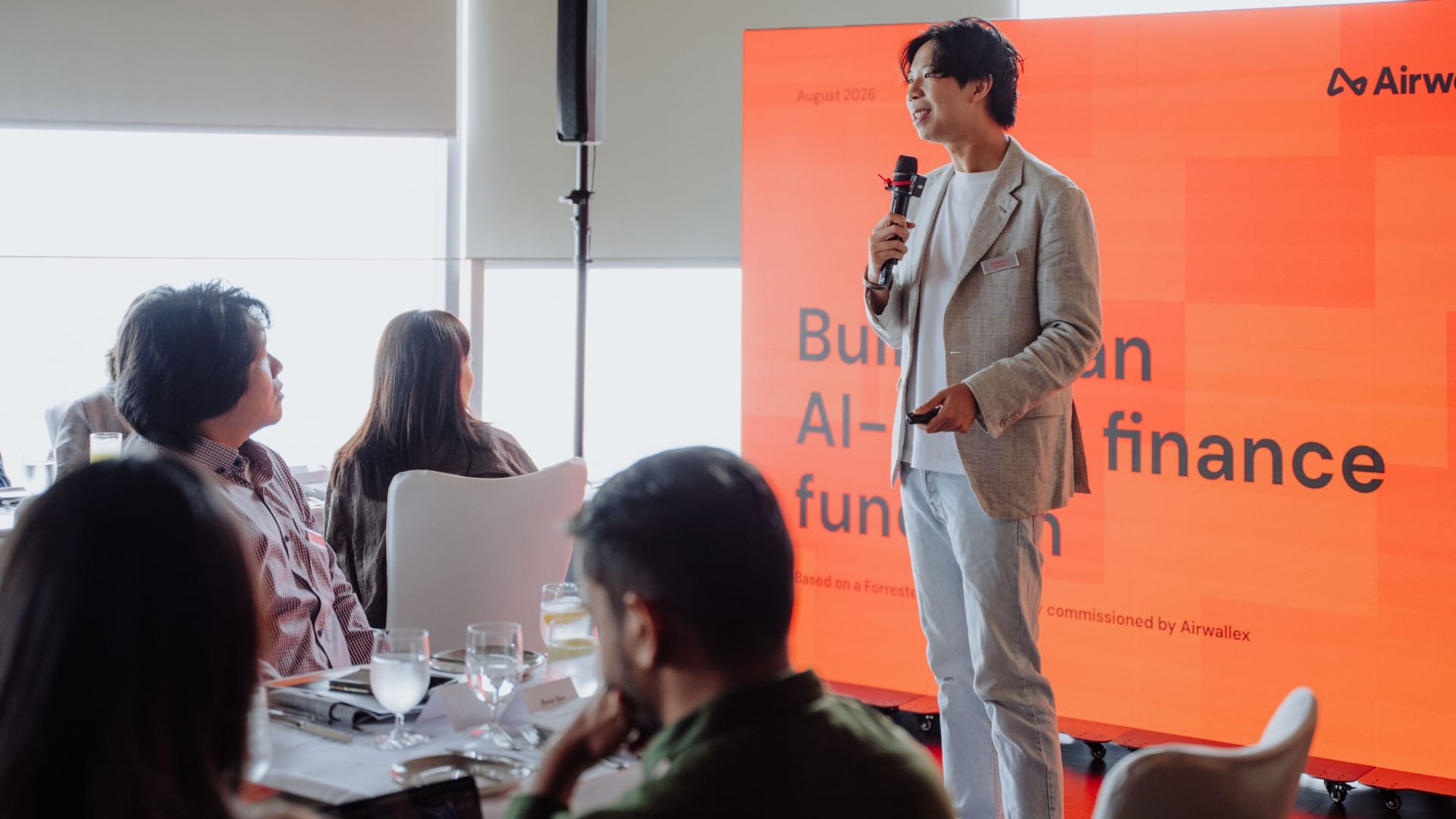
Almost all finance leaders in Singapore expect their organisations to increase spending on AI-powered finance over the next 12 months. However, broader deployment is currently restricted by fragmented data, legacy systems and limited operational oversight. A Forrester Consulting study commissioned by Airwallex found that 96% of Singapore respondents anticipate an increase in investment. These findings were announced at the inaugural Airwallex Business Builders event in Singapore.
Despite this enthusiasm, significant operational hurdles remain for local decision-makers. Inconsistent data moving across disconnected systems was identified by 64% of respondents as a core obstacle to expanding AI use, while 30% indicated that their organisations have no plans to extend adoption over the coming year. The research gathered insights from over 1,200 finance decision-makers across 11 global markets, including Singapore, alongside in-depth interviews with six industry leaders.
Adoption has outpaced system integration
AI is already embedded in at least some finance workflows across 86% of surveyed Singapore organisations, slightly ahead of the 84% global average. Looking ahead to next year, 46% of local firms plan to expand their adoption, which stands five percentage points above the global figure. Nevertheless, many enterprises are attempting to deploy sophisticated tools on financial infrastructure that is only partially digitalised. Only 32% of Singapore respondents described their finance workflows as fully digitalised, with the remaining 68% reporting that their systems are only partially upgraded.
Data isolation continues to hamper progress, with 53% reporting that information moves inconsistently between platforms or remains trapped in silos. Oversight also presents a major barrier, as 68% of local respondents cited limited capabilities for monitoring, testing or validating AI output within active operational systems. Furthermore, 64% pointed to fragmented finance data as a key hurdle, while 61% highlighted older systems that prove difficult to adapt or modernise for AI integration.
Operational hurdles extend into workforce skills and corporate governance. Limited experience in operating AI-enabled finance processes was cited by 49% of respondents as a key drawback. In addition, 44% reported difficulties in building a business case beyond immediate productivity gains, and 40% noted that risk, compliance or reputational concerns frequently delayed formal approvals.
Arnold Chan, general manager for Asia-Pacific at Airwallex, linked these operational constraints directly to the systems supporting financial activities. He stated, “Our study shows the biggest obstacle isn’t access to AI models, but fragmented financial infrastructure. AI is only as good as the financial systems beneath it. Businesses that connect their financial data, workflows and operations will be far better positioned to move beyond isolated AI use cases towards more intelligent, autonomous finance.”
Singapore reports higher autonomous AI use
Across core finance workflows, 18% of Singapore respondents reported that AI operates autonomously with minimal human intervention, compared to 11% globally. A further 31% noted that AI can perform several pre-configured actions, while 28% deploy it for individual, standalone tasks. In specific areas such as bookkeeping, closing accounts and financial reporting, autonomous AI deployment reaches 27% in Singapore, nearly double the worldwide figure of 14%.
Forecasting represents another area where finance teams expect expanded automation. Around 64% of local respondents anticipate using AI to generate forecasts and scenario analyses that recommend concrete actions for staff to evaluate, compared to 52% globally. Additionally, 43% expect AI to identify trends, patterns and root causes to assist human decision-makers, while 40% plan to use it for consolidating data and generating reports while staff retain full responsibility for final analysis and decisions.
Overall, these projections keep most AI systems firmly within advisory or controlled execution parameters. Although autonomous implementation is noticeably higher in Singapore than in other global markets, it continues to be restricted to a minority of financial processes.
Finance teams plan to combine internal and external capabilities
To execute their AI strategies, Singapore organisations are increasingly shifting towards hybrid delivery models that unite internal teams with external vendor support. At present, 38% of local firms rely on a combined approach, 32% depend solely on internal teams, and 30% outsource their AI work entirely. Over the next 12 months, 66% plan to adopt a blended model, whereas fully internal development and complete outsourcing are each projected to decline to 17%.
Third-party platforms will play a central role in these deployments going forward. Indeed, 44% of local respondents expect their primary AI capabilities to be provided by finance software vendors, though these systems will still require additional configuration and integration to function alongside existing infrastructure.
In terms of workforce readiness, Singapore demonstrates greater progress than international peers. Approximately 27% of local organisations have established a company-wide AI talent strategy for finance, compared to 15% globally. Furthermore, 25% have built internal AI development capabilities directly within or alongside the finance function, compared with 16% globally.
Just 10% of Singapore firms have yet to evaluate how AI will alter their staffing requirements, compared to 14% worldwide. The findings suggest that higher AI spending will not necessarily lead to broader autonomous deployment in the near term. For many Singapore finance teams, investment is likely to remain focused on connecting data, modernising core systems and strengthening controls for testing and validating AI outputs. Progress will therefore depend as much on operational readiness as on access to new AI capabilities.