


As Tesla begins winding down production of its Cybertruck electric pickup, fans of its distinctive angular design have another way to keep the vehicle’s futuristic styling alive. Technology company Angry Miao has introduced a new Cyberboard mechanical keyboard inspired by the electric vehicle, combining its recognisable industrial appearance with artificial intelligence features and customisable lighting.
The Cyberboard AI is the latest addition to the company’s keyboard range, inspired by Tesla’s Cybertruck since its first unveiling. The new model is currently being funded through a Kickstarter campaign and introduces several features designed to make everyday computer use more convenient.
Unlike conventional mechanical keyboards, the new device places considerable emphasis on voice interaction. It allows users to dictate text and issue voice commands through an integrated microphone system, reducing the need to type manually. The keyboard also includes a programmable LED display that provides system information and supports personalised visual effects.
AI voice controls bring hands-free functionality
One of the main features of the Cyberboard AI is its integrated voice control system. Angry Miao has equipped the keyboard with a dual-microphone array, AI-powered noise reduction and dedicated digital signal processing (DSP) technology. These features improve voice recognition by reducing unwanted background noise and helping the microphones capture speech more clearly.
Users can activate the voice functions with a dedicated button and speak directly to the keyboard. The system supports both voice commands and text dictation, letting users enter content without relying entirely on the physical keys. This could be useful for people who regularly write documents, respond to messages or perform other tasks that involve extended typing sessions.
The microphone system also offers three selectable audio pickup modes: 90 degrees, 180 degrees and 360 degrees. These settings allow users to adjust the direction from which the keyboard captures sound, depending on their surroundings and preferred working position. The wider recording option may be useful in shared environments, while narrower settings could help focus on the user’s voice.
Artificial intelligence plays an important role in enabling these functions. The combination of microphone hardware, noise reduction and DSP processing is intended to deliver a more reliable voice input experience, particularly in environments where background noise could interfere with recognition.
The keyboard supports both Windows and macOS, giving it compatibility with two of the most widely used desktop operating systems. Its 75% layout also provides a more compact alternative to traditional full-sized keyboards while retaining a practical selection of keys for everyday work.
Customisable LED display and distinctive mechanical design
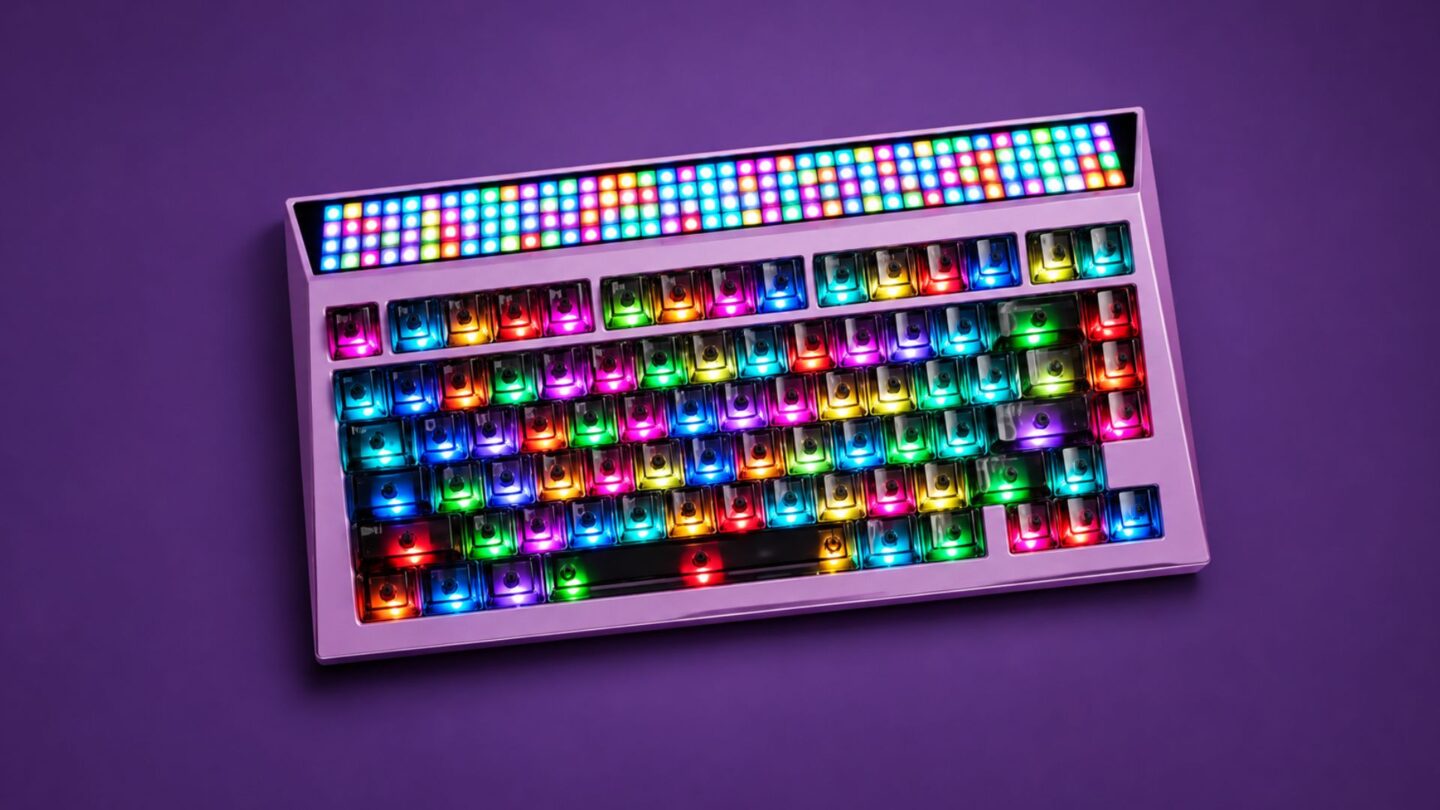
Beyond its voice control capabilities, the Cyberboard AI features a built-in LED matrix display positioned along the rear section of the keyboard. The display measures 5 x 40 pixels, for a total of 200 individual LEDs that can show different information and visual effects.
The display can show practical details, including the keyboard’s remaining battery level, operating mode and current connection status. This provides users with a convenient way to check the device’s condition without relying on separate software or system menus.
Angry Miao also allows users to customise the display with animations and lighting effects. This lets owners personalise the keyboard’s appearance rather than using it solely as a functional information panel. The LED matrix adds another visual element to a design that already stands out from conventional mechanical keyboards.
The overall appearance follows the Cybertruck-inspired styling found in previous Cyberboard models. Its body features sharp angles, an elevated key shelf and a tapered rear section that resembles the geometric lines of Tesla’s electric pickup.
The keyboard is made of aluminium, giving it a solid metal feel. It includes 81 keys and offers different keycap designs, allowing buyers to choose an appearance that suits their preferences. Its 75% layout balances a compact footprint with the keys needed for regular computer use.
The combination of its angular metal body, mechanical switches and programmable lighting makes the Cyberboard AI more than a standard office keyboard. Its design clearly targets enthusiasts who appreciate distinctive computer accessories and want their desktop equipment to look more personalised.
Kickstarter campaign exceeds its funding target
The Cyberboard AI is currently available through a Kickstarter crowdfunding campaign. According to the campaign details, early supporters can secure the keyboard at a starting price of HK$6,655, equivalent to approximately US$850 or £650.
The campaign has already exceeded its original crowdfunding target, indicating strong interest in the product among potential buyers and mechanical keyboard enthusiasts. However, as with other crowdfunding projects, supporters should keep in mind that production and delivery schedules may change as development progresses.
Angry Miao has scheduled shipping for 2027. This means customers who support the campaign will need to wait before receiving their keyboards. The company has not positioned the device as an officially licensed Tesla product, and its Cybertruck connection is primarily reflected in the design inspiration.
The launch timing is also notable, as Tesla’s Cybertruck production reportedly enters a winding-down period at its Texas Gigafactory. Although the vehicle’s future production plans remain separate from Angry Miao’s keyboard project, the new accessory offers another product for people who appreciate the electric pickup’s unconventional design.
The Cyberboard AI combines mechanical typing, voice interaction and programmable lighting in a single desktop accessory. Its relatively high starting price places it in the premium keyboard category. Still, its aluminium construction, microphone technology and 200-LED display give it a feature set that goes beyond what is typically found in conventional mechanical keyboards.
For buyers interested in its design and AI capabilities, the Kickstarter campaign offers a chance to support the project ahead of its planned 2027 delivery.