

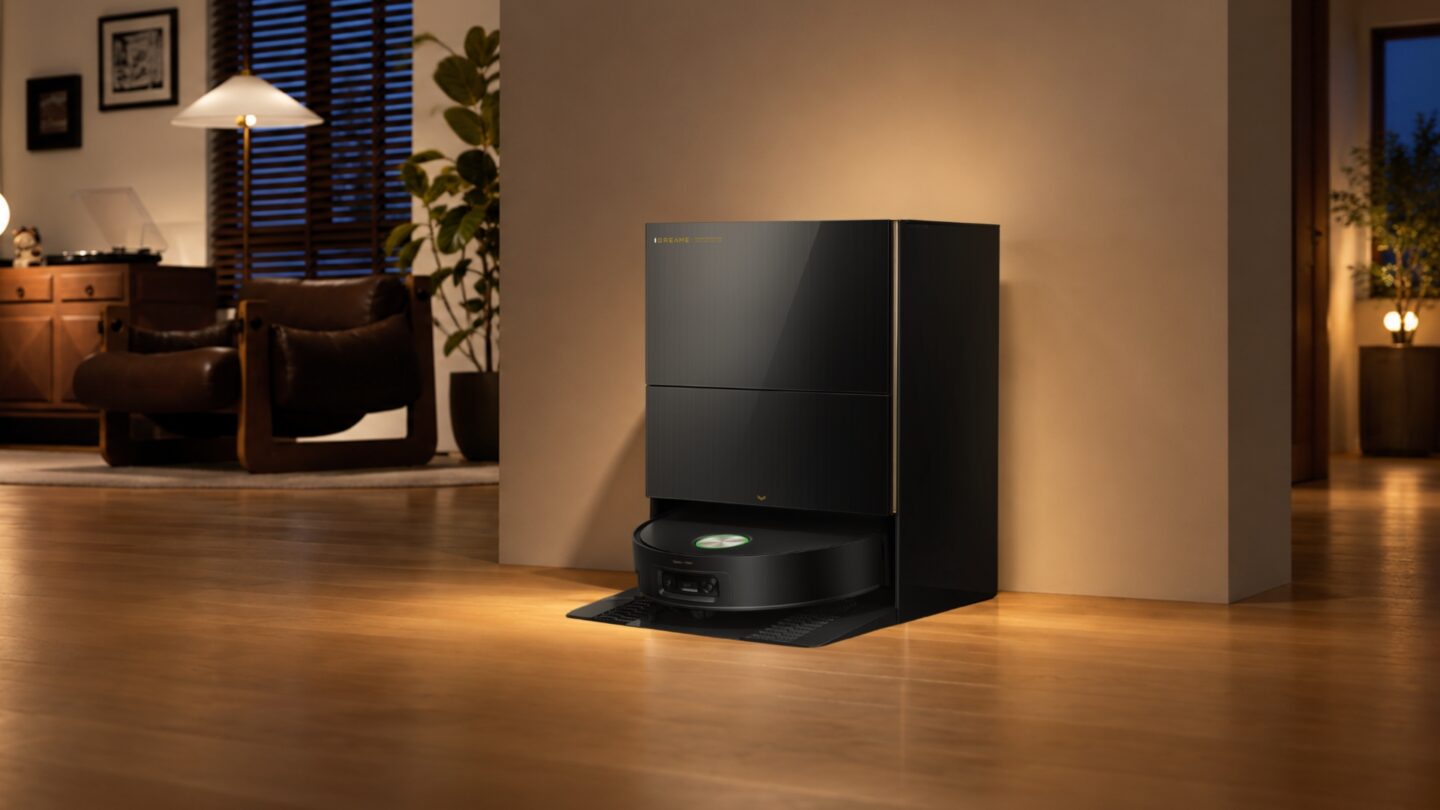
Robot vacuums have become much better at everyday cleaning, but a round body can only do so much. Dust still gathers in square corners, recessed areas beneath kitchen cabinets can remain out of reach, and low furniture often leaves narrow strips of floor untouched.
Our verdict
The Dreame X60 Ultra Extreme stands out for how much of the home it can reach without assistance. Its industry-leading Dual UltraExtend reach gets deeper into corners and beneath low furniture, while ProLeap and VersaLift help it move through more difficult layouts. Strong cleaning performance and extensive dock automation round out one of Dreame’s most capable robot vacuums.
Pros
- Dual UltraExtend offers industry-leading reach
- Strong vacuuming and mopping performance
- ProLeap is rated to clear double-layer obstacles up to 10cm
- OmniSight works well around everyday clutter
Cons
- 3.0L wastewater tank is smaller than some flagship alternatives
- Premium pricing may be hard to justify for simpler homes
The Dreame X60 Ultra Extreme is built specifically to deal with those problem areas. Rather than simply increasing suction, Dreame has given the robot more reach. Dual UltraExtend pushes the side brush and one mop pad beyond the body, while ProLeap, VersaLift, and OmniSight help it handle low furniture, raised thresholds, and everyday clutter.
Dual UltraExtend reaches into harder-to-clean areas
The X60 Ultra Extreme’s Dual UltraExtend system offers industry-leading reach, with the side brush extending up to 12cm and one spinning mop pad reaching diagonally by up to 18cm beyond the robot’s body. That extra movement helps the robot clean deeper into corners, along recessed cabinet bases and beneath low furniture without requiring the entire body to fit into the space.
With crumbs and rice scattered along a wall and into a tight corner, the extended side brush swept the debris back towards the main suction path rather than pushing it further away. Beneath low furniture, light marks placed outside the robot’s normal cleaning path were still within reach of the mop. Even at near-full extension, the pad maintained enough contact with the floor to scrub the marks rather than simply pass over them.
VersaLift adds another option where there is enough clearance for the robot itself to enter. Its top sensor retracts into the body, lowering the X60 Ultra Extreme to 8.9cm so it can move beneath furniture and clean the area directly. Where the opening remains too shallow, Dual UltraExtend can reach into part of that space from the edge instead. Together, the two systems address different limitations of conventional round robot vacuums when cleaning beneath low furniture.
Cleaning adapts to dry debris, spills and different surfaces
The X60 Ultra Extreme is rated at up to 42,000Pa of suction, placing it among the industry-leading suction specifications for current flagship robot vacuums. It uses Dreame’s HyperStream Detangling DuoBrush 2.0, with two rollers designed to handle debris and hair while reducing tangles.
Across hard floors and rugs, it consistently picked up rice, fine dust and long hair. A check underneath afterwards found little hair wrapped around the rollers, leaving less to remove by hand.
TripleUp Technology further adds value to the robot vacuum by changing the cleaning mode based on what the robot detects. Dreame says dirt and debris trigger vacuuming mode, while liquid and stains trigger mopping mode. Carpet detection works separately, lifting the mop pads to keep them away from the surface.
The two spinning mop pads rotate at up to 280RPM and apply up to 15N of downward pressure. Dried coffee marks and sticky spots came away with little trouble, with enough scrubbing action to handle marks that needed more than a light wipe.
As the pads collect dirt, the X60 Ultra Extreme uses its dirt detection system to adjust how it cleans, rather than treating every part of the floor the same way. Dreame says the system can identify fine particles, pet hair and even colourless liquids, then tailor the cleaning method in real time. During testing, dirtier areas such as the kitchen and dining space received more attention than bedrooms and hallways.
ProLeap and OmniSight handle thresholds and everyday obstacles
Raised bathroom thresholds and balcony tracks are common obstacles in Singapore homes, particularly where tiled areas sit higher than the adjoining floor. They can be enough to stop some robot vacuums from moving between rooms without help. Dreame’s ProLeap system uses retractable legs to lift the X60 Ultra Extreme over raised obstacles. The robot is rated to clear single-layer obstacles up to 5.2cm and double-layer obstacles up to 10cm, extending its ability to move between areas that can stop conventional robot vacuums.
Balcony tracks and doorway sills provided a more realistic test of how ProLeap behaves at home. Across repeated attempts, the robot cleared the raised sections reliably even when it approached slightly off-centre or from the side. It crossed without the body getting caught on the raised edge.
Smaller obstacles are handled by AI-Enhanced OmniSight, which combines two 120-degree cameras with structured-light sensors and an automatic LED for darker areas. Dreame says the system can recognise more than 320 types of objects and detect items as small as 10mm.
Loose phone cables, slippers, toys and dining chair legs were left along the cleaning path during testing. The X60 Ultra Extreme worked around them without keeping such a wide distance that large areas of floor were left untouched, while the LED switched on beneath low furniture and along dimmer parts of the room.
With the robot able to work around everyday clutter, cross raised thresholds and reach beneath lower furniture, less preparation is needed before each cleaning run. There is less need to clear the entire floor in advance or carry the robot between areas divided by a difficult threshold, allowing a single unit to cover more of the home without manual repositioning.
The PowerDock handles most of the work between cleaning cycles
Between cleaning runs, the X60 Ultra Extreme returns to the PowerDock, which empties the dustbin, refills the robot with fresh water and dispenses cleaning solution. Mop maintenance has long been one of the less pleasant parts of robot vacuum ownership, with damp pads and oily residue that can leave the dock smelling stale over time. Dreame’s ThermoHub uses heated water during mop washing, with the system rated at up to 100°C, before drying the pads for the next run.
Over several days of testing, the pads and washboard stayed clean and odour-free without needing any manual scrubbing. This is especially relevant in Singapore’s humid weather, where damp mop pads left sitting between cleaning cycles can quickly develop a musty smell. The clean-water tank holds 4.2L, while the wastewater tank holds 3.0L. The latter is smaller than the 4.0L wastewater tank on Dreame’s X50 Ultra, so frequent mopping can mean emptying it more often. During testing, the tanks needed attention every few cycles depending on how much floor space was being covered.
Dreame also offers an optional water hookup kit for homes where the dock can be connected directly to a water supply and drain. This removes the need to refill the clean-water tank or empty the wastewater tank manually, but it also limits where the PowerDock can be installed. The standard tank setup gives buyers more freedom in where they can place the dock, while the direct water connection works best where a suitable supply and drain are already available, such as the kitchen, utility yard, or bathroom.
Dreamehome provides deeper control when needed
The Dreamehome app brings together room mapping, cleaning schedules, no-go zones and separate controls for suction and water use. Settings can be adjusted by room, so the kitchen can get a more intensive clean while bedrooms use a quieter routine. Individual areas can also be sent for another pass without restarting a whole-home cycle.
Once the floor plan and schedules are set, most routine cleaning can run without reopening the app. Virtual boundaries can keep the robot out of selected areas, while carpet recognition, dirt detection and automatic cleaning adjustments handle many of the changes it encounters during a run. Room-specific controls remain useful when an area needs different treatment, but day-to-day cleaning can largely be left to the X60 Ultra Extreme rather than managed from the phone each time.
The verdict: Dreame X60 Ultra Extreme
Strong suction, obstacle avoidance and self-cleaning docks are already common among flagship robot vacuums. The X60 Ultra Extreme is different in how far it can reach and where it can travel. Dual UltraExtend pushes the side brush and mop beyond the body of the robot, while VersaLift and ProLeap help it get under low furniture and across raised thresholds instead of simply cleaning around them.
The 42,000Pa suction figure is substantial, but the extending arms and added mobility had a greater effect on where the robot could actually clean. During testing, it reached further into corners and beneath furniture while crossing raised tracks that would otherwise interrupt a cleaning run. OmniSight also reduces the need to clear everyday clutter before a run, while the PowerDock handles much of the work after cleaning.
At S$1,799 during its Singapore pre-order period, the X60 Ultra Extreme sits firmly in flagship territory. Its appeal lies in how much of the home it can clean without assistance. By reaching further, clearing obstacles that can stop other robots and requiring less preparation before each run, it reduces the number of awkward areas left for manual cleaning.