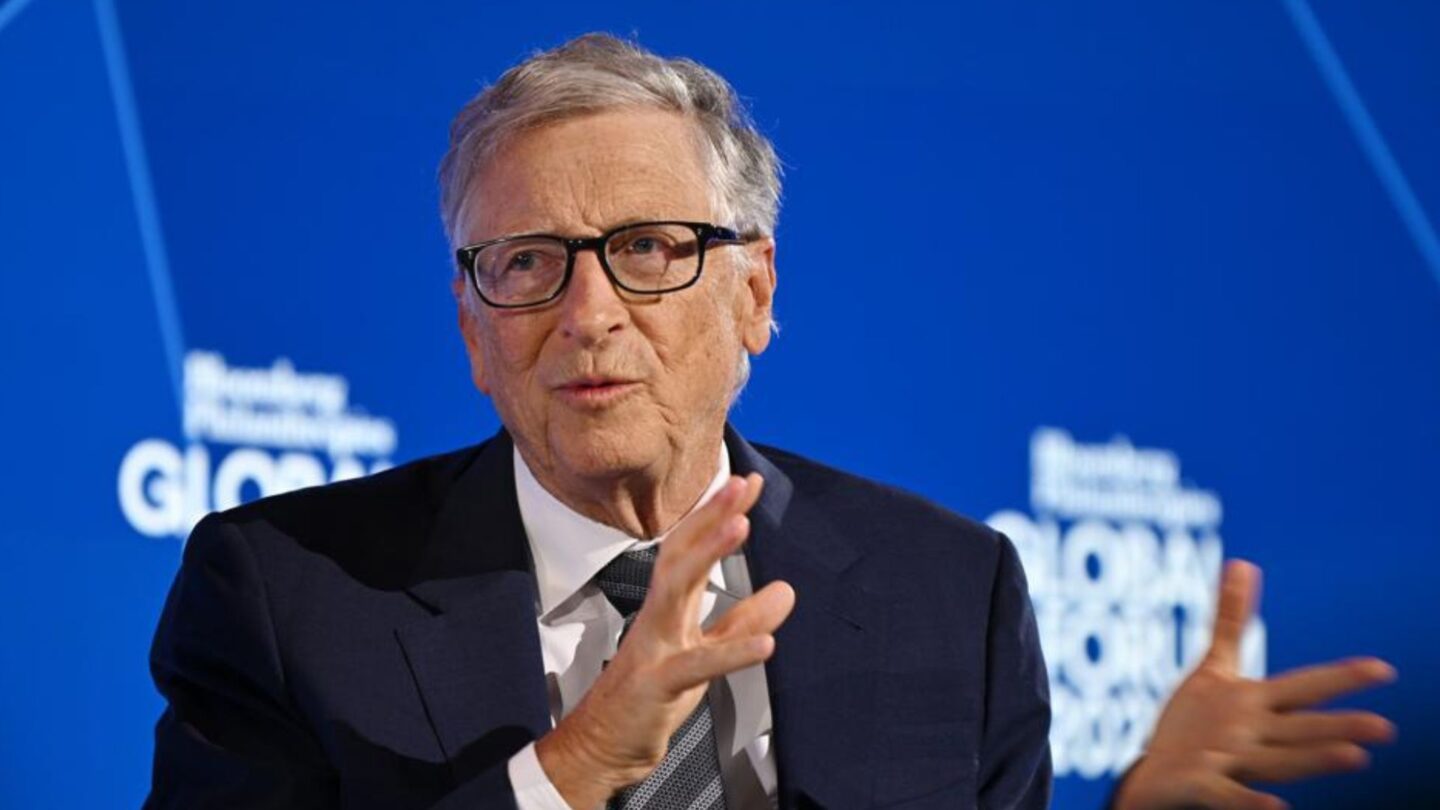
Bill Gates has called for stronger safeguards and monitoring requirements for artificial intelligence systems, warning that failing to put such measures in place would be irresponsible as the technology becomes more powerful.
The Microsoft co-founder made the comments during an interview with NBC News’ Meet the Press, following growing discussion among technology leaders and policymakers about the pace of AI development. Gates said regulation should focus not only on how quickly AI systems are developed, but also on how people with harmful intentions could misuse them.
Gates warns about the risks of AI misuse
Gates said AI companies should be required to build safeguards and monitoring capabilities into their systems. He argued that the rapid development of increasingly capable AI tools makes it important for governments and the technology industry to address potential risks alongside continued innovation.
“It’s completely irresponsible not to require every AI to have these safeguards and monitoring capabilities,” Gates said during the interview. His comments come as AI companies face increasing pressure to demonstrate that their models can be deployed safely and that potential misuse can be identified and addressed.
The discussion comes as some AI companies and technology executives have considered measures to manage the pace of the technology’s advance. Gates’ comments suggest that he sees safeguards as an important part of that process rather than relying solely on restrictions on development.
Companies are also exploring ways to bring independent organisations into the process of assessing AI systems. Anthropic, for example, has recently engaged Accenture to serve as a third-party evaluator for its latest AI models. Independent assessments can provide an additional layer of scrutiny as developers work to identify potential risks associated with increasingly capable systems.
Gates questions whether a kill switch would solve the biggest threats
The debate over AI regulation has also included proposals for mechanisms that could allow authorities to stop or disable AI systems in certain circumstances. California Governor Gavin Newsom has proposed a “kill switch” as part of a wider approach to addressing potential AI risks.
Gates said he would not dismiss the idea entirely, but questioned whether such a measure would address what he considers the more immediate concern. “I would never want to say that I’m against a kill switch,” he said, while pointing to the possibility of people deliberately using AI tools for harmful purposes.
According to Gates, the danger is not necessarily limited to AI systems operating independently or becoming uncontrollable. Instead, he highlighted the possibility that individuals or groups could combine existing harmful intentions with increasingly capable AI tools.
“The most dangerous thing we’re facing right now is people with bad intent using AI,” Gates said during the interview. “There’s never been a weapon as powerful as the combination of people with ill intent using the latest AI tools.”
He specifically raised concerns about the use of AI in areas such as bioterrorism and large-scale financial fraud. More capable systems could potentially make it easier for malicious actors to carry out complex activities, increasing the importance of safeguards that can identify and limit harmful use.
The comments reflect a wider debate over whether AI safety measures should concentrate on the technology itself, the people using it, or both. While mechanisms designed to shut down AI systems could address certain scenarios, Gates’ comments indicate that monitoring how AI is accessed and used is also an important part of managing potential risks.
Calls grow for regulation and industry oversight
Gates also backed a greater role for lawmakers and law enforcement agencies in determining what safeguards AI companies should implement. He said governments should be involved in discussions about the types of monitoring and protections developers should provide.
The former Microsoft executive acknowledged that additional requirements would create some extra work for AI companies. However, he argued that the additional oversight would not necessarily prevent the industry from continuing to develop the technology at its current pace.
Gates said the additional requirements would add some overhead to the industry, but would not cause a “dramatic slowing of what they’re doing.” His position reflects an approach that introduces safety measures while allowing companies to continue developing and deploying AI systems.
The question of how much regulation to apply to AI remains under discussion among governments, technology companies, and other organisations. Policymakers face the challenge of addressing risks without unnecessarily restricting technological development, while companies are being asked to demonstrate that their systems can be used responsibly.
As AI models become more capable and are integrated into a growing range of products and services, the debate over safeguards is likely to continue. Gates’ comments add to calls for developers, regulators, and law enforcement agencies to set clearer expectations around monitoring, safety controls, and the potential misuse of advanced AI tools.