


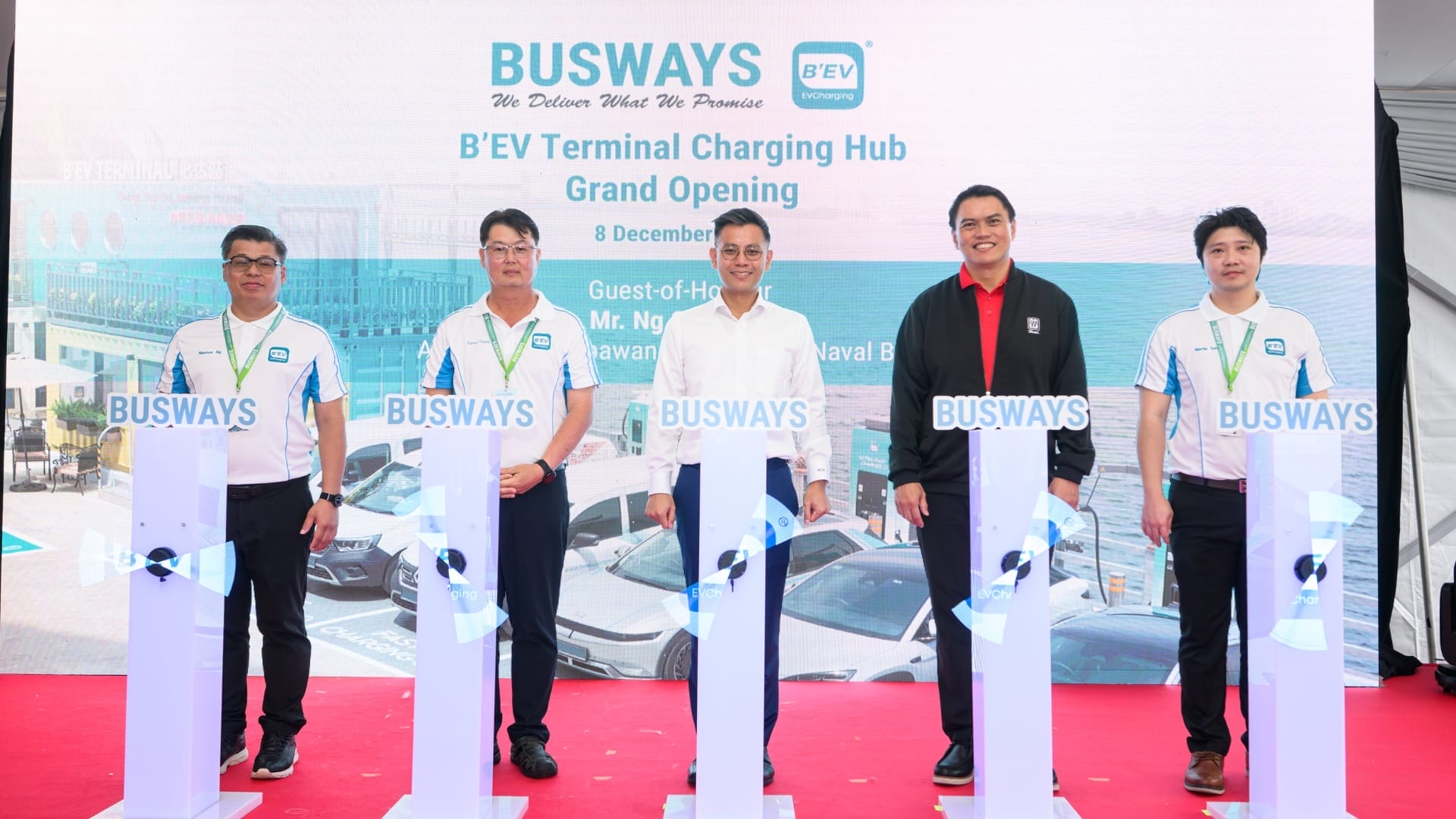
Busways has opened the B’EV Terminal Charging Hub, the first ultra-fast charging facility in northern Singapore. The new site at 27 Senoko Way is designed to support the country’s shift towards cleaner transport and the growing adoption of electric fleets among industrial and logistics operators.
The launch strengthens national efforts to expand high-capacity charging infrastructure as part of the Singapore Green Plan 2030. It follows recent policy measures under Budget 2025 that encourage the use of electric heavy vehicles and the deployment of fast-charging networks. The opening ceremony was officiated by Ng Shi Xuan, Adviser to Sembawang GRC GROs (Naval Base).
Ultra-fast charging and renewable energy integration
The B’EV Terminal Charging Hub features high-capacity chargers rated at 180kW, 360kW and 480kW, supporting passenger cars, commercial fleets and heavy-duty vehicles. The site operates around the clock and includes 12 charging guns capable of serving up to 600 vehicles per day through optimised load and energy management.
To reduce reliance on the grid, the hub is powered by a mix of solar panels and wind turbines, supported by a Battery Energy Storage System. These systems are coordinated through an Energy Management System that tracks, controls and prioritises energy flow to minimise waste while ensuring continuous operations.
Sunny Chong, Founder and Chairman of Busways, said the new facility represents the company’s long-term commitment to developing infrastructure for the future. “When I started Busways nearly two decades ago, it was with a passion for engineering and a belief that infrastructure must evolve to meet tomorrow’s challenges. Today, the launch of the B’EV Terminal Charging Hub represents exactly that evolution. It embodies our commitment to delivering solutions that not only meet demand but shape a cleaner, more connected future for Singapore and beyond.”
Supporting fleet operators and industrial businesses
The hub has been positioned as a dedicated charging destination for industrial and logistics companies operating in Senoko and across the wider region. Busways expects its ultra-fast chargers and integrated energy systems to meet the operational needs of businesses that require fast turnaround times for their fleets.
Ng Shi Xuan noted that the opening aligns with national goals for sustainable transport. “The launch of the B’EV Terminal Charging Hub marks steady progress for the Northern region and for Singapore’s EV journey. It combines private sector innovation with the goals under the Singapore Green Plan 2030 by strengthening the fast-charging network to support logistics and commercial fleets. This allows businesses to go electric with confidence and is a tangible step forward as we transition toward a cleaner transport future.”
The development involved contributions from more than a dozen engineering and technology partners, including companies specialising in high-performance charging systems, digital energy technologies, power distribution, and renewable energy solutions. Each partner played a role in building the hub’s charging, monitoring and power management capabilities.
Martin Toh, Chief Executive Officer of Busways, said the project reflects the company’s focus on reliable infrastructure tailored to real-world needs. “Our focus has always been to deliver reliable, high-performance infrastructure that meets the real operational needs of industrial and logistics fleets. The B’EV Terminal Charging Hub was designed around these operational needs, from ultra-fast chargers to integrated energy systems that keep the site running efficiently around the clock. This project reflects the practical value of working closely with our engineering and technology partners to build solutions that businesses and the public can depend on.”
Expansion plans underway
With the B’EV Terminal now operational, Busways plans to expand its high-performance charging solutions across Singapore. The company aims to support the electrification of commercial fleets and industrial operations as demand for fast, reliable and renewable-powered charging continues to grow.