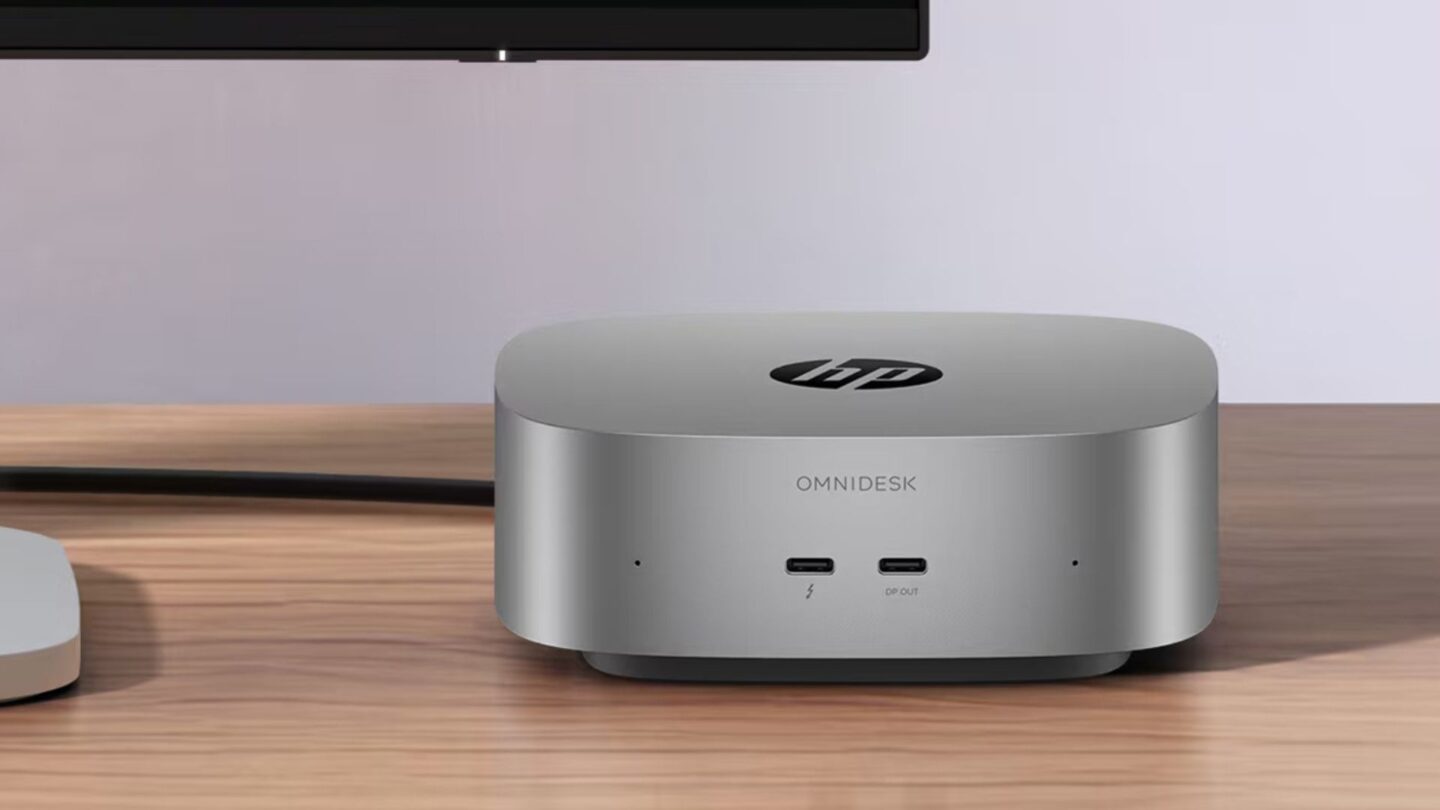
HP has introduced a compact desktop computer in the US that closely resembles Apple’s Mac mini form factor. The OmniDesk Mini starts at US$799.99, positioning it as a lower-cost alternative to Apple’s latest compact desktop.
Despite their similar sizes, however, the two machines target somewhat different users. HP’s entry-level model uses Intel hardware designed for affordable Windows PCs, while Apple’s latest Mac mini runs on its higher-performance M6 chip. The price difference may therefore be less significant than it first appears.
Compact design with a practical selection of ports
The HP OmniDesk Mini measures 5.12 x 5.12 x 1.89 inches and weighs just over a pound. Its small footprint suits desks with limited space, and its compact design makes it easy to place in a home office or other small workspace.
HP has managed to include a useful range of connectivity options despite the machine’s size. The computer features three USB-C ports, two USB-A ports, HDMI 2.0b, and an Ethernet connection. It also includes several audio connections, giving users plenty of options for connecting common peripherals without relying entirely on adapters or hubs.
The OmniDesk Mini can also drive up to three displays, which could make it useful for productivity-focused setups. Wireless connectivity includes Wi-Fi 6 and Bluetooth 5.4 as standard. HP also offers configurations with Wi-Fi 6E and Bluetooth 5.3, depending on the model selected.
Storage is another area where the compact PC offers some flexibility. The system includes two M.2 slots, allowing you to expand storage later. The memory is less flexible, however, as the LPDDR5X RAM is integrated into the system and cannot be upgraded by the user.
Intel processors keep the focus on affordable Windows computing
The entry-level OmniDesk Mini is powered by Intel’s Core 3 304 processor, a five-core, five-thread chip from Intel’s Wildcat Lake family. HP pairs the processor with 8GB of LPDDR5X memory and a 256GB SSD in the base configuration.
Higher-priced versions are available with Intel’s Core 5 320 processor and up to 16GB of memory. These configurations provide more headroom for demanding workloads, although the system remains positioned primarily as a compact Windows desktop rather than a high-performance workstation.
That distinction is important when comparing the OmniDesk Mini with Apple’s Mac mini. Similar dimensions and starting prices make the two machines easy to compare, but their hardware targets different performance levels. The OmniDesk Mini’s main appeal is its combination of a small enclosure, Windows compatibility and relatively straightforward connectivity.
For users who need a compact computer for web browsing, office applications, streaming and everyday productivity, the HP system could provide enough performance. Its upgradeable storage also gives it an advantage for users who expect their storage requirements to grow over time.
The integrated memory does mean buyers need to think carefully about how much RAM they require before purchasing. The 8GB base configuration may be adequate for basic workloads. Still, users running numerous applications simultaneously or working with more demanding software may benefit from choosing a 16GB model from the outset.
The Mac mini remains the stronger option for some buyers
HP’s biggest challenge is the relatively small price gap between the OmniDesk Mini and Apple’s latest Mac mini. Apple’s M6 Mac mini starts at US$899, just US$100 more than HP’s entry-level machine, while including 16GB of unified memory as standard.
That difference makes the comparison more complicated than the headline pricing suggests. Although the HP system costs less, its base Core 3 304 configuration occupies a lower performance category than Apple’s latest Mac mini. Buyers saving US$100 may therefore be accepting a noticeable reduction in processing capability rather than simply choosing a cheaper version of essentially the same computer.
The higher-end OmniDesk Mini configurations with the Core 5 320 processor and additional memory improve the situation, but they do not fundamentally change the machine’s position. HP’s compact desktop remains better understood as an affordable Windows PC in a small chassis rather than a direct performance competitor to Apple’s latest hardware.
The OmniDesk Mini could still make sense for people who need Windows or prefer Linux. Compatibility with existing Windows software, peripherals, and workflows can matter more than raw performance, particularly for business users and home-office customers.
For buyers comfortable with macOS and with enough budget to spend an additional US$100, Apple’s Mac mini may be the more compelling choice. Those who do not need Apple’s operating system, however, may find HP’s small form factor and broad port selection attractive, particularly if storage expansion and Windows compatibility are priorities.
Ultimately, the OmniDesk Mini’s appeal will likely depend less on its resemblance to the Mac mini and more on the operating system and performance level a buyer actually needs. Its compact design, multiple ports and expandable storage give HP a credible option for users seeking a small desktop. Still, the modest price difference means the latest Mac mini remains an important alternative.