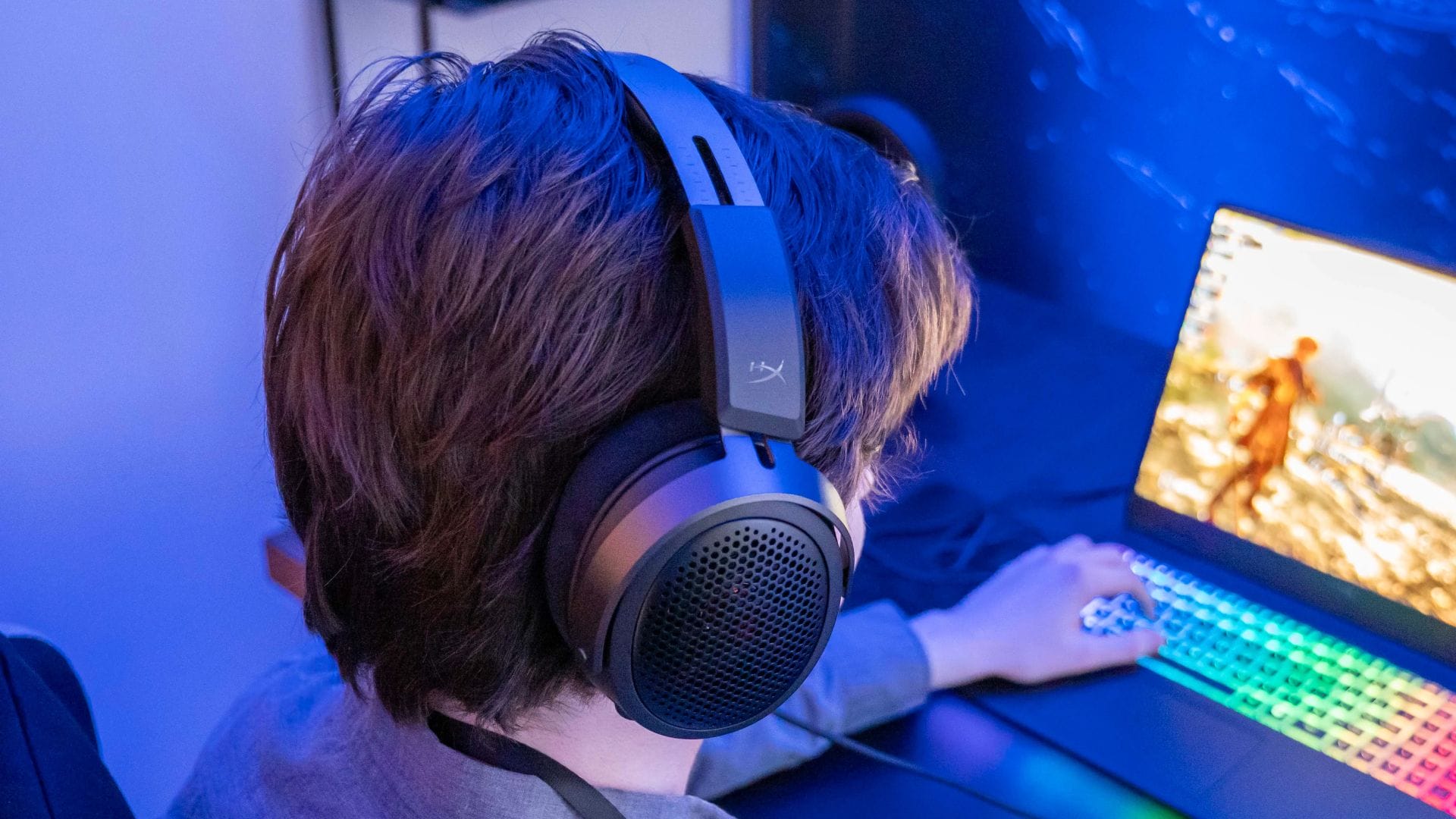
HyperX has entered the open-back gaming headset market for the first time with the Cloud Alpha Air, a US$150 wired headset designed to combine a spacious soundstage with stronger low-frequency performance. The company, which has spent years developing gaming peripherals and audio products, has equipped the new headset with plush foam earpads and a dedicated Bass Tube intended to retain the impact often associated with closed-back headphones.
Open-back headphones are generally known for producing a more natural, airy sound, but their design can also result in weaker bass than closed-back alternatives. HyperX has attempted to address that trade-off with the Cloud Alpha Air, aiming to give gamers enough low-end impact to make effects such as footsteps, explosions and other environmental sounds more noticeable without overwhelming the rest of the audio.
Cloud Alpha Air targets gamers who want open-back sound
The Cloud Alpha Air delivers a controlled low-frequency response that adds depth without dominating the mid and high frequencies. During early hands-on testing, the headset produced a deep rumble that added weight to music while retaining enough clarity for other parts of a track to remain distinct. Its bass response also brought out lower tones in shooter games. However, it remains unclear whether the difference would provide a meaningful competitive advantage compared with other headsets in the same price range.
The headset has an impedance of 34 ohms, making it relatively easy to drive from a range of devices. However, connecting it directly to a PC through the 3.5mm audio connection resulted in slightly lower volume during testing. Users who want more control over output may therefore prefer the included USB adapter or a separate digital-to-analogue converter. HyperX also allows owners to adjust the Cloud Alpha Air’s equaliser and sound profile through its free NGENUITY software.
HyperX has kept the physical controls straightforward. The headset itself features a volume wheel and a mute button for its detachable microphone, while the earcups are covered by a metallic grille that conceals red 40mm dynamic drivers. Large foam cushions wrapped in ultrasuede provide a relaxed fit intended to remain comfortable during extended gaming sessions, while the metal headband gives the headset a sturdy construction.
A simple design with a versatile collection of accessories
One of the more practical aspects of the Cloud Alpha Air is the selection of cables and adapters included with the headset. The package comes with a standard 3.5mm cable, a PC extension cable with separate audio and microphone connections, and a USB adapter supporting both USB-A and USB-C. This lets the headset work with a broad range of computers and other compatible devices without requiring users to buy additional accessories.
HyperX has also included a drawstring carrying bag, making it easier to transport the headset and its cables. The overall package targets users who want a flexible wired setup without spending significantly more on additional connectivity options. At US$150, the Cloud Alpha Air sits in a competitive part of the gaming headset market, where comfort, sound quality and microphone performance can be as important as gaming-specific features.
The biggest limitation is the lack of wireless connectivity. The Cloud Alpha Air is currently available only as a wired headset, meaning users must remain connected to their device while gaming, listening to music or talking on Discord. Wireless freedom can be particularly useful for people who move around while using a headset, but HyperX has not confirmed whether it plans a wireless version.
When asked about a wireless model, a HyperX representative declined to comment. The company is nevertheless expanding its broader peripheral line-up, with new colour options being introduced for existing products including the Cloud III S, Cloud III Wired and Cloud Flight 2.
HyperX expands its peripheral range with a new mouse
Alongside the Cloud Alpha Air, HyperX has introduced the Pulsefire Haste 3 Pro, its lightest gaming mouse to date. The US$130 wireless model uses a carbon fibre shell and weighs just 47 grams, making it unusually light. The design is intended for players who prioritise fast movement and low weight during gaming.
The Pulsefire Haste 3 Pro uses HyperX’s new Performance Sensor, which supports tracking of up to 42,000 DPI. In wireless mode, the mouse can provide up to 150 hours of battery life when operating at a 1K polling rate. HyperX is also offering a less expensive Pro model priced at US$90, which uses the same sensor and retains many of the same features but replaces the carbon fibre construction with a slightly heavier plastic shell.
A wired version is also available for US$40, providing a lower-cost option for users who do not require wireless connectivity. The three models give HyperX a wider range of price points in the lightweight gaming mouse market, while letting customers choose between construction materials, connectivity, and cost.
For PC buyers, however, HyperX’s latest announcements focus more on peripherals than complete systems. The company has updated some AMD-based configurations for the Omen 35L, but it announced no major new gaming laptops or desktops alongside the latest accessories. The new products are expected to go on sale in September, giving gamers looking to refresh their setup several new options while they wait for memory prices to drop.