



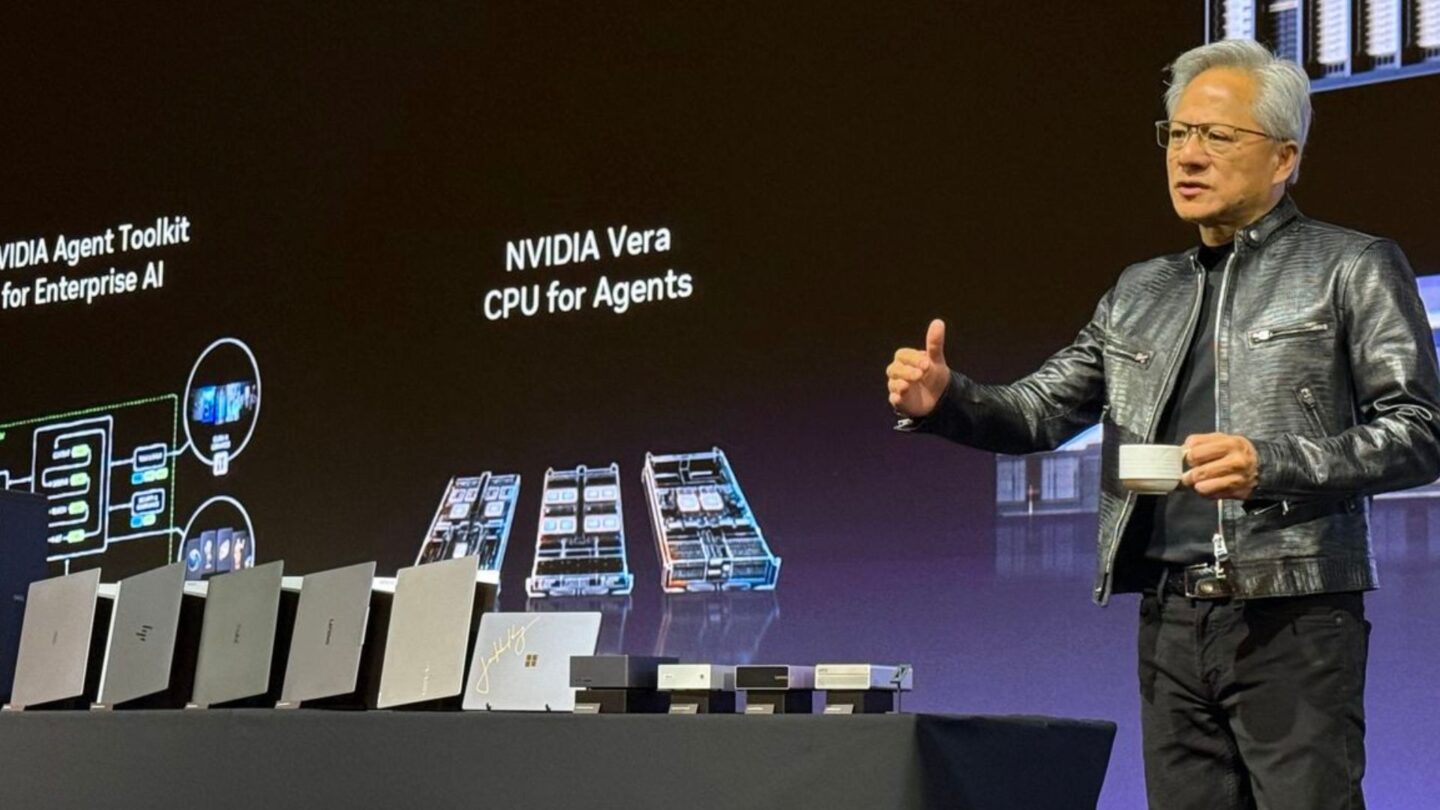
For years, the data centre processor market has prioritised increasing core counts to handle more workloads simultaneously. NVIDIA now believes this approach has overlooked another key factor: individual CPU core speed. As AI systems evolve from conversational tools into autonomous agents capable of complex tasks, the company argues that faster single-threaded performance is becoming increasingly important.
Why NVIDIA believes the CPU industry prioritised too many cores
The shift toward higher core counts and chiplet-based processor designs has shaped data centre CPU development for years, and in an interview with Wccftech, NVIDIA’s Vera team suggested this approach has involved trade-offs, particularly in single-threaded performance and instructions per cycle (IPC). The company believes the growing use of AI agents is prompting a reconsideration of these priorities.
As cloud computing expanded, processor manufacturers concentrated on increasing the number of cores available in each server. More cores let processors handle multiple workloads simultaneously, making them valuable for large data centres that must serve many applications and users. Chiplet-based designs have helped manufacturers achieve this by dividing a processor into several smaller silicon dies rather than building the entire chip on a single, larger die.
However, separating a processor into multiple dies can introduce additional challenges. Data must travel between different parts of the chip, and communication between dies can increase latency. Memory access and coordination between processor components can also become more complicated. These factors may affect performance in workloads that depend heavily on an individual core’s speed. NVIDIA’s position is not that chiplets are inherently unsuitable, but that the industry’s emphasis on adding cores may have come at the expense of other aspects of processor performance.
The growing importance of agentic AI is changing the requirements for data centre processors. Unlike conventional chatbots that primarily generate responses to user prompts, AI agents can perform a sequence of operations to complete a task. They may write and execute code, call external tools, retrieve information, evaluate results and determine the next action. Some of these operations can run simultaneously, but others depend on earlier steps completing successfully.
This dependency makes single-threaded performance particularly relevant. A processor with faster individual cores can potentially complete sequential operations more quickly, reducing the time an AI agent needs to move from one stage to the next. Although adding more cores can improve performance for highly parallel tasks, it does not necessarily speed up operations that must happen in a specific order. NVIDIA believes that a balance between core count and individual core speed is therefore becoming more important.
Processor performance also affects the efficiency of the GPUs used to power AI systems. GPUs can perform large numbers of calculations in parallel, but they rely on CPUs to coordinate workloads, prepare tasks and handle supporting operations. If a CPU takes too long to do this, a GPU may have to wait before processing the next task. This can leave expensive computing resources underused. NVIDIA argues that faster CPU execution could help reduce these delays and keep AI infrastructure operating more efficiently.
How NVIDIA Vera aims to improve single-core performance
NVIDIA’s Vera CPU combines high core counts with faster processing and more efficient communication. The processor features 88 custom Olympus CPU cores on a single, monolithic compute die, alongside a custom LPDDR5X memory subsystem. By placing its cores on a single compute die, NVIDIA aims to reduce the communication overhead of transferring data between separate compute chiplets.
The company also highlights its second-generation Scalable Coherency Fabric, which it says delivers up to 3.4 terabytes per second of bisection bandwidth. According to NVIDIA, this is three times the bandwidth offered by leading x86 processors. Bisection bandwidth measures how much data can cross a division in a system, making it a useful indicator of communication capacity. Higher bandwidth helps processors move information more efficiently between components.
These specifications reflect NVIDIA’s attempt to address the demands of modern AI workloads without abandoning the benefits of multiple CPU cores. Rather than focusing exclusively on increasing the number of cores, the company is placing greater emphasis on how quickly those cores can execute instructions and communicate with other parts of the system. The actual performance benefits will depend on the workloads involved, but the design illustrates NVIDIA’s view that processor architecture must evolve alongside AI computing requirements.
Vera also reflects a broader shift in how NVIDIA sees CPUs used within AI infrastructure. Its Grace CPU has primarily served as a host processor for systems built around powerful GPUs. In contrast, the company expects agentic AI to drive additional demand for standalone CPU racks that can handle tasks such as tool calls, code execution, and reinforcement learning.
These workloads can require substantial CPU resources, particularly when numerous agents operate at the same time. Dedicated CPU systems could handle supporting operations independently, letting GPU resources focus on the calculations they are best suited for. This approach could become increasingly useful as organisations deploy AI agents to manage longer workflows rather than respond to individual prompts.
Why agentic AI could change future CPU designs
NVIDIA’s position does not suggest that GPUs will become less important or that chiplet technology will disappear. Chiplets remain a useful way to build large processors, improve manufacturing flexibility and combine different components. NVIDIA itself acknowledges that chiplet designs can still make sense for particular applications. The issue is whether maximising core counts should remain the dominant priority for every processor designed for AI infrastructure.
As AI agents take on increasingly complex tasks, the performance of the entire computing system matters more than any single specification. High core counts can help process many tasks simultaneously, while fast individual cores can reduce delays in operations that must run sequentially. Memory bandwidth and communication efficiency also influence how quickly information moves through the system.
This creates a more complex set of requirements for CPU manufacturers. Processors must provide sufficient parallel processing capacity while also executing individual instructions quickly and coordinating efficiently with memory, GPUs and other components. The best balance will vary by workload, so future designs may need to be tailored more closely to specific AI applications.
The change could also influence how data centre operators evaluate processors. Core counts and overall throughput will remain important, but they may not fully explain how well a CPU supports AI agents. Latency, single-threaded speed and the time required to complete dependent operations could become increasingly significant measures of performance.
NVIDIA’s Vera strategy reflects this emerging priority. As AI systems move beyond generating answers and begin executing multi-step workflows, CPUs must keep pace with the demands of increasingly autonomous software. The next stage of processor development may therefore focus not only on fitting more cores into a chip, but also on making each core fast enough to support the workloads running across modern AI infrastructure.