



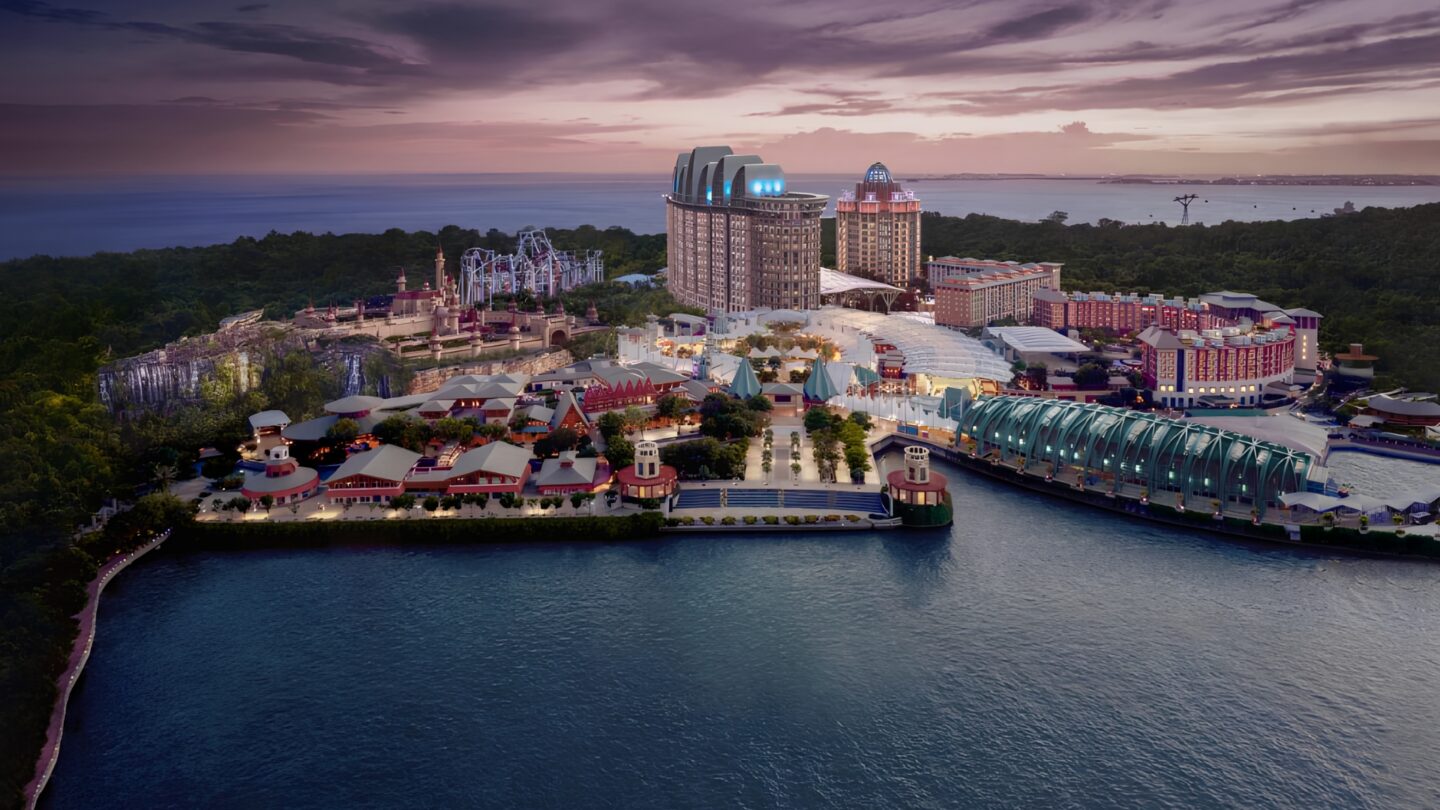
Resorts World Sentosa (RWS) is expanding its use of artificial intelligence to manage cooling demand and energy consumption across the integrated resort, working with Honeywell Technologies on three programmes targeting an additional 6 GWh in annual energy savings. The collaboration will introduce predictive optimisation for district cooling, automated air-conditioning controls and integrated energy management. According to the companies, RWS will become Singapore’s first tourism destination to adopt predictive optimisation technologies for district cooling, building on a connected-building system established in 2023.
Across hotels, attractions and public facilities, the initiative aims to reduce unnecessary energy consumption while maintaining comfortable temperatures. By using occupancy information, scheduling and operating conditions to anticipate cooling requirements, the systems are intended to adjust equipment operation as demand changes.
District cooling upgrades target lower energy consumption
A central part of the initiative involves improving coordination between RWS’ two district cooling plants, which have a combined cooling capacity of 30,000 RT. Integrating the facilities through Honeywell Technologies’ Forge platform will allow them to operate in a coordinated manner and supply cooling from either facility according to operational requirements. The platform will also consolidate energy data, identify potential inefficiencies and provide facilities teams with recommendations to improve energy management across the resort.
By improving plant efficiency from its current level of 0.625 kW/RT to 0.613 kW/RT, RWS aims to reduce the electricity required to produce a given amount of cooling. The planned integration targets 2.0 GWh in annual energy savings, equivalent to approximately the yearly electricity consumption of 438 four-room HDB flats.
Predictive optimisation will complement this integration by forecasting cooling requirements based on occupancy and scheduling. Designed to determine which equipment should operate and when, the system is intended to help the resort avoid producing more chilled water than required while maintaining guest comfort. For Resorts World Convention Centre and Illumination’s Minion Land at Universal Studios Singapore, RWS is targeting energy savings of 5% to 10% through the predictive cooling programme.
Together, the measures form part of the second phase of RWS’ building-efficiency efforts, which targets an additional 6 GWh in annual energy savings. The resort estimates that this would be equivalent to the annual electricity consumption of approximately 1,320 four-room HDB flats.
Air-conditioning systems will respond to room occupancy
Alongside district cooling, the collaboration covers AI-powered air-conditioning controls that adjust cooling according to demand within individual buildings and occupied spaces. For hotel rooms, the planned systems will integrate with hotel management and building management systems, allowing air-conditioning to operate according to actual room occupancy. This is intended to reduce unnecessary cooling in unoccupied spaces while maintaining comfortable temperatures when guests are present.
RWS is targeting energy savings of 20% to 30% for hotel rooms through these controls. According to the companies, an AI-enabled air-conditioning solution has already been deployed at Resorts World Convention Centre and Illumination’s Minion Land. Kess Chiang, Senior Vice President, Resort Services, Resorts World Sentosa, explained that room and venue temperatures should respond to humidity, airflow and changing weather conditions instead of relying on fixed settings, with the objective of maintaining consistent comfort while limiting energy use to what is needed.
Building on existing infrastructure and sustainability targets
The connected, cloud-based building-management system established by RWS and Honeywell Technologies in 2023 was associated with estimated energy savings of up to 4 GWh. The new programmes introduce additional capabilities intended to support future autonomous building operations, with development and testing drawing on the Honeywell Technologies Singapore Sustainable Buildings Centre of Excellence, established with support from the Singapore Economic Development Board. The technologies will be evaluated within RWS’ hospitality and entertainment environment, where cooling requirements vary across accommodation, attractions and other facilities.
Munish Suri, President, Building Automation, India and APAC, Honeywell Technologies, described the importance of coordinating multiple building systems to improve efficiency. “The next frontier in building efficiency is not simply automating individual systems such as HVAC, chillers and district energy infrastructure. It is enabling interconnected systems to work intelligently together, continuously and proactively optimising energy use as conditions change,” he said.
The programmes also support RWS’ ambition to achieve carbon neutrality by 2030, alongside its existing building-efficiency measures and sustainability certifications. According to RWS, nine buildings achieved Green Mark Platinum ratings in 2026. Three buildings, Hotel Ora, The Laurus and Resorts World Convention Centre, hold Platinum Super Low Energy ratings, while Illumination’s Minion Land and the Singapore Oceanarium Research and Learning Centre hold Platinum Zero Energy ratings. The resort also reported that 75% of its built estate had achieved its Green Gross Floor Area target, with two further developments working towards Green Mark certification.