

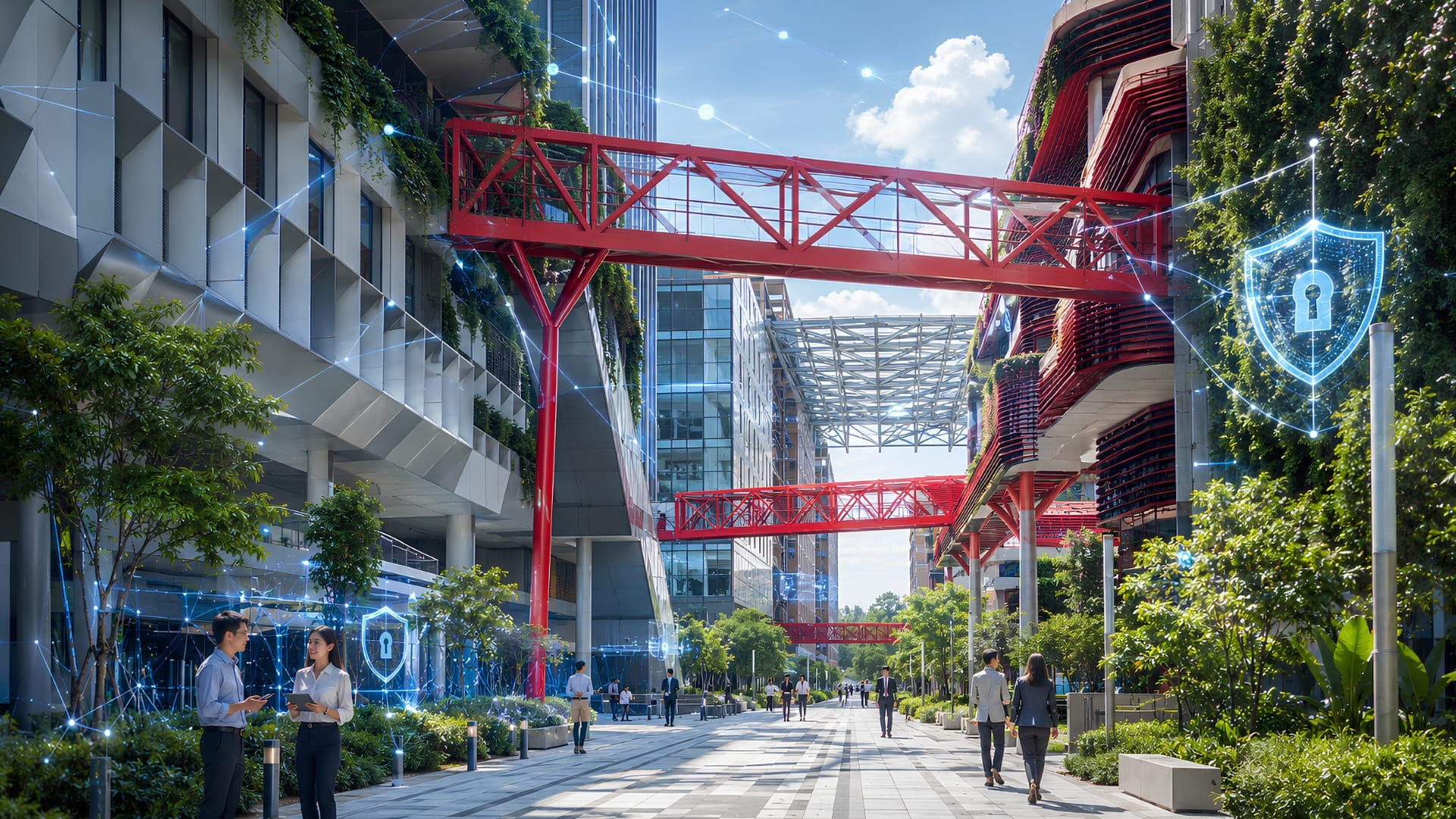
The Singapore Institute of Technology (SIT) and IBM plan to establish a Quantum-Safe Centre at SIT’s Punggol Campus by the end of 2026. This new facility will provide organisations with a dedicated space to assess weaknesses in their existing encryption, test quantum-safe technologies, and plan how their systems need to be updated.
Located within the Punggol Digital District, the centre will serve enterprise leaders, technology practitioners, academic researchers, and government stakeholders. Its work will cover security assessments, technology testing, training, applied learning, and research related to post-quantum cryptography.
Testing systems before migration
The centre will feature a dedicated testbed where organisations can examine their existing security systems, identify potential vulnerabilities, and explore ways to adopt quantum-safe cryptography. To facilitate applied testing, the facility will use IBM Quantum Safe technology, including IBM Guardium Cryptography Manager and IBM Quantum Safe Explorer, supporting experiments directly within the Punggol Digital District live testbed environment.
SIT and IBM are preparing for the possibility that advances in quantum computing could eventually make some encryption methods used today vulnerable to attack. Both organisations also cite the risk of attackers collecting encrypted information and retaining it for possible decryption when sufficiently capable quantum computers become available. Identifying where vulnerable encryption is used forms a vital part of this preparation, allowing the centre to help organisations assess their current security systems and map possible routes towards quantum-safe technologies.
To support these efforts, Michael Osborne, Chief Technology Officer of IBM Quantum Safe, has been appointed as SIT’s first Distinguished Visiting Scientist. He will contribute to the centre’s education, applied research, and industry collaboration initiatives, drawing on his extensive work with enterprises, governments, and critical infrastructure organisations.
Training leaders and technical teams
Alongside the testbed, SIT and IBM will introduce two Continuing Education and Training programmes for the management and technical teams involved in preparing organisations for post-quantum security risks. The one-day Executive Programme is designed for business leaders, board members, chief information security officers, and senior technology decision-makers. Topics covered include modern enterprise cryptography, quantum-related cybersecurity risks, post-quantum cryptography, migration planning, governance and regulatory considerations, organisational transformation, and digital resilience.
A separate three-day Foundation Programme will target cybersecurity practitioners, software developers, engineers, and IT professionals. It will cover enterprise cryptographic architecture along with post-quantum cryptography standards and ecosystems. In addition, the course will focus on identifying where cryptography is used, migration planning, risk management, compliance, security architecture modernisation, as well as organisational readiness and capability planning.
Both programmes are expected to begin later in 2026, combining instructor-led teaching with practical exercises and case studies based on enterprise environments, while the centre will also provide targeted briefings and workshops. Registration details for the training programmes are expected closer to the launch of the Quantum-Safe Centre.
The Cyber Security Agency of Singapore (CSA) has expressed support for the centre, which it views as aligned with Singapore’s efforts to prepare for quantum-safe migration. “CSA welcomes the establishment of the Quantum-Safe Centre in the heart of Singapore’s digital district. Strengthening Singapore’s quantum-safe readiness requires close collaboration across government, industry, and academia. Initiatives like this provide practical support for organisations in building awareness and developing the capabilities needed for quantum-safe readiness and resilience. CSA looks forward to continuing our work with ecosystem partners like IBM and SIT to support quantum-safe migration and strengthen Singapore’s digital infrastructure,” said Ong Kok Wee, Assistant Chief Executive, Policy and Corporate Development at CSA.