


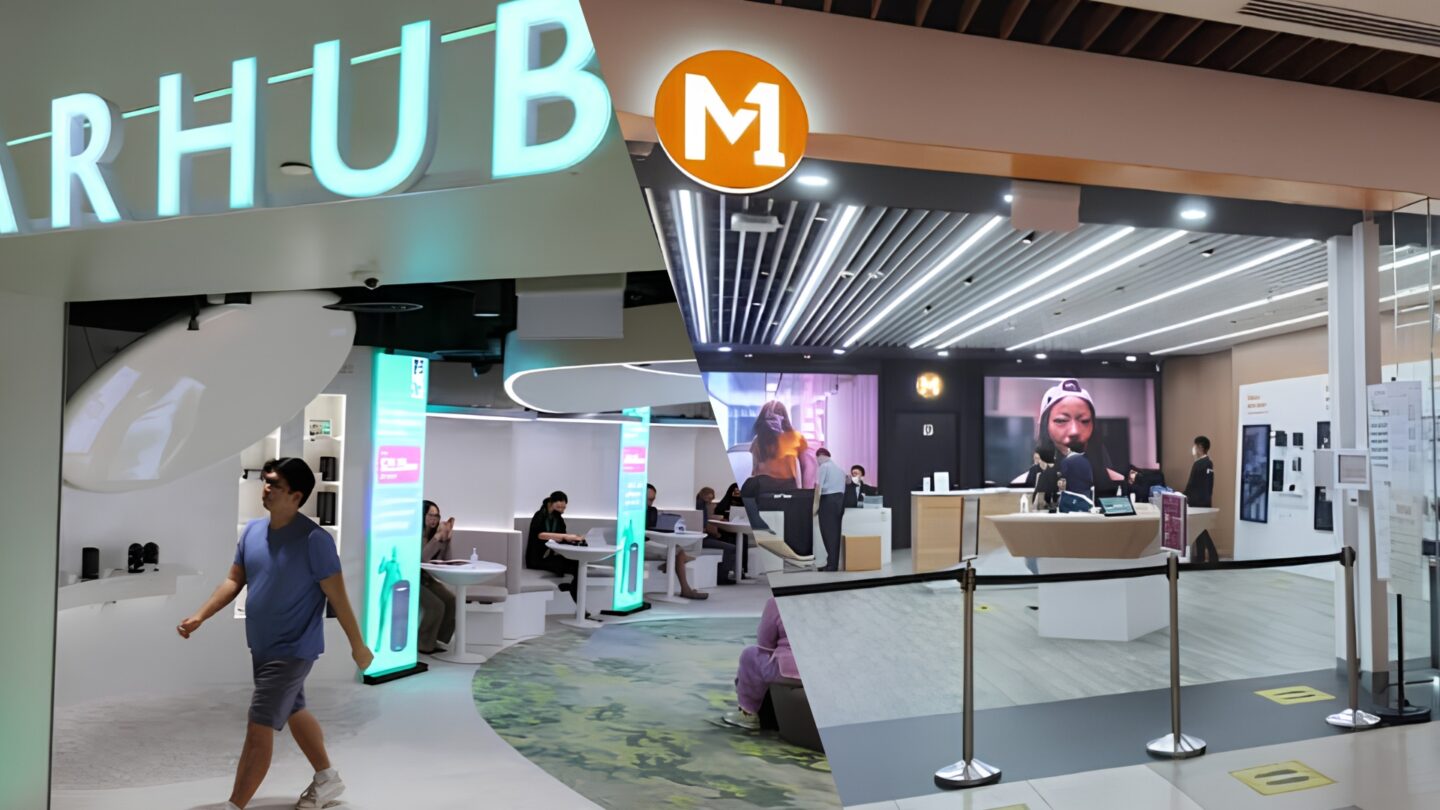
StarHub and Keppel, acting through its subsidiaries, have entered into definitive agreements to combine StarHub and M1 in an all-share transaction. Valuing M1 at an implied enterprise value of S$1.36 billion, the proposed merger would create a Singapore telecommunications group serving 4.1 million customers. Completion is expected by the first half of 2027, subject to regulatory and shareholder approvals alongside other transaction conditions.
By bringing the two operators together, the companies expect to expand revenue opportunities and market share across mobile, broadband, enterprise and digital services. They also estimate annual run-rate cost savings of S$110 million by 2030 across network, infrastructure, commercial and IT functions, representing a net present value of S$1.1 billion.
Keppel to become a substantial StarHub shareholder
Under the proposed transaction, StarHub will issue approximately 651.7 million new shares to M1’s shareholders, accounting for approximately 27.4% of its enlarged share capital. Through its interest in M1’s shareholders, Keppel will effectively hold a 23% stake in the enlarged StarHub, while M1’s other shareholders will hold the remaining 4.4%. M1 will also be contributed with S$380 million in net debt, including other adjustments.
That ownership allocation reflects a valuation of both companies at comparable multiples of enterprise value to earnings before interest, taxes, depreciation and amortisation (EBITDA), using StarHub’s traded valuation as a reference. Both businesses are expected to contribute similar levels of net debt relative to EBITDA at completion, based on EBITDA for the 12 months ended 30 June 2026.
M1’s implied enterprise valuation rests on a pro forma StarHub share value of S$1.50, which incorporates the estimated net present value of operating expenditure savings. On a pro forma basis, the combined group would have generated approximately S$2.6 billion in revenue and S$500 million in EBITDA for the 12 months ended June 2026, alongside a net-debt-to-EBITDA ratio of 2.9 times as of June 2026.
To support the integration of the two businesses, Keppel will remain invested for at least 12 months. Any subsequent disposal of its holdings would be conducted in a measured and orderly manner, subject to market conditions.
Network consolidation and investment in digital infrastructure
Combining the two operators would consolidate ownership of Antina, their existing joint venture. According to the companies, bringing Antina under single ownership is expected to support the integration of spectrum and network assets while accelerating the deployment of network automation and monitoring capabilities.
Greater scale and cash flow are also expected to support investment across 5G, future technologies, fibre, cloud and cybersecurity. At the same time, StarHub and M1 expect the merger to reinforce their positions in the mobile and broadband markets and improve network connectivity, resilience and security.
Nikhil Eapen, CEO of StarHub, argued that consolidation was necessary to meet Singapore’s future digital infrastructure requirements.
“Thirty years ago, Singapore began liberalising its telecommunications market, and StarHub and M1 answered the call. As challengers, we gave Singaporeans greater choice, pushed the industry to compete and helped build one of the world’s best-connected and most competitive telecommunications markets. That chapter is now closing. Four operators competing for the same mature market will no longer deliver the infrastructure Singapore needs next, and consolidation is the answer. Bringing StarHub and M1 together is how two challengers become a builder of Singapore’s digital future. Singapore’s next decade will be shaped by the agility, quality and resilience of the digital infrastructure beneath it. We intend to build it.”
For businesses and government customers, the combined enterprise business would offer connectivity, enterprise networks, secure hybrid multi-cloud platforms, and data and digital solutions. StarHub and M1 expect these capabilities to support the infrastructure requirements of wider AI adoption and the delivery of new digital services at scale.
Manjot Singh Mann, CEO of M1, also pointed to recent telecommunications industry consolidation across Southeast Asia as a precedent, noting revenue increases among the combined businesses.
Customer arrangements and regulatory approvals
Until the transaction is completed, StarHub and M1 will continue to operate and compete independently, with customers retaining their existing plans, services and points of contact. Following completion, the combined group expects to offer a broader range of mobile, broadband and digital services through its premium, digital and value brands, drawing on close to three decades of infrastructure expertise at each operator to use their combined technological capabilities to improve customer service and network performance.
Both companies will begin structured employee engagement, having committed to open consultation, fair treatment and regular updates throughout the process. The proposed merger also requires regulatory approval from Singapore’s Infocomm Media Development Authority and Ministry of Digital Development and Information, while StarHub and Keppel must secure shareholder approval at separate extraordinary general meetings.
Asia Mobile Holdings Pte Ltd, a controlling shareholder of StarHub, will abstain from voting at StarHub’s extraordinary general meeting, while Temasek, a controlling shareholder of Keppel, will abstain from voting at Keppel’s meeting. J.P. Morgan Securities Asia Private Limited is acting as financial adviser to StarHub, while DBS Bank Ltd. is advising Keppel.