



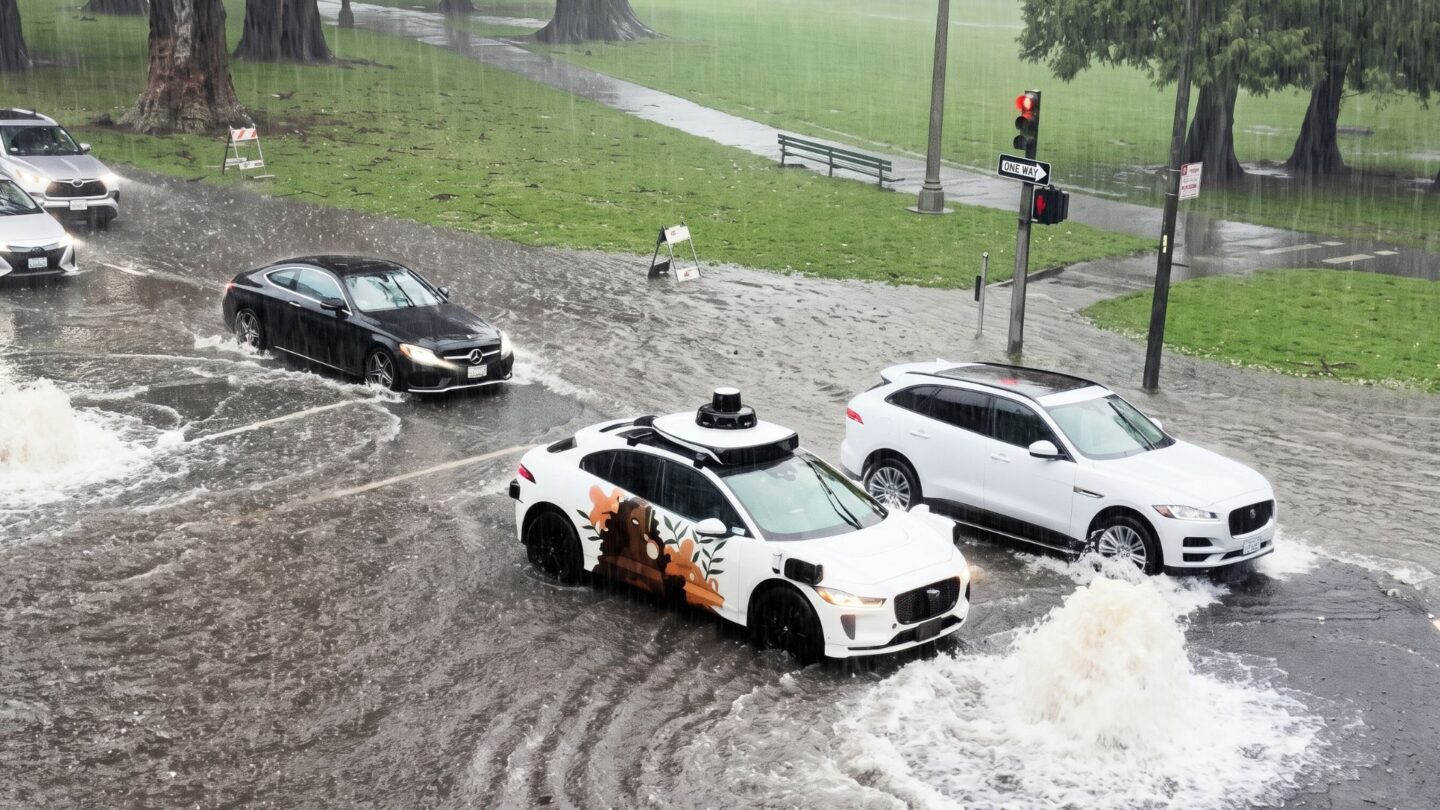
Autonomous ride-hailing company Waymo has temporarily halted operations in San Francisco after severe rainfall left several driverless vehicles stranded on waterlogged roads. The suspension follows reports from local officials and residents showing autonomous taxis blocking traffic across multiple city neighbourhoods during heavy downpours.
District 5 Supervisor Bilal Mahmood confirmed the service interruption on the social media platform X, while customers opening the Waymo mobile application encountered an automated notice explaining the shutdown. According to the message displayed to users, the company stated, “we’re paused for now due to weather”, adding that rides would restart “when road conditions improve, and the forecast looks clear”.
We’ve notified @SF_emergency about the stalled Waymos in the Panhandle, and they have immediately taken action. We have been informed that Waymo service has accordingly been paused today due to stalling in flood zones. We will continue to monitor and address conditions.
— Bilal Mahmood 馬百樂 (@bilalmahmood) November 18, 2026
The decision comes as northern California experiences intense storms at the onset of what meteorologists warn could become a record-breaking El Niño winter season. Heavy precipitation has overwhelmed drainage systems in parts of the city, creating standing water that appears to confuse the sensors and navigation software used by autonomous vehicles.
Traffic disruptions prompt safety shutdown
Before the company officially suspended its fleet, local commuters shared footage online showing driverless cars struggling to navigate submerged intersections. One widely circulated video depicted a Waymo vehicle stationary across a flooded pedestrian crossing, forcing human drivers to swerve into adjacent lanes to pass safely.
In a separate incident captured on social media, another autonomous taxi came to a complete halt in the middle of an active roadway while carrying a passenger. The vehicle’s internal system reportedly advised the rider to remain inside the cabin rather than exit onto the wet street, highlighting the operational challenges posed by sudden urban flooding.
WATCH: Waymo robotaxi gets STUCK in a flooded San Francisco intersection as an atmospheric river swamps the Bay Area > Waymo paused its Bay Area robotaxi service around 11 AM local time, saying it will return when roads improve > Downtown SF got about 2.11 inches of rain before noon, breaking a 1950 record > Comes a day after California’s DMV barred Waymo robotaxis from freeways Self-driving, not self-swimming. -CBS SF, Guardian 🎥 @medriscoll
— James Reichert (@_jamesreichert) November 18, 2026
Technology publication Engadget reached out to Waymo for an official statement regarding the stalled vehicles and the company’s response to the San Francisco weather conditions. At the time of publication, representatives from the Alphabet-owned subsidiary had not yet provided further details on how long the suspension is expected to last.
Recurring weather challenges for autonomous fleets
This latest operational pause adds to a growing list of weather and infrastructure disruptions Waymo has faced over the past year. In December 2025, the company was forced to halt its San Francisco service when a widespread municipal power outage caused traffic signal failures, leaving numerous robotaxis immobilised in the middle of busy thoroughfares.
Standing water has proven to be a particularly persistent obstacle for the company’s self-driving technology across different American cities. In May, Waymo initiated a voluntary recall affecting nearly 4,000 vehicles and temporarily suspended operations after one of its taxis drove directly into a flooded street in San Antonio, Texas.
Although engineers later deployed a software update to help vehicles better recognise and avoid deep water, similar problems soon surfaced elsewhere. Following the San Antonio incident and subsequent software adjustments, Waymo had to pause its service in Atlanta after another vehicle entered a flooded roadway, raising questions about how reliably current sensor suites can judge water depth.
Regulatory pressures mount alongside operational hurdles
The ongoing struggle to manage adverse weather in San Francisco suggests that teaching autonomous systems to handle unpredictable road conditions remains a complex engineering challenge. While human drivers can often assess the depth and current of pooled water visually, automated sensors such as lidar and radar can misinterpret reflective surfaces or submerged hazards.
For now, the weather-related suspension applies exclusively to San Francisco, leaving operations in other metropolitan areas unaffected by the local storms. However, the timing adds pressure for the company, coming just 24 hours after the California Department of Motor Vehicles restricted Waymo from operating on state motorways.
That regulatory decision prompted the firm to voluntarily remove its autonomous vehicles from motorways across all of its active markets nationwide. Combined with the weather-induced halt on city streets, the back-to-back setbacks underscore the technical and regulatory hurdles still facing commercial driverless transport.