


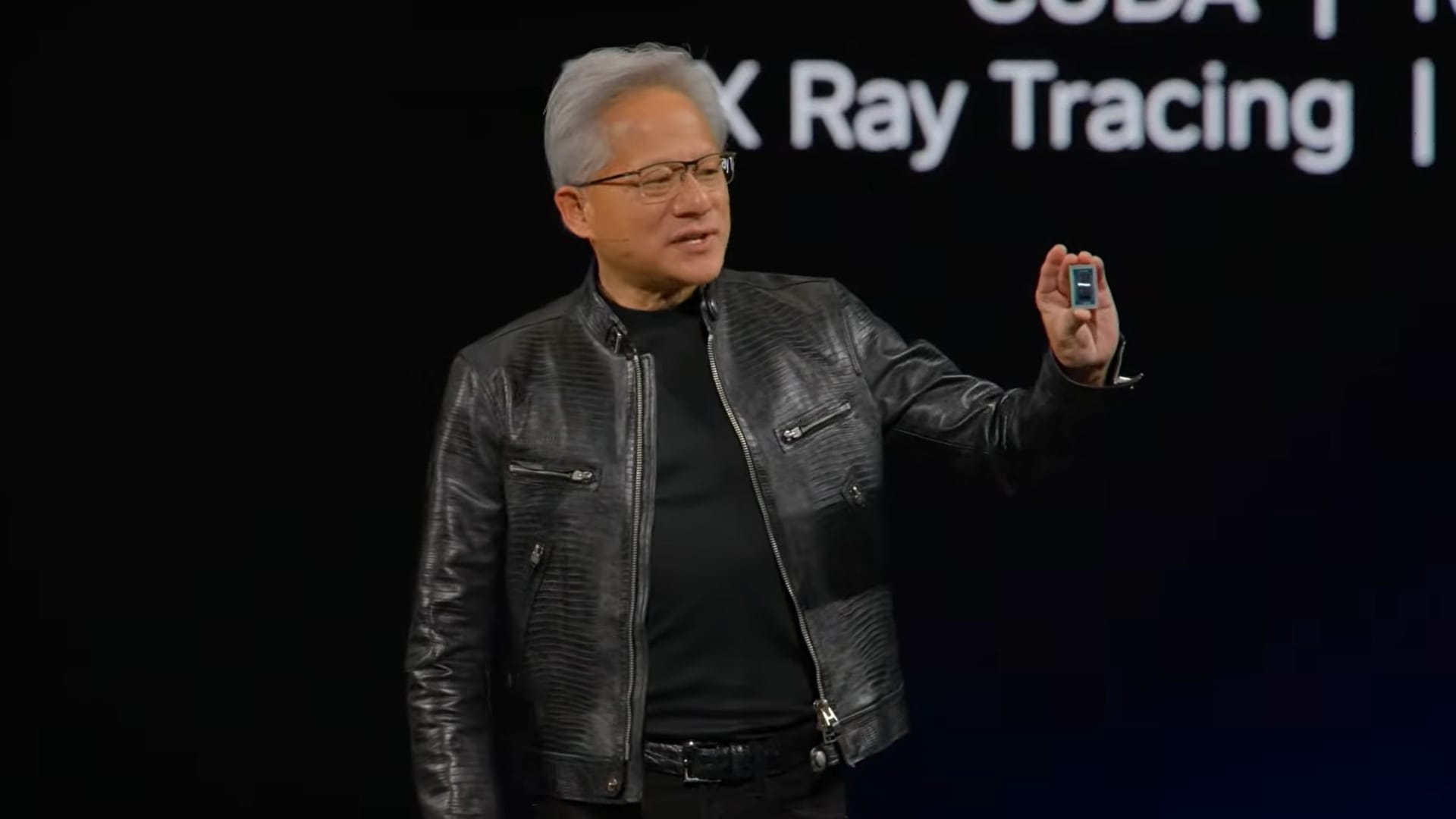
NVIDIA introduced the RTX Spark at the GTC Taipei in Fall 2026 as a new computing platform for Windows laptops and compact desktops. Developed in partnership with Microsoft, with MediaTek contributing to the processor design, the platform combines an Arm-based NVIDIA Grace CPU, a Blackwell RTX GPU and up to 128GB of unified memory, with initial hardware expected in Autumn 2026 from manufacturers including ASUS, Dell, HP, Lenovo, Microsoft and MSI.
The platform sits between NPU-led AI PCs and discrete-GPU mobile workstations. Most Copilot+ PCs rely on neural processing units for lighter background tasks such as transcription, image effects and operating system features, whereas gaming laptops and mobile workstations rely on discrete GPUs that deliver higher graphical performance but carry only 8GB to 24GB of dedicated graphics memory.
By connecting a 20-core Grace CPU and a Blackwell GPU containing up to 6,144 CUDA cores through NVIDIA’s NVLink-C2C interconnect to share a single memory pool of up to 128GB, RTX Spark grants the graphics processor vastly expanded capacity while preserving support for CUDA, TensorRT, OptiX and the wider NVIDIA software ecosystem. This architecture targets developers, researchers and digital creators whose AI models, 3D scenes or generative-media projects exceed existing laptop GPU memory limits, a focus that becomes evident when examining how conventional laptops allocate memory.
How the architecture removes a memory bottleneck
A conventional performance laptop separates system memory used by the CPU from dedicated VRAM used by the discrete GPU. While GDDR memory provides fast data access, it imposes a fixed capacity ceiling, with current GeForce RTX 50-series laptop GPUs offering between 8GB and 24GB of VRAM depending on the model. Even when a laptop contains 64GB or 128GB of system RAM, the GPU cannot address system memory as dedicated graphics memory.
Problems emerge as soon as a project exceeds that allocation. An AI application may swap model components continually with system RAM, a 3D package may unload textures or simplify geometry, and generative-media software may run models sequentially rather than keeping generation, enhancement and upscaling tools active together. These workarounds introduce delays, additional processing steps and compromises in model precision, texture quality or scene complexity, while some workloads cannot run locally at all because the complete dataset exceeds GPU memory. RTX Spark replaces this fixed separation with up to 128GB of unified memory shared directly by the CPU and GPU, supported by updated Windows memory management that allows GPU workloads greater access to the pool.
A local AI agent may need language, speech, vision, search and document-retrieval models to remain active together, while a generative-video workflow may use separate models for creation, motion control, refinement and upscaling. A larger shared pool reduces the need to unload these components or move data repeatedly between system memory and VRAM.
However, the full 128GB is shared across Windows, background applications, the CPU and the GPU, so less will be available to an individual workload. Unified memory also does not remove latency or bandwidth constraints; it gives the GPU access to a larger addressable pool rather than reproducing the behaviour of 128GB of dedicated VRAM. NVIDIA states RTX Spark can support language models with up to 120 billion parameters alongside context windows reaching one million tokens, as well as 90GB-plus 3D scenes, though actual throughput depends on how the architecture separates capacity from processing speed.
Capacity and performance solve different problems
A system with more memory holds a larger workload, but that does not mean it will complete every task faster. RTX Spark is designed primarily to reduce capacity constraints, whereas processing speed varies according to application design, model architectures and system thermals. NVIDIA frames the platform’s performance around a claimed one petaflop of FP4 AI compute via the Blackwell GPU’s fifth-generation Tensor Cores. FP4 represents numbers using four bits, allowing compatible models to consume less memory and process more operations than at higher precision. While this capability can improve inference performance when a model is quantised appropriately and supported by software, it does not describe general CPU performance, gaming frame rates or conventional FP32 computing, nor does it indicate token generation speeds or render times.
Because large language models stream weights continuously through memory during inference, memory bandwidth is crucial to sustained throughput. Evaluating that real-world speed remains difficult, however, as NVIDIA has yet to disclose official memory-bandwidth figures for RTX Spark systems. This makes direct performance comparisons with Apple silicon, AMD Ryzen AI Max or discrete GeForce GPUs premature. In practice, a discrete GPU with dedicated GDDR memory may offer far higher bandwidth over less capacity, completing workloads faster whenever data fits comfortably within VRAM. Thermal management creates a similar trade-off, as RTX Spark operates under lower power and thermal limits inside thin laptops and compact desktops, whereas a larger chassis with a discrete GPU can dissipate heat more effectively and sustain higher clock speeds during prolonged rendering or AI tasks.
Photographers, designers and 4K video editors whose projects already fit within current hardware gain little from 128GB, where storage speed, display quality, fan noise, battery life and application stability affect daily use far more. Gaming performance will likewise depend on thermal limits, power draw and memory behaviour, meaning RTX Spark will not automatically outperform a discrete GPU when both systems perform the same task. Beyond physical thermals and bandwidth, real-world execution will also depend on whether the applications, drivers and development tools surrounding these workloads can run reliably on Windows on Arm.
Software compatibility will shape adoption
RTX Spark is not the first Windows platform to offer up to 128GB of unified memory, as AMD’s Ryzen AI Max+ 395 offers identical maximum capacity, and Apple’s M-series Max processors have used large unified-memory pools across several generations. NVIDIA’s difference comes from combining that capacity with its established software ecosystem, preserving continuity for organisations already using CUDA, TensorRT and OptiX in workstations, data centres or cloud infrastructure. Its NPU can handle Windows AI features while the Blackwell GPU runs larger CUDA, rendering and generative-AI workloads. Unlike the Linux-based DGX Spark development system, RTX Spark is intended to function as a primary Windows laptop or desktop.
That broader role introduces a compatibility risk because the Grace CPU uses the Arm architecture rather than x86 processors from Intel or AMD. Applications built natively for Windows on Arm run directly, while Microsoft’s Prism layer translates x86 and x64 software, including software using AVX and AVX2 instructions and x86 games.
However, translation does not guarantee seamless operation across every professional workflow. A video editor may run while a capture card or specialist plug-in lacks an Arm driver, a developer could encounter unsupported virtualisation tools, or an enterprise may depend on security and device-management software lacking native Arm compatibility. Buyers must validate their entire workflow, including extensions, drivers, peripherals and endpoint tools, as additional memory offers limited value when an unsupported component prevents replacing a workstation.
Who should consider RTX Spark
AI developers form the primary audience for RTX Spark because the expanded memory allows local testing of larger models, extended context windows and multi-step pipelines without cloud compute costs, keeping source code, internal documents and confidential datasets on the physical device. Agent developers may also benefit, although local execution creates separate security requirements. NVIDIA OpenShell is intended to contain agent processes, restrict network and file access, and govern when requests remain on the device or move to cloud models.
Generative-media specialists and 3D artists similarly benefit when workflows combine multiple models for creation, motion control, enhancement and upscaling without lowering scene complexity. Likewise, researchers and engineers relying on CUDA tools can shorten development cycles when remote clusters are unavailable or expensive.
By contrast, the value proposition is much weaker for smaller models, mainstream creative work or cloud-centric services. A conventional GeForce laptop offers better gaming performance, broader x86 compatibility and a lower purchase price, whereas AMD and Apple systems remain compelling choices for software already tailored to their platforms. RTX Spark will ultimately complement cloud infrastructure rather than replace it, as training foundation models, supporting high user counts and scaling across server clusters still require data-centre systems. Cost is tied directly to hardware utilisation, becoming easier to justify when demanding jobs run regularly rather than occasionally.
RTX Spark is, therefore, aimed at three specific conditions, namely projects that exceed conventional laptop GPU memory, software that depends on NVIDIA’s ecosystem, and workflows that benefit directly from processing data locally on device. Anyone who has yet to encounter those memory limits may find that a standard RTX laptop, an AMD or Apple unified-memory system, or occasional cloud access provides a better balance of performance, compatibility and cost.