

As artificial intelligence complicates decisions regarding staffing, productivity, and future space requirements, companies are becoming increasingly reluctant to commit to long-term office leases, according to research from International Workplace Group. The workspace provider found that 60% of surveyed chief executives and chief financial officers believe AI has made it harder to predict how much office space their organisations will need over the next two years. This growing uncertainty is already directly influencing property decisions, with 73% of respondents stating that technological change, including AI, has reduced their willingness to enter lengthy leases or rely on traditional real estate arrangements.
A further 88% of chief executives noted that the rise of AI necessitates greater flexibility in workspace or property arrangements. Businesses now face the distinct risk of committing to physical offices based on workforce assumptions that could quickly shift as automation reshapes job roles, team structures, and daily working patterns.
Companies seek more control over property costs
Nearly all respondents, at 99.8%, indicated that their organisations were actively seeking to convert fixed real estate costs into more variable spending. Flexible arrangements allow businesses to expand or contract their office footprint as demand fluctuates, effectively limiting the capital tied up in lengthy contracts. Cost remains central to these strategic decisions. Indeed, 99% of executives reported that reducing expenditure influenced where their organisations located office space, with 27% identifying cost as the primary factor.
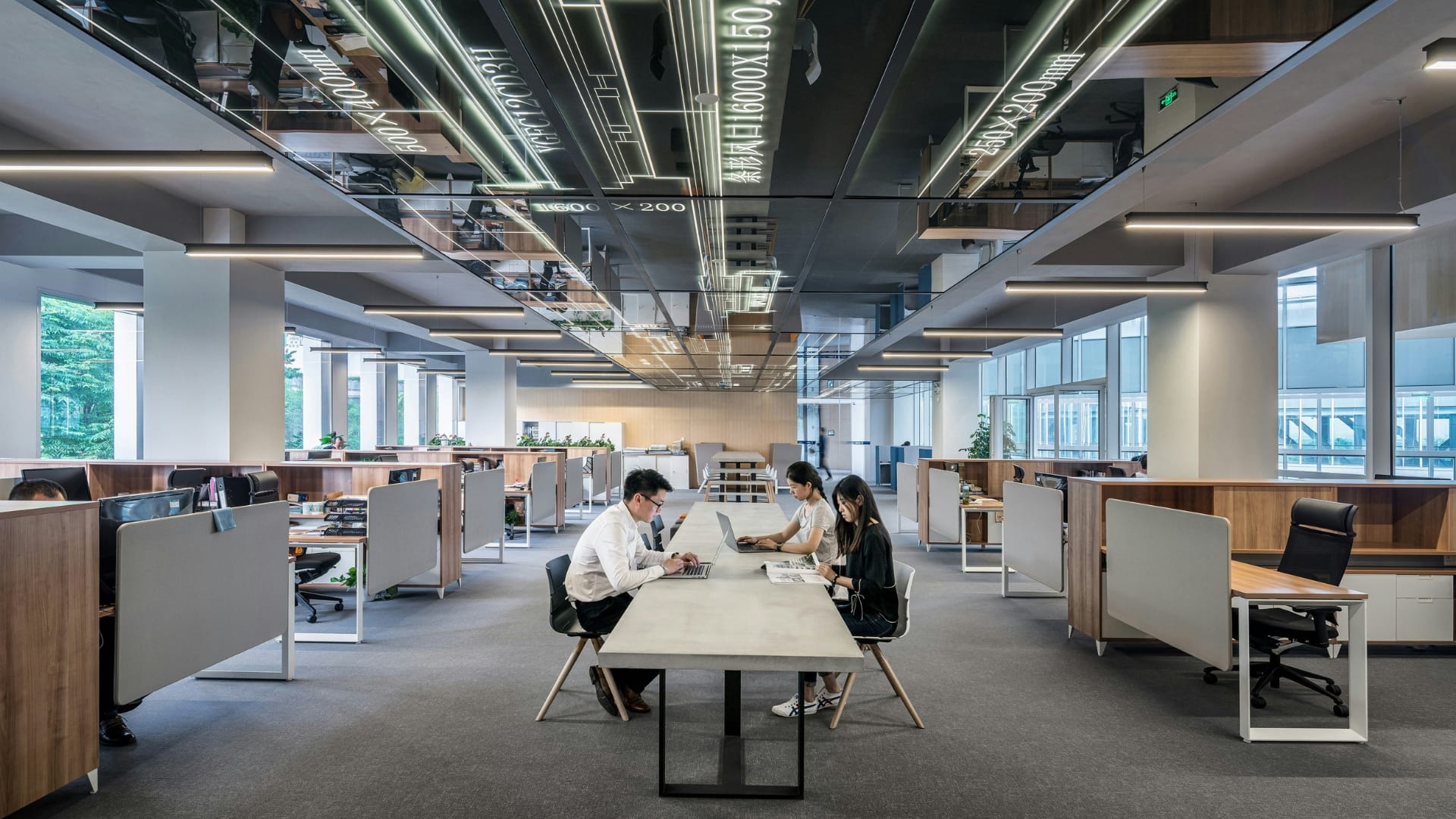
To achieve this financial control, 57% of respondents were investing in hybrid workspace arrangements, while 55% were considering networks of locations closer to employees’ homes, and 52% were examining decentralised workspace models. Establishing a network of smaller locations allows a company to lessen its dependence on an expensive central headquarters while still retaining professional facilities required for meetings, training, and collaborative work.
Technology plays a significant role in dictating where these workspaces are placed. Among those surveyed, 42% said technology enabled remote working and reduced the need for a central office, 39% said it encouraged flexible or decentralised models, and 37% noted that it expanded access to talent situated across different geographical locations.
IWG also noted that hybrid working models offering access to workspaces closer to employees’ homes could yield an 11% productivity uplift over five years. The provider also associated flexible workplace access with employee retention and lower long-term costs.
Singapore demand expands beyond the CBD
In Singapore, rising Central Business District rents and tight supply are actively driving demand in regional areas such as Alexandra and Paya Lebar, according to the report. Establishing offices outside the city centre offers a viable alternative to higher-cost central locations while positioning physical workspaces much closer to residential areas.
Government planning is further supporting this trend by introducing additional employment and technology districts outside the traditional commercial centre. The Urban Redevelopment Authority’s Draft Master Plan 2025 incorporates proposals to develop brownfield areas such as Bishan and Woodlands into integrated business and residential nodes, containing community facilities, housing, and work infrastructure within the exact same districts. In tandem with these plans, Punggol Digital District and Jurong Innovation District are being developed as specialised technology hubs. Meanwhile, one-north has been chosen as the location for Kampong AI, described in the release as Singapore’s first dedicated AI park, designed to gather start-ups, businesses, practitioners, and industry experts inside an environment that combines living and working spaces.
Growing demand for decentralised offices does not necessarily mean companies will reduce their overall property requirements. Research cited from CapitaLand Investment reveals that 86% of Singapore technology companies planned to expand, with AI adoption driving demand for well-located offices equipped with modern infrastructure, amenities, and dedicated areas for collaborative work and remote participation. The findings suggest that some companies may distribute office demand across multiple locations, although the research does not specify whether their total floor area will increase.
Offices retain a defined role in hybrid work
Most executives surveyed by IWG expect the physical office to become more important even as their organisations adopt flexible property models. Specifically, 76% of chief executives stated that its role would increase over the next two years, compared to just 0.8% who anticipated a decline.
These findings indicate that companies are reconsidering the specific function of the office rather than removing physical space from their operating models. Physical workplaces remain essential for fostering collaboration, training, meetings, and organisational culture, whereas individual focus work is increasingly distributed across homes, central headquarters, and regional facilities.
Christian Schmitz, chief executive of International Workplace Group, emphasised that property arrangements needed to respond to changes in technology and operational demand.
“AI is accelerating the pace of change for every business, and companies that want to succeed need workplace strategies that allow them to scale up or down quickly, reduce unnecessary fixed costs and give their people access to high-quality workspace wherever they need it. This is about giving businesses the flexibility to adapt as technology changes. Nobody knows exactly what their organisation will look like in two years’ time, but they do know they need the agility to respond. That’s exactly what the IWG platform is designed to deliver.”