


AMD has expanded its latest FidelityFX Super Resolution (FSR) 4.1 upscaling technology to older Radeon graphics cards, bringing improved gaming visuals to hardware that first launched in 2020. The update is available through the company’s Adrenalin 26.10.1 driver and covers the Radeon RX 6000 series, several years ahead of the original early-2027 timeframe.
The announcement marks a significant development for gamers who have continued using older graphics cards instead of upgrading to newer hardware. FSR 4.1 uses machine learning to improve image quality while helping games run at higher frame rates. By adapting the technology for older GPUs, AMD is extending the benefits of its latest upscaling improvements to a wider range of systems.
The expansion also includes support for selected Ryzen processors and handheld gaming devices. Microsoft has confirmed that the technology will reach the Xbox Series X and Series S consoles, although neither company has announced a specific release date. These developments highlight AMD’s efforts to bring its graphics technologies to more platforms while improving performance across its existing hardware ecosystem.
AMD adapts its machine-learning upscaler for older GPUs
AMD originally introduced FSR 4 with its Radeon RX 9000 series, making the technology exclusive to its latest graphics hardware at launch. Earlier in 2026, the company expanded FSR 4.1 support to the Radeon RX 7000 series. The latest announcement extends compatibility further back, allowing users with Radeon RX 6000 graphics cards to access the newer upscaling technology.
The older graphics cards first appeared in 2020, meaning they predate the latest FSR implementation by several hardware generations. AMD had previously indicated that support for the RX 6000 series would arrive in early 2027. Releasing the update earlier than expected gives owners of these GPUs a chance to benefit from the improvements without waiting for the originally anticipated timeframe.
AMD’s Jack Huynh confirmed that compatibility extends across the Radeon RX 6000 family, from the RX 6900 series down to the RX 6400 class. However, bringing the technology to older hardware required additional engineering rather than simply enabling an existing feature.
FSR 4.1 for CPUs/APUs, Radeon 6000 series and much more related news!
— Frank Azor (@AzorFrank) October 20, 2026
The company has adapted and optimised the INT8 machine-learning model originally developed for the Radeon RX 7000 series. This approach lets the newer upscaler run on the older GPU architecture while accounting for its technical limitations. The work aims to make advanced image reconstruction available to graphics cards not originally designed around the latest version of FSR.
AMD claims FSR 4.1 delivers a noticeable improvement in image quality compared with FSR 3.1. Upscaling technology renders a game at a lower internal resolution, then reconstructs the image at a higher output resolution. This can reduce the processing workload while maintaining a clearer picture than conventional rendering at the same lower resolution.
However, the actual benefits for Radeon RX 6000 owners will depend on individual games, performance settings and hardware configurations. Independent testing will be needed to establish how well the adapted model performs across the supported graphics cards. The driver update provides access to the technology, but it doesn’t guarantee identical results in every game or on every system.
FSR 4.1 expands to Ryzen processors and handheld gaming PCs
The latest expansion is not limited to desktop graphics cards. AMD is also bringing FSR 4.1 to selected Ryzen processors, including Ryzen AI Max systems based on the Strix Halo and Gorgon Halo platforms. Support is also extending to Ryzen AI 9 laptops, giving users of compatible portable computers access to the updated upscaling technology.
AMD has developed a more efficient implementation for lower-powered hardware, recognising that handheld gaming devices operate under tighter power and thermal limits than conventional desktop PCs. The optimised version is intended for systems including the Ryzen AI Z2 Extreme, Ryzen Z2 Extreme and Ryzen Z2 A.
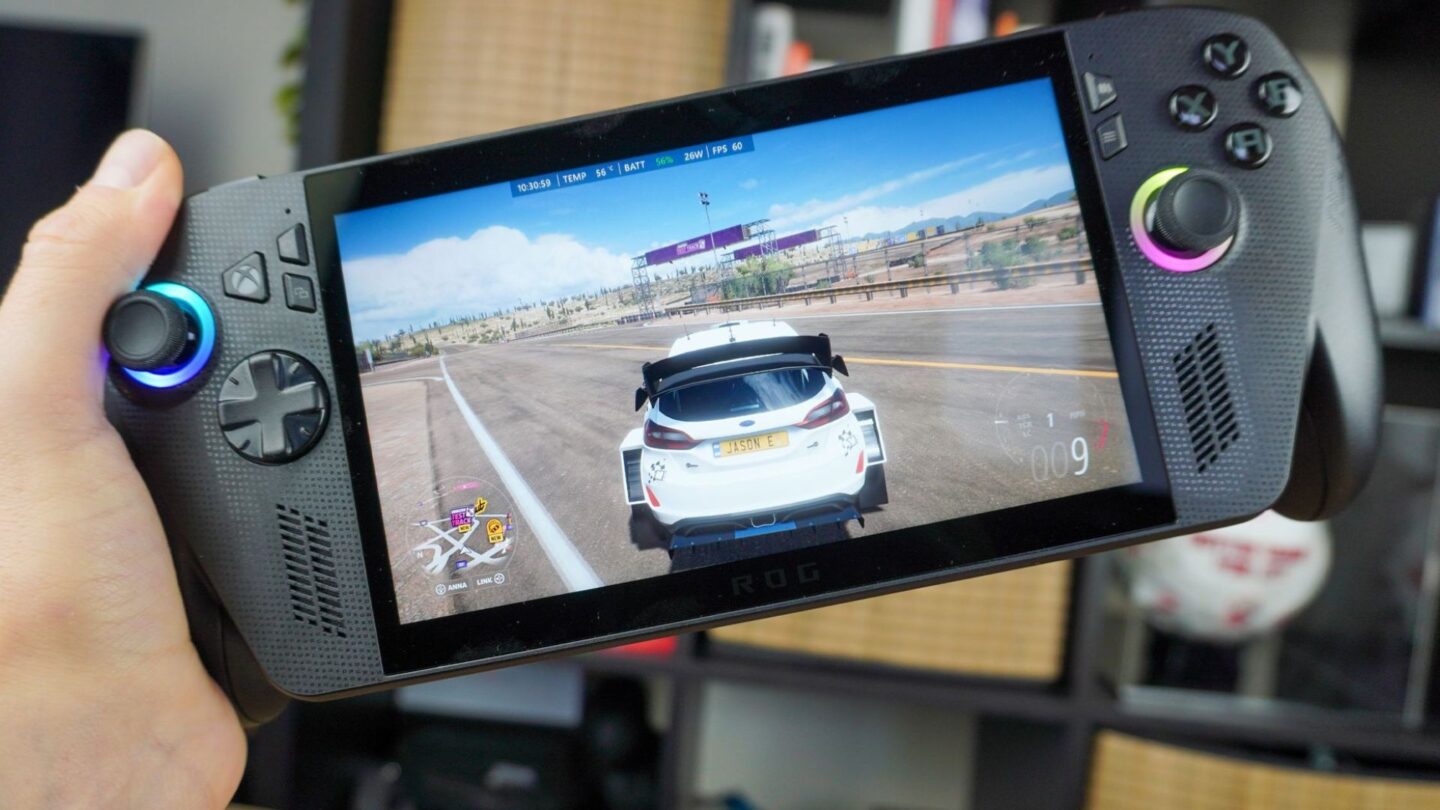
The ASUS ROG Xbox Ally X is one example of a handheld gaming device relevant to this expansion. Such systems rely on integrated graphics and have less power available for demanding games than many desktop computers. Upscaling can therefore be particularly useful, as it may help maintain smoother performance without requiring games to render every frame at the final display resolution.
Nevertheless, FSR 4.1’s arrival does not mean every compatible device will get the feature at the same time. Availability on handheld systems can depend on manufacturers releasing the appropriate drivers and software updates. Users may therefore need to wait for their device manufacturer to deliver a compatible version, even after AMD has announced broader support.
The expansion reflects a wider effort to make advanced rendering features available across different types of gaming hardware. Rather than restricting the latest upscaling improvements to high-end desktop graphics cards, AMD is adapting its software to work across older GPUs, laptops and portable gaming systems.
Beyond upscaling, AMD is continuing to improve other parts of its FSR technology stack. The company is working on more consistent frame pacing for Frame Generation, which creates additional frames to improve perceived smoothness. More consistent pacing can reduce uneven frame delivery, an issue that can affect how fluid a game feels even when the reported frame rate is high.
Ray Regeneration is also expanding to additional games, while support for the Vulkan graphics API is on the way. These developments could broaden the range of games and rendering environments that can take advantage of AMD’s graphics technologies.
Xbox Series X and Series S to receive FSR 4.1
Microsoft has confirmed that FSR 4.1 is coming to the Xbox Series X and Series S consoles. The announcement follows collaboration between AMD and Microsoft to adapt and optimise the technology for Xbox hardware. Although both companies have confirmed the planned expansion, neither has provided a firm launch date.
The move could bring machine-learning-based upscaling improvements to Microsoft’s current-generation consoles, potentially helping developers balance image quality and performance in supported games. However, the precise benefits will depend on how developers implement the technology in individual titles, as well as the requirements and performance targets they choose.
Console support matters because developers work with fixed hardware configurations rather than the wide variety of components found in PC gaming. Optimising FSR for Xbox platforms could let developers explore how the technology fits into their existing rendering systems. More details are needed to determine which games will support it and whether players will get the feature through game updates or broader system-level changes.
AMD has also highlighted the growing adoption of its Redstone technologies, which Huynh said are now present in more than 400 games on Radeon RX 9000-series graphics cards. The figure shows that AMD’s newer graphics features are reaching more titles, although individual features can vary by game.
The announcement also reinforces AMD and Microsoft’s partnership as they prepare for future console hardware. Microsoft has previously revealed that its upcoming Project Helix Xbox system will use AMD technology and support the company’s future FSR Diamond graphics technology. The next-generation platform is expected to build on their ongoing collaboration, although further technical details and launch information remain limited.
For now, the immediate development is the arrival of FSR 4.1 on Radeon RX 6000 graphics cards through the Adrenalin 26.10.1 driver. The expansion lets owners of older hardware access newer upscaling capabilities without immediately replacing their graphics cards. With Ryzen systems and Xbox consoles also included in AMD’s plans, the technology is moving towards a broader role across the company’s gaming ecosystem.