


Stranger Than Heaven, the upcoming action game from Sega and RGG Studio, is shaping up to be a more grounded and brutal entry in the Like a Dragon franchise. While the series blends crime dramas with exaggerated combat, unusual characters, and humorous side activities, the new title emphasises personal struggles, historical change, and the harsh realities of life in early-to-mid-20th-century Japan.
Following an extended hands-on preview of the game’s opening chapters, Stranger Than Heaven appears to offer a significant departure in tone and combat design. The story follows Makoto Daito, a Japanese-American outsider who travels to Japan and tries to build a life in a country undergoing major social and cultural change. Alongside its historical setting, the game introduces a more technical fighting system that demands greater precision and timing.
A five-decade crime story centred on an outsider
Stranger Than Heaven follows Makoto Daito across five different periods: 1915, 1929, 1943, 1951 and 1965. The narrative traces his transformation from a troubled outsider into a prominent figure in Japan’s criminal underworld. His journey begins in the United States, where racial prejudice and an encounter with corrupt police officers force him to flee San Francisco. After arriving in Japan, he faces further discrimination as he tries to establish himself in unfamiliar surroundings.
Daito’s rise takes him through several stages of Japanese society. He begins as a dock and factory worker in Kokura, hustling on the streets to make a living. His ambitions eventually lead him to Osaka, where he becomes involved in the nightclub business and builds his position as an entrepreneur. By the 1960s, his influence has grown considerably, placing him among the important figures connected to the Tojo Clan in Shinjuku.
Although the game tells a standalone story, its narrative also adds historical context to the wider Like a Dragon universe. The franchise began with stories centred on Kazuma Kiryu and his involvement with Japan’s criminal organisations before expanding into a broader collection of characters, locations and gameplay styles. Later entries introduced Ichiban Kasuga and further explored the relationships between ordinary people, organised crime, and the communities around them.
Daito’s story could add background to the world these established characters inhabit. His position in the criminal underworld during the 1960s could connect to the circumstances that shape later events in the franchise, while letting the game focus on a new protagonist and an earlier period of Japanese history.
The tone is also noticeably more serious than that of many previous entries. Like a Dragon games often balance emotional storytelling with absurd encounters, elaborate mini-games and exaggerated humour. Stranger Than Heaven retains some of these familiar elements, but its central narrative places greater weight on Daito’s experiences as a mixed-race Japanese-American man confronting prejudice in two different countries.
Its treatment of discrimination adds another dimension to the traditional crime drama. Daito encounters racial hostility from townspeople, as well as more direct acts of violence that affect his ability to move through the world safely. These interactions help establish an environment that feels more uncomfortable and unpredictable than the settings of earlier games.
However, the opening chapters do not always handle their serious themes consistently. Some storytelling sequences interrupt the narrative’s momentum, while the casting of well-known musicians, including Snoop Dogg, occasionally threatens to pull players out of the historical setting. Nevertheless, the early experience suggests RGG Studio is exploring racism and social exclusion through a protagonist whose identity directly shapes how others treat him.
A more demanding combat system puts precision first
Combat remains central to Stranger Than Heaven, but the new system changes how players approach encounters. Rather than relying on the fast combinations and accessible brawling of previous Like a Dragon titles, the game emphasises individual strikes, defensive timing, and deliberate decisions in fights.
The controls allow players to direct Daito’s left and right arms independently. The controller’s left shoulder buttons handle light and heavy attacks with the left hand, while the corresponding right-side controls manage strikes with the right hand. This setup gives players more direct control over their movements and creates a fighting style that demands close attention to enemy behaviour.
The approach shares some characteristics with combat-heavy games like Elden Ring, but retains the more immediate action associated with the Like a Dragon franchise. Rather than simply overwhelming opponents with repeated attacks, players must learn to create openings, choose the right strike, and respond to incoming blows.
Getting accustomed to these mechanics can take time. An earlier demonstration at Summer Game Fest 2026 reportedly offered little help in learning the system, making encounters particularly difficult for newcomers. Subsequent gameplay improvements and clearer introductory guidance made the experience more approachable during the later hands-on session.
Once the controls become more familiar, the combat offers a stronger sense of physical impact. Daito’s attacks feel forceful, and successful combinations convey the effort required from a fighter who relies on determination and technique rather than effortless spectacle. Weapons and well-timed attacks also provide opportunities to finish encounters in particularly brutal fashion.
Defending against opponents remains one of the more challenging aspects. Players must block incoming attacks from the appropriate direction, alternating between left and right depending on the angle of an enemy’s strike. During intense encounters, recognising these directions and responding quickly can become difficult, particularly when several attacks arrive in succession.
The system therefore introduces a steeper learning curve than the franchise’s more conventional action combat. While this may initially frustrate players who prefer straightforward brawling, the additional complexity could reward those willing to learn its mechanics. The result is a fighting style that makes every punch, block, and counterattack feel consequential.
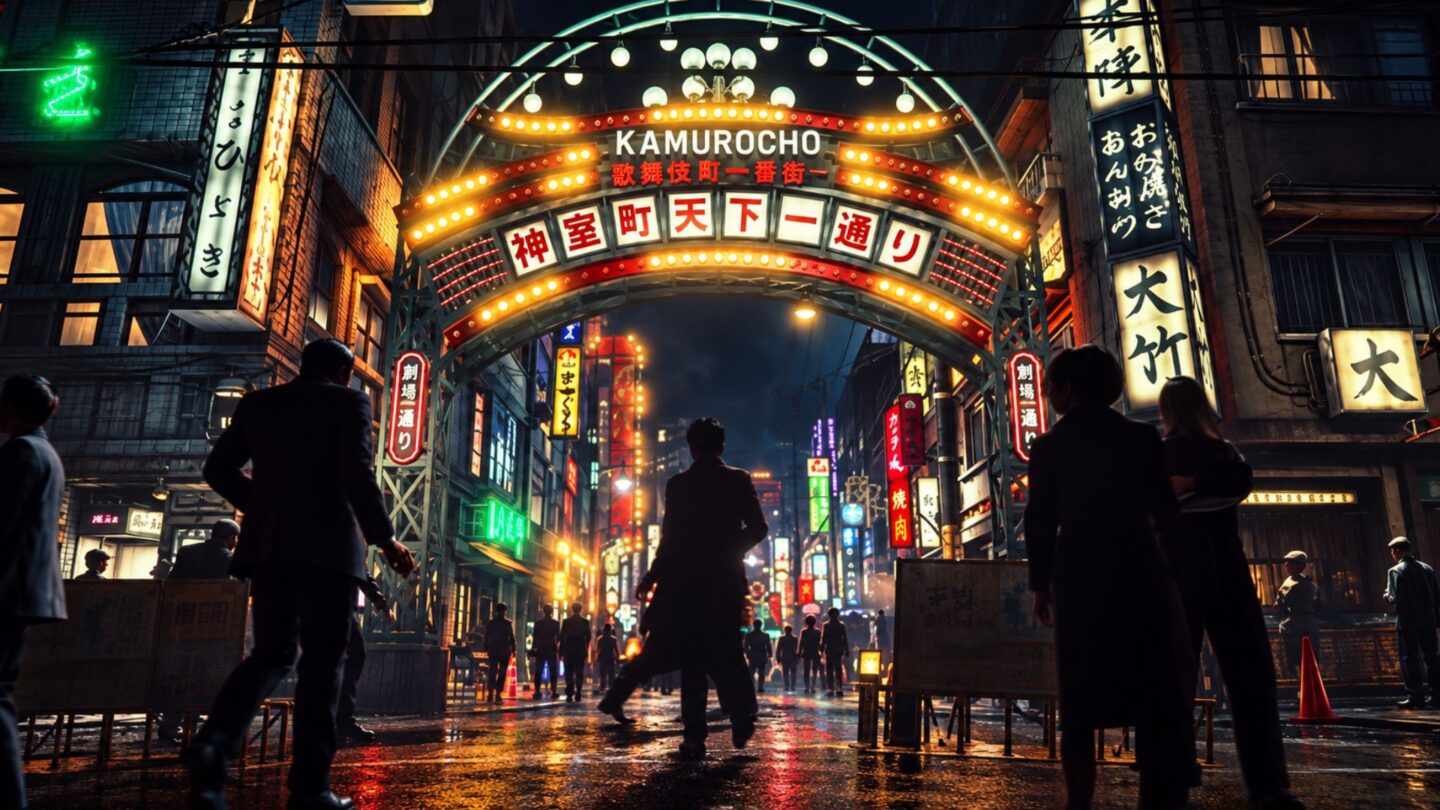
Despite its more serious direction, Stranger Than Heaven has not abandoned the unusual encounters that have helped define the series. During the preview, exploring the streets of Kokura at night led to an unexpected confrontation with a serial killer carrying a knife. The enemy’s evasive movements and dangerous attacks proved hard to overcome, forcing a retreat instead of a victory.
These encounters show how the game blends a harsher atmosphere with the unpredictable activities associated with Like a Dragon. Its world may be more threatening, but it still offers situations that encourage players to explore beyond the main story and discover what the streets contain.
Changing cities and historical detail shape the experience
Stranger Than Heaven’s five-decade structure gives RGG Studio a chance to show Japan undergoing major changes in technology, culture, and urban life. Rather than using a single historical setting throughout the campaign, the game follows Daito as he moves between different periods, allowing its locations and surrounding communities to develop alongside him.
The familiar semi-open-world structure remains. Players can explore towns, encounter opponents, and take part in activities outside the main objectives. However, these spaces serve a broader purpose by placing Daito within distinct historical environments. The streets of Kokura and Osaka provide different stages in his development, while the later setting of Shinjuku reflects the world he eventually helps shape.
This changing backdrop is one of the preview’s strongest elements. The evolution of Japan’s cities offers a visual and narrative way to communicate the passage of time, showing how everyday life changes as the country moves towards the modern era. The environments are not simply fight locations; they also provide context for Daito’s ambitions and the challenges he faces.
The historical approach also supports the game’s more personal storytelling. As an outsider, Daito must navigate unfamiliar customs, social expectations and hostility from people who regard him as different. His experiences give the exploration a purpose beyond completing missions, as encounters with ordinary residents can reinforce the story’s central tensions.
Even so, balancing historical realism with the franchise’s established style remains a potential challenge. Celebrity casting, exaggerated encounters and occasional pacing issues could weaken the impact of the more serious material. The full game’s success in balancing these elements will be clearer once players experience the complete narrative, not just its opening chapters.
The preview nevertheless suggests that Stranger Than Heaven is pursuing a distinct identity within the franchise. Its more demanding combat, multi-decade narrative and focus on discrimination distinguish it from the adventures of Kiryu and Kasuga without abandoning the exploration and street-level action that define the series.
Stranger Than Heaven is scheduled for release on 17 January 2027 for PC, PlayStation 5 and Xbox Series X|S. The hands-on experience suggests that RGG Studio is taking a bold approach to its established formula, placing a troubled outsider at the centre of a crime story shaped by personal hardship and a changing nation. If the full release maintains the narrative’s emotional focus while refining its combat and pacing, the game could deliver one of the franchise’s most distinctive historical adventures yet.