



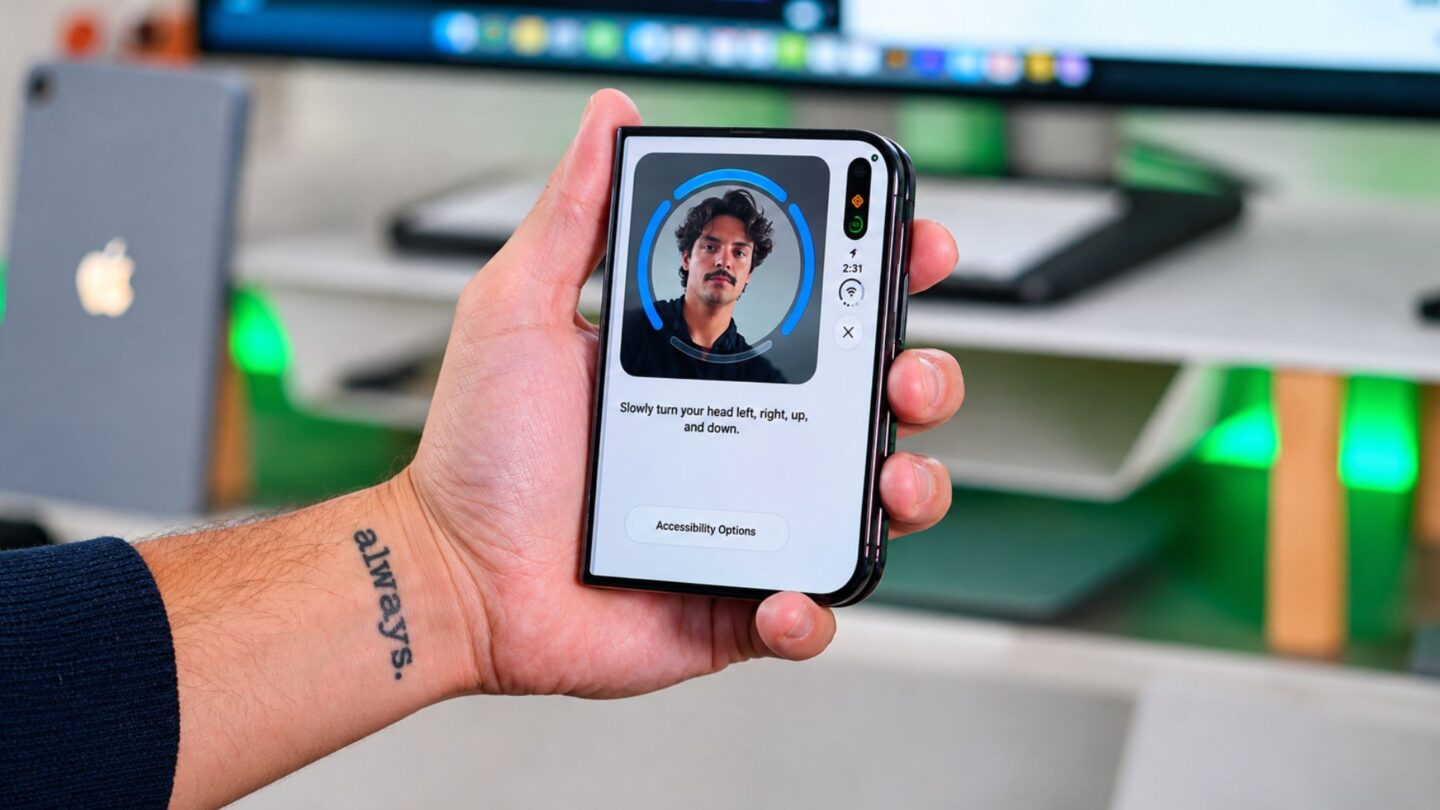
Apple introduced a new facial recognition feature for the iPhone Duo in the latest iOS 27.3 developer beta, giving users an alternative to Touch ID for unlocking their devices. The feature, called Unlock with Front Camera, uses the phone’s standard front-facing camera rather than the dedicated TrueDepth hardware found in other iPhone models.
The addition addresses one of the main criticisms of Apple’s foldable smartphone since its introduction: the absence of Face ID. While earlier reports suggested that a future generation could include the hardware needed for Apple’s full facial recognition system, the latest software update indicates that the company is exploring a different approach to improve the unlocking experience on its existing device.
iOS 27.3 beta introduces a new facial unlocking option
The second developer beta of iOS 27.3, released on Monday, introduces Unlock with Front Camera as a new option for iPhone Duo owners. The setting is available under Touch ID & Passcode in the iPhone’s Settings app, letting users enable facial recognition as an additional way to access the Lock Screen.
The feature differs from conventional Face ID because the iPhone Duo lacks Apple’s TrueDepth camera system. That hardware uses specialised sensors to map a user’s face in three dimensions, providing the security technology behind facial authentication on supported iPhone models.
Instead, the foldable device features standard front-facing cameras on its external and internal displays. These cameras were not designed to provide the same depth information as TrueDepth, which explains why Apple originally relied on Touch ID rather than Face ID for device authentication.
According to Engadget’s testing, the new functionality works on an iPhone Duo running the iOS 27.3 beta. Its implementation suggests Apple has developed a simpler facial recognition system that can identify users through a conventional camera without extra hardware.
During setup, Apple makes the security limitations clear. The software warns that the feature “provides convenience” but “isn’t as secure as Touch ID or Face ID.” This distinction indicates that the company does not consider front-camera recognition a full replacement for its established biometric authentication systems.
Despite the limitations, initial testing suggests that the feature performs reasonably well. Engadget reported that facial unlocking was faster than Touch ID during its tests and could not be fooled by simply pointing a photograph of the user’s face towards the camera. It also appeared to function in some low-light environments, although it did not work in complete darkness.
Apple limits facial recognition to basic device unlocking
Although Unlock with Front Camera offers a more convenient way to access the iPhone Duo, Apple has restricted its functionality to reduce potential security risks. The feature can only bypass the Lock Screen and cannot authorise more sensitive activities.
Users will still need Touch ID to access protected applications, view saved passwords or authorise payments through Apple Pay. These restrictions ensure that facial recognition through the standard front camera does not become an alternative for transactions or actions requiring stronger authentication.
Apple has also introduced a temporary security restriction that turns off the feature if the device has not been used for more than 45 minutes. This means users may need to rely on Touch ID again before facial unlocking becomes available.
Another limitation concerns the iPhone Duo’s internal display. Unlock with Front Camera does not work through the camera located beneath the foldable screen. This may be related to the lower resolution of under-display cameras, which can make facial recognition more difficult compared with conventional front-facing camera systems.
The approach resembles Apple’s implementation of facial recognition in its recently announced HomeView device. That product also lacks Face ID and uses a simpler facial recognition method to identify the person interacting with it and display personalised content.
By bringing a similar system to the iPhone Duo, Apple appears to be extending its use of camera-based identification across products without dedicated facial recognition hardware. However, these devices have different security requirements so that the technology may serve different purposes depending on the product.
The new unlocking option could also address some of the concerns raised about the iPhone Duo’s existing biometric system. In its review, Engadget described Touch ID as accurate but somewhat slower than expected when unlocking the device. Adding front-camera recognition could therefore provide a quicker alternative for everyday use, particularly when users want to check notifications or access the home screen.
The iOS 27.3 beta includes another setting specifically designed for the foldable device. Users can now choose to lock the iPhone Duo when it is closed rather than automatically transferring the displayed content to the external screen. This gives owners another way to control how the device behaves when switching between its open and closed positions.
Public release of iOS 27.3 remains unconfirmed
Unlock with Front Camera is currently limited to the iOS 27.3 beta programme. Developers and users participating in Apple’s beta testing programme can explore the feature, but it has not yet been confirmed as part of a public software release.
Apple has not announced an official launch date for the completed iOS 27.3 update. However, based on the anticipated release schedule, the software is expected to reach eligible users around mid-December.
The current beta offers an early indication of how Apple plans to improve the iPhone Duo’s usability without adding camera hardware. Rather than waiting for a future generation of the foldable device to receive a TrueDepth system, the company appears to be addressing the immediate demand for a more convenient unlocking method through software.
The new feature also highlights the limitations of using conventional cameras for biometric authentication. While front-camera recognition may offer faster access to the Lock Screen, its reduced security means Touch ID and Face ID will remain important for protecting sensitive information and approving payments.
It remains unclear whether Apple will retain the feature in the final version of iOS 27.3 or make further adjustments before its public release. Its performance during beta testing could help determine how widely the company adopts this approach on future devices.
For iPhone Duo owners, the update offers a practical improvement to everyday device access, although it does not provide the full facial authentication experience available on other iPhone models.