



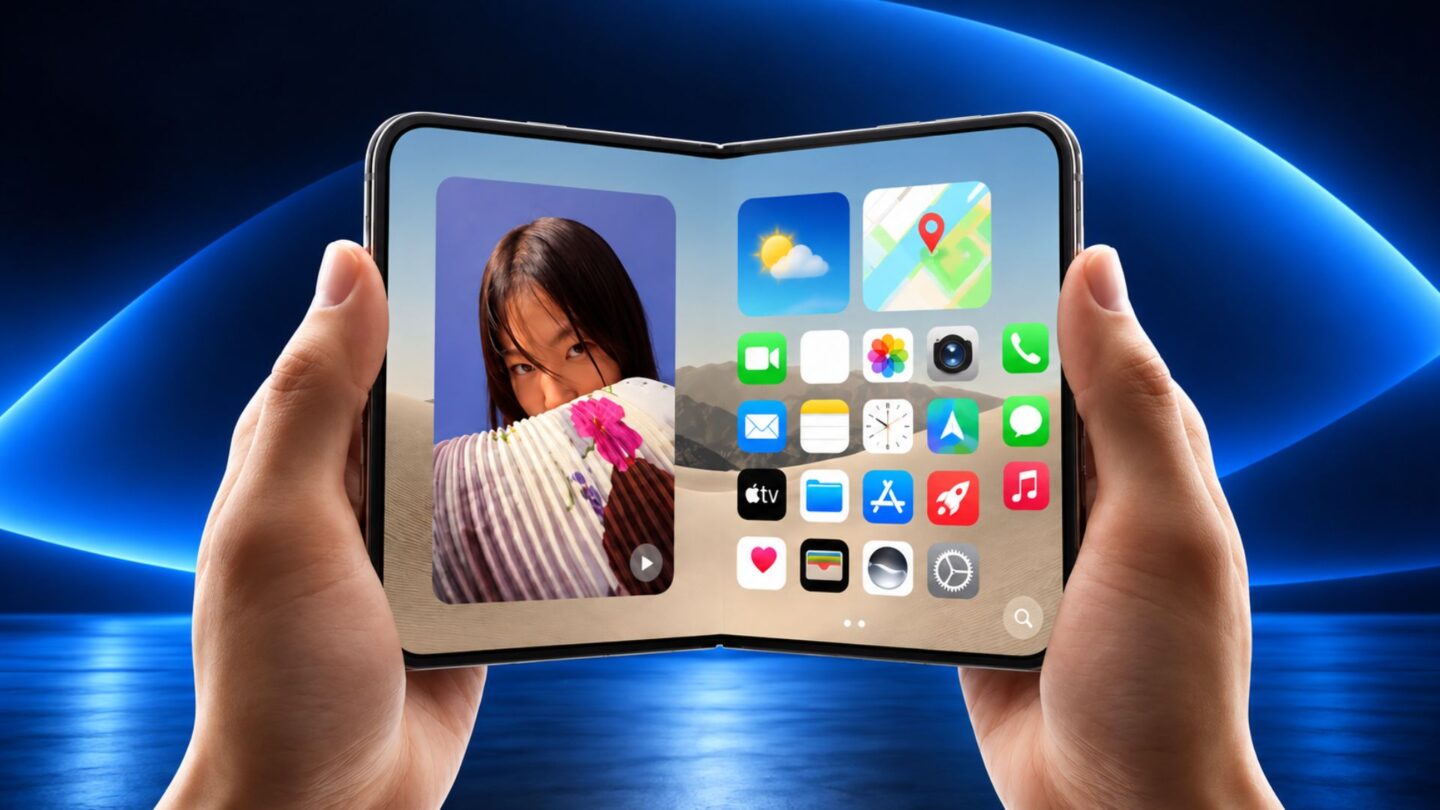
Apple is reportedly exploring ways to bring Face ID to its next-generation foldable iPhone, with early prototypes of the expected iPhone Duo 2 featuring facial recognition beneath the outer display.
The development could address one of the main compromises of the first-generation iPhone Duo, which uses Touch ID instead of Face ID. While the foldable has received broadly positive early reviews, its fingerprint-based unlocking system may feel like a step backwards for users accustomed to Apple’s facial recognition technology.
According to Bloomberg journalist Mark Gurman, Apple is actively developing under-display Face ID, suggesting the company is working to make its facial recognition system compatible with the design requirements of its foldable smartphone. The technology could help the manufacturer deliver a more familiar iPhone experience in future foldable models.
Apple explores under-display Face ID for its next foldable
In his Power On podcast, Gurman said Apple is “actively working” on under-display Face ID and that prototypes of the iPhone Duo 2 already incorporate the technology into the device’s outer display.
The report suggests Apple is exploring ways to hide more of its front-facing hardware beneath the screen. This would let the company reduce visible cutouts while preserving features that have become central to the modern iPhone experience.
Apple has already taken steps towards this goal with its latest smartphone designs. The iPhone 18 Pro and iPhone 18 Pro Max reportedly feature a smaller Dynamic Island, suggesting the company continues exploring ways to move components beneath the display—the Dynamic Island houses elements associated with the front-facing camera and other sensors.
The first-generation iPhone Duo also represents a step forward in Apple’s display technology, as it includes the company’s first under-display camera. Although the feature moves toward a cleaner screen design, integrating Face ID presents a different technical challenge because facial recognition requires multiple components to work together accurately.
If Apple can place Face ID beneath the outer display, the next foldable could look more seamless while restoring a familiar unlocking method for existing iPhone users. However, the reported prototypes don’t confirm the technology will make it into the final product, and Apple hasn’t officially announced the iPhone Duo 2 or its specifications.
Why the first iPhone Duo uses Touch ID instead
Equipping a premium foldable smartphone costing around US$2,000 with Touch ID may seem unusual, especially since Face ID has been a defining feature of Apple’s flagship iPhones since the iPhone X launched in 2017.
The first-generation iPhone Duo instead returns to fingerprint recognition, a system that was last used on an iPhone with the iPhone SE in 2022. Touch ID remains available on selected Apple devices, including some MacBook and lower-priced iPad models, but it has largely disappeared from the company’s main smartphone range.
Early assessments suggest that Touch ID works reliably on the iPhone Duo, although unlocking the device can take longer than users accustomed to Face ID might expect. This difference may be especially noticeable for people who have relied on facial recognition for years.
The foldable’s design could help explain Apple’s decision. Unlike a conventional smartphone, the iPhone Duo can be used in multiple orientations and offers both an outer display and a larger internal screen. Adding Face ID to both displays could require extra sensors and a more complex hardware setup.
Such an approach could increase manufacturing complexity and raise the price of a device already significantly more expensive than Apple’s conventional iPhones. Adding facial recognition to only one display might also create an inconsistent experience, depending on how the phone is positioned and used.
Gurman has also highlighted the challenge posed by the iPhone Duo’s particularly thin display. Fitting the additional components required for Face ID into such a limited space would be difficult, especially if Apple wants to maintain the same design and functionality across both screens.
These constraints suggest that Touch ID may have been a practical compromise rather than a deliberate move away from facial recognition. By relying on fingerprint authentication, Apple could bring its first foldable to market without solving every hardware challenge associated with a fully integrated Face ID system.
iPhone Duo 2 could bring further design improvements
The reported Face ID prototypes indicate that Apple is continuing to refine the foldable concept beyond its first generation. If the company can overcome the challenges of integrating sensors beneath the display, the next model could offer a more consistent experience for users switching between the inner and outer screens.
Under-display facial recognition would also support Apple’s broader effort to reduce visible front-facing hardware. A successful implementation could eventually make displays appear less interrupted by cameras and sensor cutouts. However, the final result would depend on the technology’s performance and limitations.
Another potential addition to the next foldable is the Action button, which Apple introduced with the iPhone 15 Pro. According to Gurman’s reporting, the button could appear on a future iPhone Duo 2, bringing another familiar element from Apple’s conventional smartphone range to its foldable device.
The Action button can be configured to perform selected functions, giving users a shortcut to frequently used features. Including it would align the foldable’s controls with those of other premium iPhones while giving Apple another chance to refine the hardware layout.
However, the reported features remain part of Apple’s development work rather than confirmed specifications. Prototype hardware can change considerably before a product reaches consumers, and Apple makes no guarantees that every feature under consideration will appear in the finished device.
For now, the first iPhone Duo represents an early stage in Apple’s foldable smartphone strategy. Its dual-display design, under-display camera, and Touch ID highlight the compromises involved in introducing a new form factor. The reported work on the iPhone Duo 2 suggests that Apple is already exploring ways to address those limitations, with under-display Face ID potentially becoming one of the most significant improvements in a future release.