Reports suggest that Apple’s long-anticipated foldable iPhone could face delays after unexpected issues emerged during early production testing, even as new dummy units offer a glimpse of the device’s possible design.
Recent industry discussions had pointed to a launch later this year, with September widely viewed as the likely timeframe. However, fresh information from supply chain sources now indicates that the schedule could slip if technical challenges are not resolved in time.
Early production challenges raise uncertainty
According to a Nikkei Asia report, a source familiar with the development process said the early stages of testing had revealed more complications than initially expected. The individual stated, “It’s true that more issues than expected have emerged during the early test production phase of the iPhone Fold, and additional time will be needed to resolve them and make necessary adjustments.”
The source further warned that “the current situation could put the mass production timeline at risk.” While this statement does not confirm a delay, it highlights growing uncertainty around the project’s timeline. The suggestion that mass production could be affected has raised the possibility that the foldable handset may not reach consumers as soon as anticipated.
Apple had reportedly aimed to introduce its first foldable iPhone in September, in line with its typical autumn launch cycle. Should production problems persist, the launch window could slip into 2027, marking a notable shift for a product widely anticipated within the industry.
Despite the concerns, there are indications that development has not stalled entirely. Chinese technology leaker Instant Digital has claimed that the foldable iPhone has already entered trial production at Foxconn, Apple’s long-time manufacturing partner. Trial production is typically a stage used to test manufacturing processes and identify potential faults before scaling up output.
However, it remains unclear whether this information reflects the current production status. It is possible that the reported issues emerged during this trial phase, which would explain the need for further adjustments before full manufacturing begins.
Dummy units hint at design and features
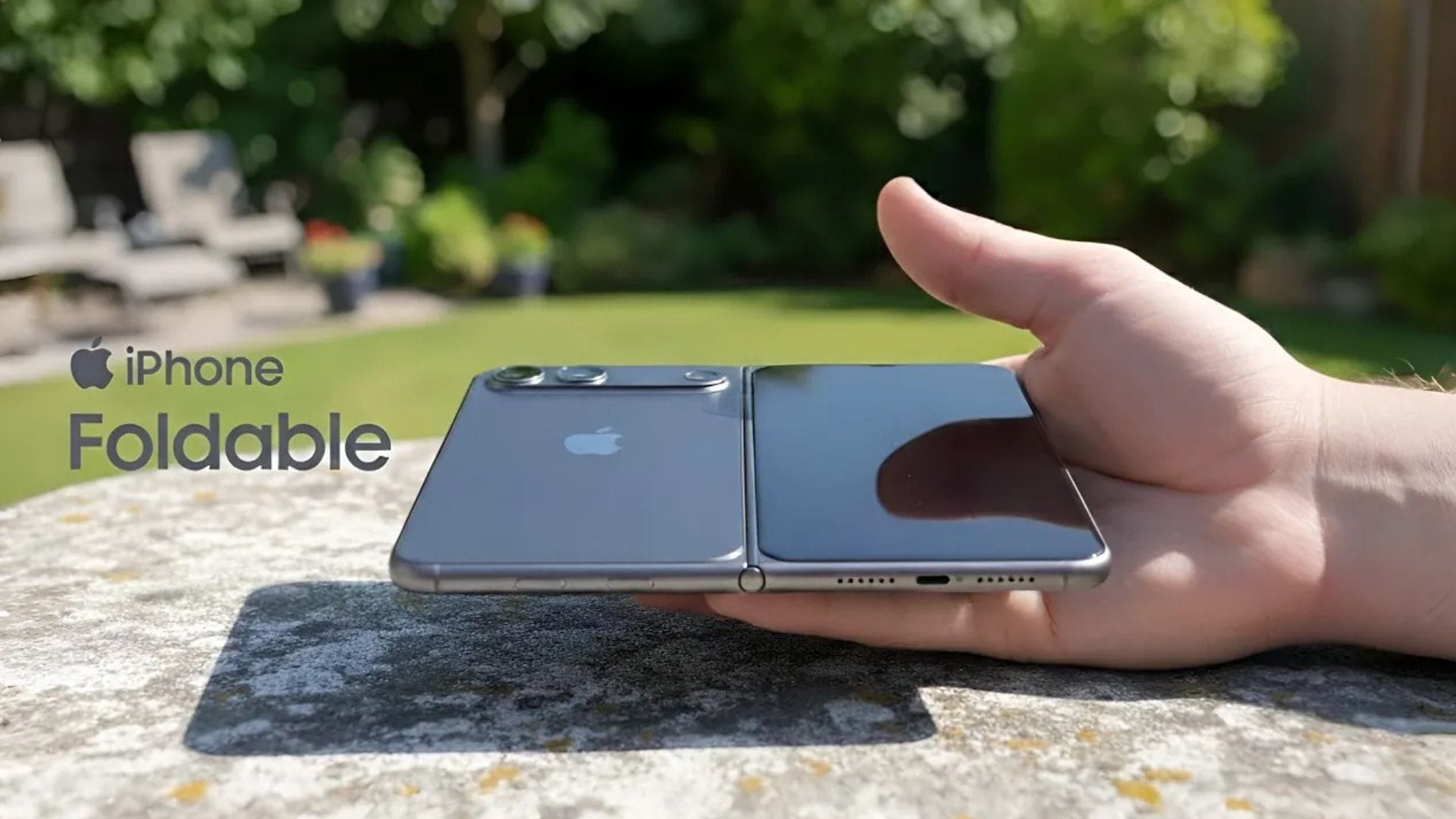
While official details remain scarce, recent images of dummy units have provided an unofficial preview of the foldable device’s possible design. The units were shared by industry insider Sonny Dickson, who has previously published accurate previews of upcoming Apple hardware.
Exclusive First Dummies of what the final size of the iPhone Fold, iPhone 18 Pro and iPhone 18 Pro Max will look like. pic.twitter.com/X9P9uBK12p
— Sonny Dickson (@SonnyDickson) April 7, 2026
The images show the foldable iPhone placed alongside dummy models believed to represent the iPhone 18 Pro and iPhone 18 Pro Max. These side-by-side comparisons offer a sense of scale and suggest that the foldable model may not feature a dramatically larger display than the Pro Max variant.
Based on the available visual details, the foldable device appears to feature a dual-lens rear camera system. This aligns with earlier rumours suggesting that Apple may prioritise a thinner design over additional camera hardware, at least in the first generation of the product.
One detail that drew attention was the apparent absence of a MagSafe ring on the foldable dummy unit, despite the feature being visible on the iPhone 18 Pro models shown in the same image. However, industry observers caution against drawing firm conclusions from such prototypes. Dummy units are often simplified versions created for accessory testing and may omit components that will appear in the final product.
These early visual clues offer only a partial picture of the device’s final form. Apple has not publicly confirmed specifications, and the company is known for refining hardware design until late in the development cycle.
Launch expectations remain uncertain
Despite the reported challenges, industry watchers have not entirely ruled out a launch later this year. The September window remains a possibility, particularly if Apple can resolve the identified production issues within the coming months.
Some earlier leaks suggested that Apple might announce the foldable iPhone in September but delay shipping until October. Such staggered releases are not uncommon for new product categories, especially when manufacturing volumes are still ramping up.
The latest reports suggesting technical complications make this scenario increasingly plausible. Even if the device is unveiled on schedule, availability could be limited at first, with wider distribution following after further production stabilisation.
A more significant delay into 2027 remains possible, though analysts currently view it as less likely. Much will depend on how quickly Apple and its suppliers can address the reported manufacturing difficulties and ensure consistent product quality.
For now, the emergence of dummy units provides a reminder that development is still moving forward, even if timelines remain fluid. As Apple works to finalise its first foldable iPhone, industry attention is likely to intensify, with further leaks and reports expected in the months ahead.