



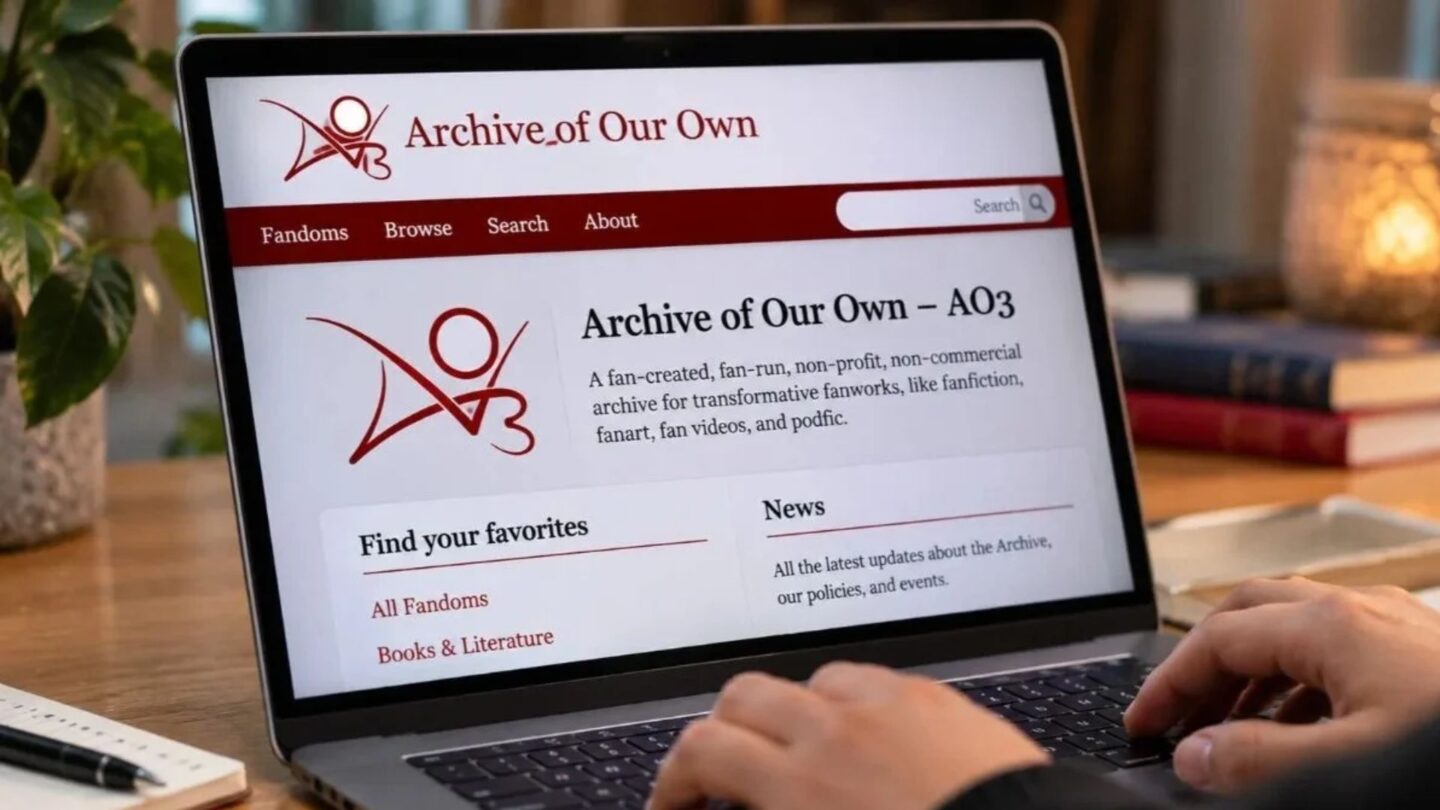
Archive of Our Own, one of the largest fan fiction platforms on the internet, resumed operations on 15 November following a 17-day outage triggered by a security incident. The volunteer-managed repository had been offline since 29 October, leaving millions of readers and writers without access to its vast library. The restoration arrived significantly ahead of the four-week downtime estimate that administrators had initially projected.
The Organisation for Transformative Works, the non-profit body that operates the platform, announced the return in a public status update. In its statement, the organisation confirmed the site was accessible again and apologised for the extended disruption. “AO3 is now up!” the group announced, adding, “We understand that the wait and uncertainty surrounding AO3’s return have been difficult, and we apologise for the inconvenience.”
ARCHIVE OF OUR OWN IS BACK!!!! I REPEAT: AO3 HAS RETURNED!!! https://t.co/Abrgr4erAL
— kat ☆ yj spoilers (@queermediabait) November 15, 2026
According to figures reported by The New York Times, the archive currently hosts nearly 19 million fan works and serves an active community of roughly 12 million users. The platform’s sudden disappearance for two and a half weeks caused widespread disruption across online fandom spaces. News of the recovery sparked immediate celebration on social media networks, with a single announcement post on X attracting more than 100,000 likes and over one million views shortly after publication. Discussions on Reddit generated similar enthusiasm, drawing thousands of upvotes and hundreds of user comments.
Temporary restrictions and data safety
To bring the core archive back online as quickly as possible, the technical team implemented several temporary service restrictions. User profile icons and collection icons have been disabled to reduce server load, along with the tool that allows authors to import stories from external websites. Readers looking to save stories for offline access are currently limited to HTML downloads, and general browsing speeds may remain sluggish while engineers intentionally throttle traffic during the stabilisation phase.
Despite the severity of the incident, the Organisation for Transformative Works reassured its community that all creative content remained intact throughout the downtime. Stored stories, user bookmarks, and kudos records were completely unaffected, and no unpublished drafts were lost while the servers were offline. However, administrators noted that the automated system responsible for deleting expired drafts will resume normal operation on 29 November, and advised writers to review and save any unfinished work before then.
Ongoing investigation and password advice
Technical investigators have not yet disclosed the exact vulnerability or mechanism behind the late October security breach. The non-profit is collaborating with an external cybersecurity firm to analyse the incident and strengthen its infrastructure. While officials stated they have “no reason to believe that the user database was compromised,” they acknowledged that unauthorised access cannot be ruled out entirely until the audit concludes.
Out of an abundance of caution, the Organisation for Transformative Works is urging all account holders to update their login credentials immediately. Users are advised to select a new, unique password for Archive of Our Own and to change passwords on any other online services where the same combination may have been reused. Although investigators have found no evidence of active misuse, prompt action remains the safest precaution for community members.
Copycat sites and artificial intelligence concerns
The extended absence of the official platform created an opportunity for unauthorised third-party operators to exploit the community. During the blackout, copycat websites such as AO3.life scraped stories from the archive and converted them into synthetic audiobooks using artificial intelligence tools. These audio versions were then listed for commercial sale without the original authors’ knowledge or permission.
Cybersecurity researchers and platform founders suggest that the incident reflects a broader wave of digital threats driven by emerging technologies. Mel Stanfill, a professor at the University of Central Florida, told the Associated Press via email that breaches of this nature “are likely to continue to happen in the age of AI-enabled coding as the finding and exploiting of exploits is scaled up rapidly.” Earlier in November, Archive of Our Own co-founder Naomi Novik expressed similar frustration to CNN, stating that “thanks to the irresponsibility of AI companies, virtually the entire tech world is being slammed at once.” Because the fan fiction archive relies entirely on volunteer labour rather than a large corporate security staff, defending against increasingly automated cyberattacks presents a persistent challenge.