


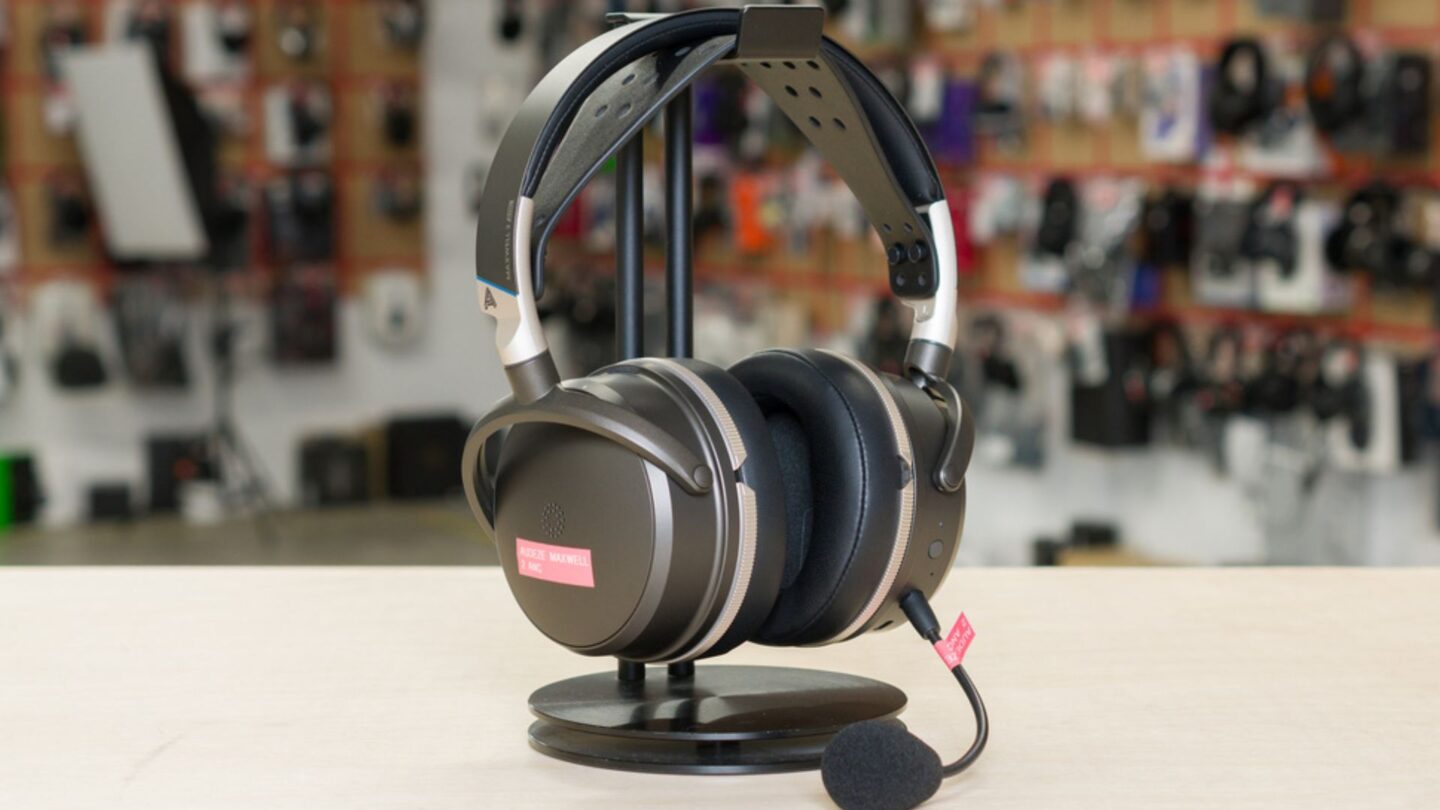
Audeze has partnered with audio technology company Audiokinetic to introduce native head-tracking support for its Maxwell 2 ANC gaming headset within Wwise, a widely used audio creation platform for video games. The integration aims to simplify spatial audio production by letting developers monitor and refine 3D sound directly in the software, without relying on external applications.
The collaboration combines Audeze’s head-tracking technology with Audiokinetic’s audio development tools, giving sound designers greater control over how audio behaves in virtual environments. By connecting the headset directly to Wwise, developers can assess spatial positioning and create more realistic sound experiences for players.
The companies say the integration will expand creative options for game audio professionals, particularly those working on immersive environments, virtual reality, and complex speaker configurations. The plug-and-play approach is designed to reduce technical barriers between designing a soundscape and hearing how it performs in a spatial audio environment.
Native head tracking simplifies spatial audio production
The new integration lets developers use the Maxwell 2 ANC headset’s real-time, self-calibrating head-tracking system directly in Wwise. This means sound designers can monitor spatial audio in the same environment they use to create and adjust game audio, reducing the need to switch between tools.
Head tracking is important in spatial audio because sound must respond naturally as a listener moves their head. When implemented correctly, the technology helps maintain the perceived position of sounds in a virtual environment, making it easier to distinguish whether audio originates from the front, rear or sides of the listener.
Audeze says developers can get started by connecting the Maxwell 2 ANC headset via USB-C or its low-latency wireless USB-C dongle. Once connected, developers can use the headset for monitoring directly in Wwise, without needing additional external software to enable the integration.
The simplified setup makes spatial audio testing more accessible across different working environments. Developers can use the headset as a portable reference system to position sounds, evaluate mixes, and check how audio elements interact in three-dimensional space.
The integration also supports workflows involving VR emulation and binaural audio processing for Sony’s Tempest 3D AudioTech. In addition, developers can use Audiokinetic’s AK Custom Panner to work with non-standard speaker arrangements for location-based entertainment installations. These applications give sound designers more options when developing audio for experiences that extend beyond conventional stereo headphones or standard surround-sound systems.
By bringing the technology directly into Wwise, the companies aim to narrow the gap between a developer’s intended sound design and what they hear during production. This could make it easier to test spatial audio decisions earlier in development and refine them without adding software to the workflow.
Maxwell 2 ANC hardware supports immersive sound design
The integration leverages several hardware features built into the Maxwell 2 ANC headset. Its self-calibrating head tracking delivers consistent positional information, helping developers evaluate the accuracy of sound placement in interactive audio environments.
The headset also features 90mm planar magnetic drivers, along with Audeze’s Uniforce, Fluxor, Fazor, and SLAM acoustic technologies. These components and design techniques support detailed sound reproduction, giving developers a monitoring option to assess audio elements during the creation process.
Active Noise Cancellation (ANC) is another feature of the headset. The technology reduces surrounding noise, helping users focus on audio playback in different environments. Audeze also says the ANC system is designed to maintain a consistent frequency response, which is relevant when evaluating tonal balance and other aspects of a mix.
For game audio teams, the combination of head tracking and high-quality audio reproduction could help them check how individual sound effects, dialogue, and environmental audio fit into a scene. Developers can use the headset to assess how sound positions change with head movement and identify areas that may need further adjustment.
The companies’ approach also offers a portable alternative to relying exclusively on a fixed studio monitoring setup. Although headphones and speaker systems offer different listening experiences, a dedicated headset with integrated head tracking can help developers test binaural and other spatial audio techniques without a complex physical setup.
The new Wwise integration is intended to support a range of interactive media projects, including conventional video games, virtual reality experiences and location-based entertainment. Its usefulness will depend on individual production requirements, but monitoring head-tracked audio directly within an established development platform could simplify testing for teams already using Wwise.
Audeze and Audiokinetic aim to expand creative possibilities
Sankar Thiagasamudram, Audeze’s chief executive, said the integration was designed to make spatial audio production more straightforward for developers.
“By natively integrating Maxwell 2 ANC’s self-calibrating head tracking directly into Wwise, we’re removing the friction between creator vision and spatial execution.”
He added: “Game developers now have a portable, studio-grade reference system that lets them place, audition, and mix 3D audio effortlessly in any environment. Together with Audiokinetic, we’re establishing a new benchmark for spatial audio creation across the interactive media industry.”
The comments reflect the companies’ focus on reducing the technical effort involved in evaluating spatial audio during development. Rather than treating head tracking as a separate process, the integration places it within the audio authoring environment, letting developers place and monitor sound through a more direct workflow.
Martin Dufour, chief technology officer at Audiokinetic, said the collaboration would help developers explore new ways of creating immersive audio.
“We’re unlocking new creative possibilities for developers, making it easier to implement vivid spatial audio that elevates player immersion,” he said.
Audiokinetic’s Wwise platform creates and manages interactive audio in games and other digital experiences. Integrating the Maxwell 2 ANC headset’s tracking capabilities into the platform extends the tools available to developers who want to evaluate three-dimensional audio without adding a separate software layer.
The partnership highlights the growing importance of spatial audio tools as game developers look for ways to make virtual environments feel more convincing. Accurate sound positioning can strengthen a player’s sense of direction, distance, and presence, especially in games and VR experiences where audio provides key environmental cues.
By combining native head tracking, planar magnetic audio hardware, and direct integration with Wwise, Audeze and Audiokinetic aim to make spatial audio workflows easier for developers. The approach is designed to help creators spend less time managing separate tools and more time refining the sound experiences they build.