


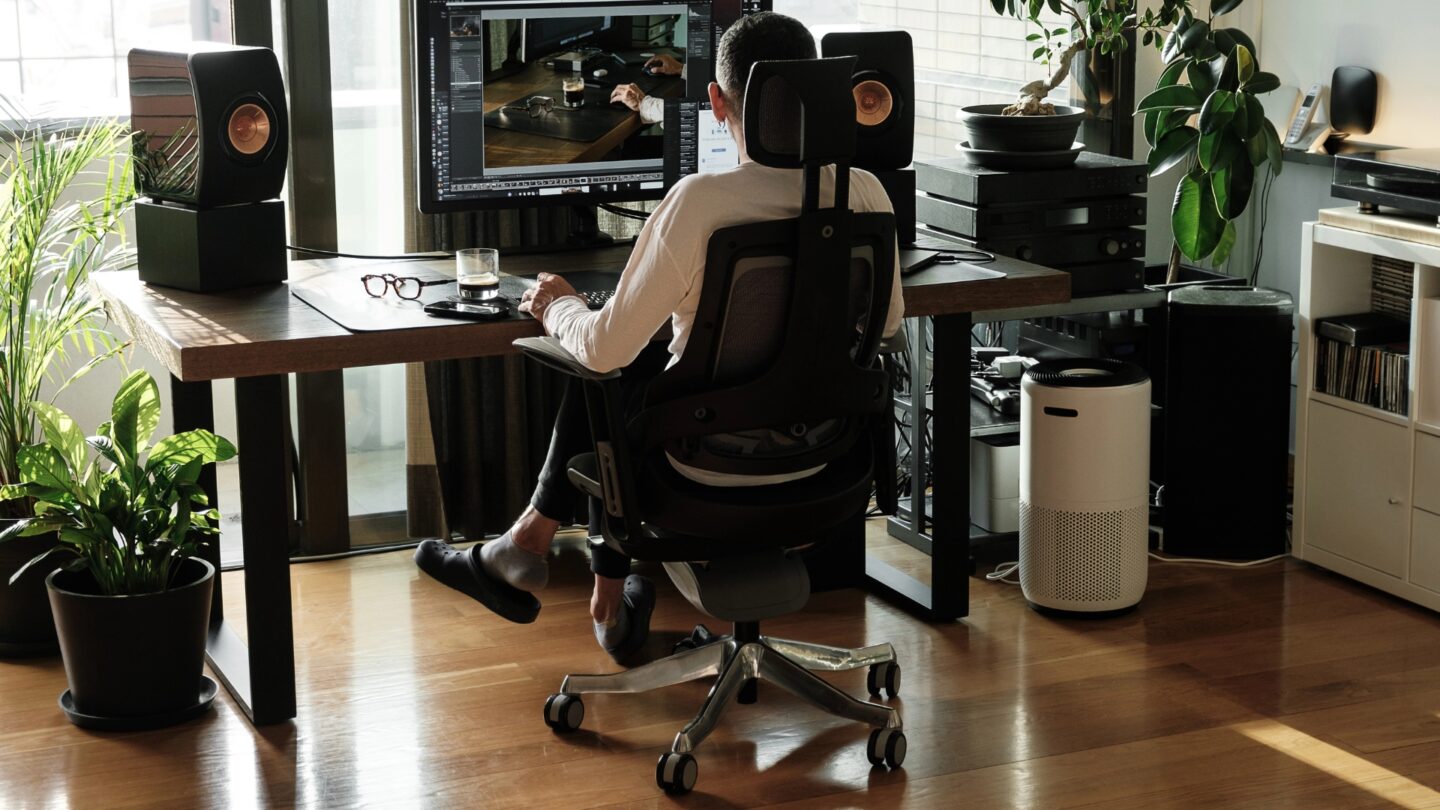
An ergonomic chair can make a significant difference to everyday comfort, particularly for those who spend long hours working at a desk. Beyond basic cushioning, the right chair should provide adequate back support, encourage natural movement and accommodate different body proportions. Features such as adjustable lumbar support, seat depth, armrest positioning and reclining mechanisms can help users maintain a more comfortable sitting position throughout the day.
Table of contents
In Singapore, the choice of materials is another important consideration. Breathable mesh designs can improve ventilation in warmer environments, while upholstered chairs offer a different balance of cushioning and support. Ergonomic chairs also vary considerably in price, adjustment options and construction, with more expensive models offering additional features that may not necessarily benefit every user. Finding a suitable chair depends on how its design aligns with individual seating preferences, body proportions and working habits.
This selection covers different ergonomic chairs available in Singapore, ranging from accessible office seating to premium models with more advanced adjustment mechanisms. Each takes a different approach to comfort, support and flexibility, whether through adaptive lumbar systems, adjustable components or specialised backrest designs. Understanding these differences can help buyers identify which features matter most before deciding on a chair for their home or office.
InterGlide X5
The InterGlide X5 is an ergonomic mesh chair built around extensive adjustability for prolonged desk work. Its QuadFlex lumbar system offers five depth settings and 12 height positions, while the backrest has 12 height settings across a 4.8 cm range. The 6D armrests accommodate different working postures through multiple positioning options. Italian mesh upholstery covers the seat and backrest, providing firm support and ventilation that may appeal to users working in Singapore’s humid climate.
The InterGlide X5 also features five lockable recline angles of up to 160° and an integrated leg rest that extends up to 45 cm. Its 4D headrest offers 16 height positions alongside tilt and rotation adjustments, while the sliding seat provides 5 cm of depth adjustment. These adjustments let users tailor the chair to their body proportions, seating preferences, and work requirements, providing greater flexibility throughout the day.
Key features and benefits
- QuadFlex lumbar support: Offers five depth settings and 12 height positions to accommodate different lower-back support preferences, alongside a backrest with 12 height settings.
- 6D armrests and 4D headrest: Provide multiple positioning options for arm, head and neck support, including 16 headrest height positions and adjustable tilt and rotation.
- Adjustable seat depth: Features a sliding seat with 5 cm of adjustment to accommodate different leg lengths and provide more personalised thigh support.
- 160° recline with leg rest: Combines five lockable recline angles and an extendable leg rest for more relaxed sitting positions.
- Italian mesh upholstery: Covers the seat and backrest with breathable mesh that encourages airflow while providing firm seating support.
IKEA JÄRVFJÄLLET
The IKEA JÄRVFJÄLLET offers essential ergonomic adjustments at a more accessible price than many specialist office chairs. Its high mesh backrest encourages airflow, while the Glose black configuration combines a padded seat with grain-leather upholstery. Adjustable lumbar support and a height-adjustable headrest allow users to modify support around the back and neck. The chair also features 2D armrests with height and width adjustments, accommodating different working positions without requiring extensive configuration.
The JÄRVFJÄLLET includes adjustable seat depth and height, alongside automatic backrest tension that responds to the user’s body weight. Its synchronised tilt mechanism follows reclining movements, while a three-position tilt lock provides additional control. IKEA rates the chair for users up to 110 kg and includes a 10-year guarantee. Although its adjustment options cover everyday desk work, the leather-covered seat may feel warmer than full-mesh alternatives, while users seeking more specialised lumbar support may find its configuration comparatively limited.
Key features and benefits
- Adjustable lumbar support: Allows users to reposition lower-back support according to their seating preferences and body proportions.
- 2D armrests and adjustable headrest: Provide height and width adjustments for arm support, alongside a height-adjustable headrest for different neck positions.
- Adjustable seat depth and height: Allow users to modify their seating position to accommodate different leg lengths and workstation heights.
- Synchronised tilt mechanism: Combines automatic backrest tension based on body weight with coordinated reclining movement and three lockable positions.
- Mesh and grain-leather construction: Pairs a breathable mesh backrest with a padded grain-leather seat in the Glose black configuration, balancing ventilation and cushioning.
ErgoTune Supreme
The ErgoTune Supreme is an ergonomic mesh chair offered in small, medium and large sizes for different body proportions. Its ATLAS lumbar mechanism is designed to follow the back’s curvature, with three tension settings, although lumbar height cannot be adjusted independently. The TriTune 3D headrest adjusts in height, depth and angle, while DuraWeave fabric mesh helps ventilate the seat and backrest.
Across 13 adjustment points, the Supreme includes a height-adjustable backrest, 5 cm of seat-depth adjustment and GyroBrace armrests with height, width and pivot controls. The armrests rotate up to 270°, accommodating different seated activities, although the design may take time to get used to. An aluminium alloy base supports a rated maximum load of 130 kg. ErgoTune advertises warranty coverage of up to six years, subject to extension requirements and component-specific limits. Its range of sizing and seating adjustments suits users who prioritise personal fit over additional reclining accessories.
Key features and benefits
- ATLAS lumbar support: Responds to the back’s curvature, with three adjustable tension settings to accommodate different lower-back support preferences.
- GyroBrace armrests and TriTune headrest: Combine armrests with height, width, and 270° pivot adjustments with a 3D headrest that adjusts in height, depth, and angle.
- Three chair sizes and adjustable seat depth: Offers Small, Medium and Large configurations, with 5 cm of seat-depth adjustment to accommodate different body proportions.
- Adjustable backrest and recline controls: Form part of the chair’s 13 adjustment points, allowing users to modify backrest height and reclining positions for different seated activities.
- DuraWeave mesh and aluminium base: Combine breathable seating surfaces with a structural base rated to support users weighing up to 130 kg.
Razer Fujin Pro
The Razer Fujin Pro is a mesh chair intended for gaming and desk work, with several adjustments commonly found on ergonomic office seating. Its thermoplastic elastomer and polyester mesh covers the seat and backrest, promoting airflow compared with conventional foam-padded gaming chairs. Height- and depth-adjustable lumbar support lets users adjust lower-back contact, while the 3D contoured headrest adjusts in height, depth, and tilt. The chair also includes 4D padded armrests and an aluminium alloy frame rated to support up to 136 kg.
A synchro-tilt mechanism coordinates the movement of the seat and backrest as the user reclines, with a separate control to adjust tilt resistance. Razer recommends the Fujin Pro for users measuring 170 cm to 200 cm tall, making fit an important consideration for shorter buyers. Its breathable construction may suit Singapore’s warm climate, although a mesh seat feels different from conventional cushioning and is best assessed in person.
Key features and benefits
- 2D adjustable lumbar support: Provides height and depth adjustments to accommodate different lower-back support preferences during gaming and desk work.
- 4D armrests and 3D contoured headrest: Offer multiple armrest positioning options, plus headrest adjustments for height, depth, and tilt.
- Ergonomic sizing and weight capacity: Accommodates a recommended user-height range of 170 cm to 200 cm, with a maximum supported weight of 136 kg.
- Synchro-tilt technology: Coordinates movement between the seat and backrest during reclining, with adjustable tension for more controlled movement.
- Breathable mesh and aluminium construction: Combines thermoplastic elastomer and polyester mesh seating surfaces with an aluminium alloy frame to support ventilation and structural stability.
Secretlab ATLAS
The Secretlab ATLAS combines a full-height, contoured backrest with cushioned seating in a design intended for everyday desk work. Its RE-CURVE backrest incorporates fixed lumbar support through a hybrid spring-and-foam structure that responds to body movements. Unlike chairs with independently adjustable lumbar systems, the ATLAS relies on its backrest contour to support the lower back. The standard model uses medium-firm cold-cure foam, while premium variants feature NanoFoam Composite with an additional soft-cushion microfoam layer.
The ATLAS features a synchronous tilt mechanism that reclines the backrest and seat at a 2:1 ratio, keeping the seat relatively level during movement. Four tilt-resistance settings, adjustable seat depth and 3D armrests provide further positioning options. Available in Regular and Large sizes, the chair offers fabric and synthetic leather upholstery depending on the configuration. Its cushioned construction offers an alternative to full-mesh seating, though the fixed lumbar system provides fewer adjustment options than some competing ergonomic chairs.
Key features and benefits
- RE-CURVE backrest: Combines full-height back support with an integrated spring-and-foam lumbar structure that responds to body movement without requiring separate lumbar adjustments.
- 3D adjustable armrests: Provide multiple positioning options to accommodate different arm positions and workstation arrangements.
- Adjustable seat depth and two sizes: Offers forward and backward seat adjustments, with Regular and Large configurations to accommodate different body proportions.
- Synchronous tilt mechanism: Coordinates backrest and seat movement at a 2:1 ratio, with four tilt-resistance settings for more controlled reclining.
- Cold-cure foam cushioning: Provides medium-firm seating in standard models, while premium NanoFoam Composite variants add a microfoam layer for softer cushioning.
Haworth Fern
The Haworth Fern is an ergonomic office chair built around a flexible backrest rather than a rigid outer frame. Its patented Wave Suspension system uses a three-part structure that flexes as users lean, turn and change posture, distributing support across the back. The chair includes a waterfall seat edge designed to reduce pressure behind the knees, while optional height-adjustable lumbar support provides more pronounced lower-back contact for users who prefer it.
Other adjustments include 88 mm of seat-depth adjustment, 4D armrests and adjustable tilt tension. A multi-position backstop allows users to limit their reclining angle, while forward tilt supports a more upright position during desk-focused tasks where included. These features accommodate different working postures, particularly for users who frequently change position while seated. However, the Fern is available in several configurations, and buyers should confirm whether their selected model includes forward tilt and additional lumbar support before purchasing.
Key features and benefits
- Wave Suspension backrest: Uses a flexible three-part structure that distributes support across the back while accommodating movement, with optional height-adjustable lumbar support.
- 4D adjustable armrests: Provide height, width, depth and pivot adjustments to accommodate different arm positions during desk work.
- Adjustable seat depth: Offers 88 mm of adjustment to accommodate different leg lengths and provide more personalised thigh support.
- Multi-position backstop and forward tilt: Combines adjustable recline limits and tilt tension, with forward-tilt functionality available depending on the selected configuration.
- Waterfall seat design: Features a contoured seat edge designed to reduce pressure behind the knees during prolonged sitting.
Steelcase Leap
The Steelcase Leap focuses on ergonomic adjustability for extended desk work. Its LiveBack technology allows the contoured backrest to change shape as users move, while height-adjustable lumbar support and a separate lower-back firmness control provide more precise positioning. The chair also features adjustable seat depth and four-directional armrests to accommodate different body proportions and working positions. Unlike full-mesh alternatives, the Leap uses an upholstered backrest and cushioned seat with flexible edges designed to reduce pressure beneath the thighs.
Its Natural Glide mechanism moves the seat forwards during reclining, helping users maintain a comfortable distance from their workstation. Recline tension can be adjusted independently, with four recline-angle stops and an upright back lock providing additional control. The seat cushion also incorporates air pockets designed to distribute pressure. Steelcase Singapore provides limited lifetime warranty coverage for selected structural components and 12 years for specified mechanisms and parts. Its extensive adjustments suit users seeking precise ergonomic control, although the premium price makes an in-person assessment worthwhile.
Key features and benefits
- LiveBack and adjustable lumbar support: Combines a flexible backrest that adapts to spinal movement with height-adjustable lumbar positioning and a separate lower-back firmness control.
- Four-directional armrests: Provide height, width, depth and pivot adjustments to accommodate different arm positions and workstation arrangements.
- Adjustable seat depth: Allows the seat to move forwards and backwards to accommodate different leg lengths and provide more personalised thigh support.
- Natural Glide reclining mechanism: Moves the seat forwards during reclining, with adjustable tension, four recline-angle stops and an upright back lock for greater control.
- Pressure-distributing seat construction: Uses cushioning with integrated air pockets and flexible seat edges designed to distribute pressure and reduce discomfort beneath the thighs.
Herman Miller Aeron
The Herman Miller Aeron uses suspended mesh seating rather than conventional foam cushioning. Its 8Z Pellicle material provides eight zones of varying tension across the seat and backrest, distributing body weight while allowing air to circulate. The chair comes in three sizes, A, B and C, with different seat dimensions to accommodate varying body proportions. Its breathable construction may appeal to users working in Singapore’s warm climate, although the suspension seating may feel different from padded alternatives.
The Aeron incorporates Herman Miller’s Harmonic 2 tilt mechanism, supporting controlled movement between upright and reclined positions. Back-support options include adjustable PostureFit SL, which uses separate pads to support the sacral and lumbar regions. Armrest adjustments, tilt limiters and forward-tilt functionality vary by configuration. Herman Miller provides a 12-year warranty with limited exceptions, supporting longer-term ownership. However, its premium pricing and fixed seat depth within each size make an in-person assessment advisable before purchasing.
Key features and benefits
- Adjustable PostureFit SL support: Uses separate pads to support the sacral and lumbar regions, with adjustable support intensity where this optional configuration is selected.
- Configurable armrest adjustments: Offers fixed, height-adjustable and fully adjustable armrest options to accommodate different arm positions and seating preferences.
- Three chair sizes: Provides A, B, and C configurations with different fixed seat dimensions, allowing users to select a size based on their body proportions.
- Harmonic 2 tilt mechanism: Supports controlled reclining, with optional tilt-limiting and forward-tilt controls depending on the selected configuration.
- 8Z Pellicle suspension: Uses eight zones of varying tension across the seat and backrest to distribute seated pressure while encouraging airflow through the mesh construction.
Building a comfortable workspace around an ergonomic chair
A well-designed ergonomic chair is a worthwhile investment for anyone spending long hours at a desk. Properly configured, it provides the support and flexibility needed for different working postures. Its benefits can be further enhanced by a workstation that complements the seating position, with the monitor, keyboard and work surface arranged to maintain comfortable alignment.
A height-adjustable standing desk is a natural complement, allowing users to set the work surface at their preferred seated height while offering the option to alternate between sitting and standing. Together, an ergonomic chair and standing desk provide greater control over how the workspace is configured, making it easier to accommodate different tasks and working routines throughout the day.