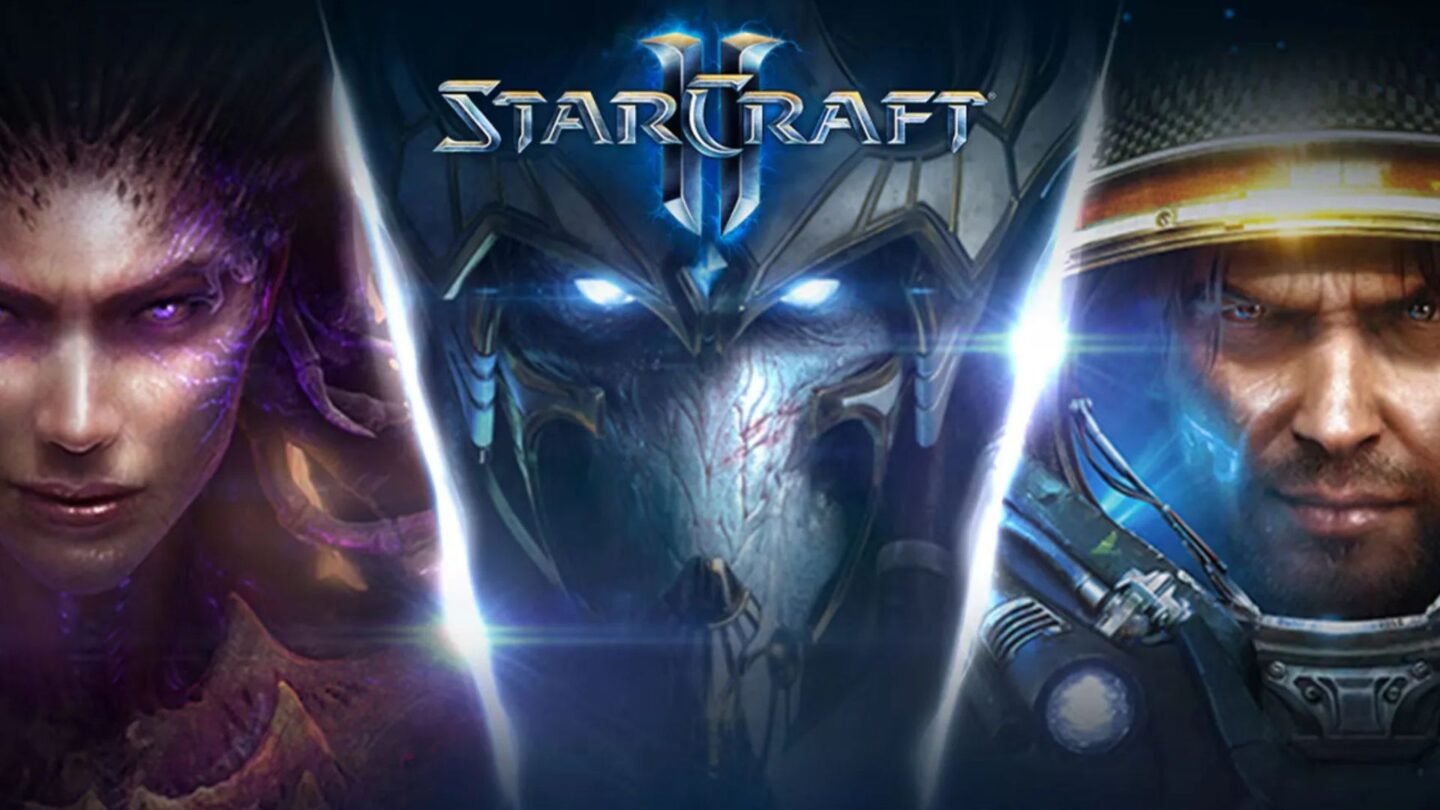
Blizzard is preparing to take StarCraft in a very different direction, with the next game in the long-running science-fiction series moving away from its traditional real-time strategy roots and into the open-world shooter genre. The shift creates challenges ranging from designing a world at a much larger scale to making everyday objects behave naturally from a first-person perspective.
StarCraft general manager Dan Hay explained that changing the series’ viewpoint has required the development team to reconsider how almost every part of its environments works. Some of those challenges are more unusual than others, with doors becoming an unexpected example of the problems created by the scale of StarCraft’s characters and equipment.
Blizzard says even doors become a challenge at StarCraft’s scale
When asked about the difficulties involved in adapting StarCraft to a completely different genre, Hay gave a surprisingly simple answer: “Was there a specific challenge? Doors.”
The comment referred to the practical problems of creating interactive environments for characters that can be considerably larger and more heavily equipped than a typical human-sized shooter protagonist. Hay explained that a character’s size and equipment can dramatically affect how ordinary objects like doors need to be designed.
“If you’re 10 feet tall and you’re wearing something that weighs 1,000 pounds, doors are a challenge, and we had to figure out how to make our doors [work in] that perspective,” Hay said. “It’s like, how does it all work?”
The issue is not simply whether a character can physically pass through an entrance. Blizzard also needs to make sure the environment behaves consistently for different types of characters and equipment. A doorway that looks perfectly reasonable from one perspective could appear too small, too large or otherwise unnatural when viewed from the position of a heavily armoured character.
Hay said the development team has been focused on ensuring that the world feels believable and internally consistent. “You’ve got to be able to play with that perspective, and so from the standpoint of building the world and making sure that the world was logical, and that when I walked up to a door it [opened] and also worked for somebody who’s in armour or not”.
The example shows how much the shift from an RTS to an open-world shooter can affect the design process. In traditional StarCraft games, players generally observe the battlefield from above and control units as part of a larger strategic picture. A shooter instead places the player directly inside that environment, making details such as doors, buildings and machinery much more noticeable.
A closer perspective changes how players experience StarCraft
Scale is another major consideration for Blizzard as it builds the new StarCraft experience. Hay said changing the player’s perspective can fundamentally alter the world’s appearance and impact.
“I think you got to think about scale, right? Because the moment you adjust a perspective, [everything] looks completely different to us,” he said.
For a franchise built around enormous military vehicles, alien creatures and futuristic structures, that change could have a particularly significant effect. Objects that may have appeared relatively small when viewed from above can become imposing when experienced from ground level. Likewise, familiar locations may take on a completely different character when players can walk around them rather than observe them as part of a battlefield.
Annalee Hartling, associate manager of development operations for StarCraft, described the sense of scale as one of the project’s most striking aspects. Hartling pointed to the barracks shown in the game’s trailer as an example of how the new perspective can change how familiar StarCraft elements are presented.
“When I saw the trailer, the most impactful portion of it for me was the barracks. The barracks flying in and seeing it from the perspective of every nook and cranny, not looking at it from above.”
Hartling said the scene was particularly effective because the building could be experienced from ground level rather than from the traditional overhead RTS viewpoint. “I’m not seeing just the top of it. I’m looking at it from the point of view of it landing landing [in front of me], and those jets are going to come out, and the feet are going to come out, and they’re going to they’re going to touch the ground.”
That closer viewpoint is intended to make the StarCraft universe feel more immediate. Rather than simply seeing a structure arrive on a battlefield, players can experience its movement and physical presence in much greater detail.
Hartling described the effect of this approach as “incredibly powerful for a player”. They added: “It’s emotional, it’s fascinating, and it’s beautiful.”
The next StarCraft aims to redefine the series
The move into the open-world shooter genre represents a significant departure for StarCraft. The series has historically been associated with real-time strategy, with players managing armies, gathering resources and directing units from an overhead viewpoint. Moving into an open-world environment requires Blizzard to rethink not only combat but also exploration, environmental design, and how players interact with the universe.
The emphasis on perspective could therefore become a defining feature of the new game. Buildings, vehicles and characters that players have previously encountered primarily as strategic assets can be presented as physical objects occupying the same space as the player. Blizzard’s comments suggest that creating a convincing sense of scale is an important part of making that transition work.
At the same time, the comments about doors demonstrate that the challenge goes beyond spectacular visuals. For an open-world shooter to feel convincing, the smallest interactions must make sense within the world. Characters need to move naturally through their surroundings, equipment needs to fit their physical proportions, and environmental objects need to work regardless of who is interacting with them.
Blizzard has not yet revealed all the details of the new StarCraft title. Still, the development team’s comments suggest how deeply the genre shift is shaping its design. Instead of simply adapting existing RTS mechanics to a shooter, the project appears to be built around experiencing the StarCraft universe from a fundamentally different perspective.
The next StarCraft game is currently scheduled to launch in 2030, giving Blizzard several years to develop and refine its new approach. As development continues, more details are expected to emerge about how the open-world format, shooter gameplay and the series’ established universe will come together.