



Adobe has spent decades developing software that creative professionals rely on. Photoshop, Illustrator, Premiere Pro and After Effects are embedded in the workflows of photographers, designers, editors and production studios, making Creative Cloud subscriptions a recurring business expense.
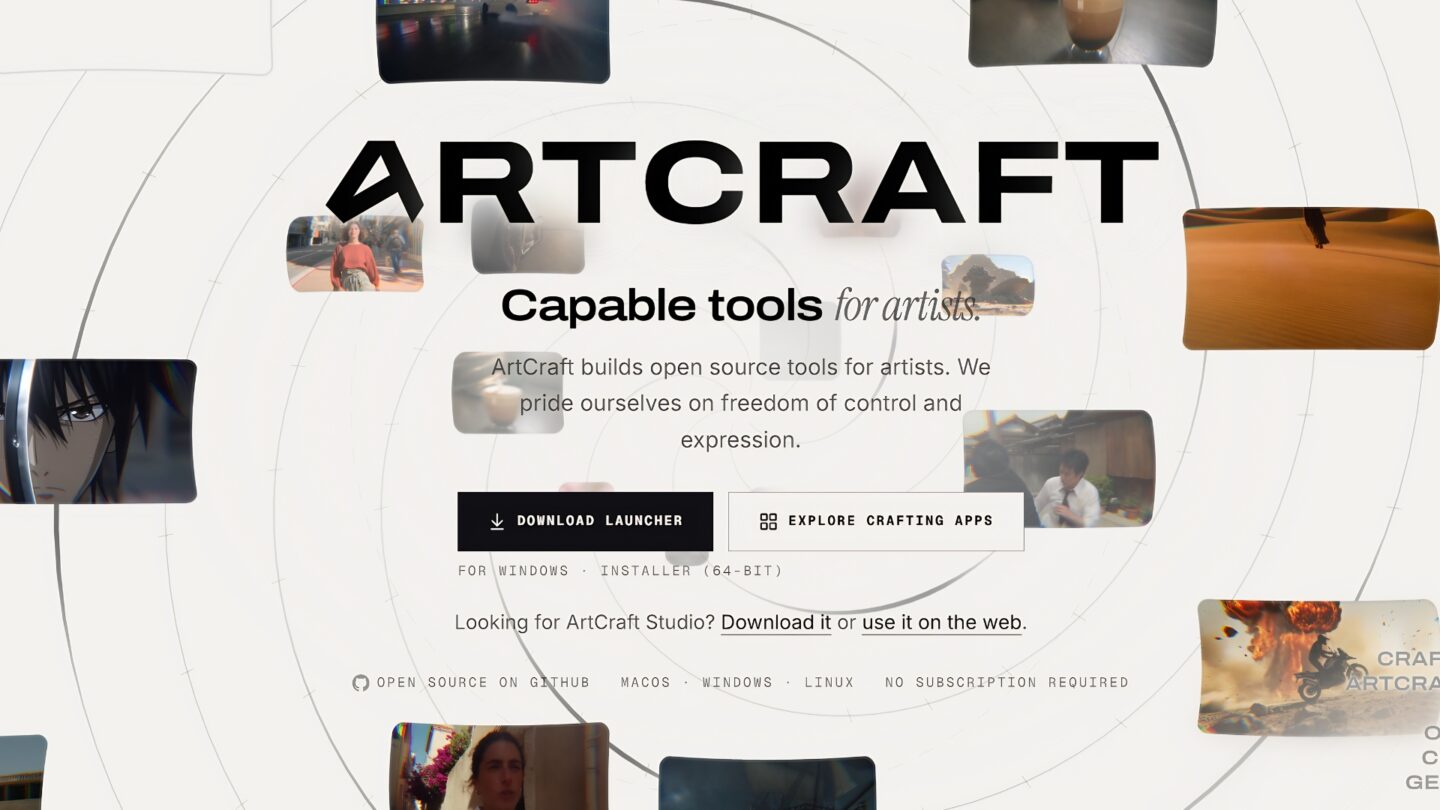
ArtCraft, an open-source project led by developer Brandon Thomas, is challenging that dominance with AI-assisted alternatives to several Adobe applications. Built with Anthropic’s Claude, its PhotoCraft editor replicates much of Photoshop’s familiar interface, while companion projects target Illustrator, Premiere Pro, Lightroom, After Effects, InDesign, and Acrobat.
ArtCraft remains far behind Adobe in stability, performance and feature depth. Its emergence nevertheless raises questions about how long Adobe can maintain its advantage as lower-cost alternatives become more capable. While its integrated ecosystem makes switching difficult, customers may increasingly reconsider which Adobe applications remain essential.
Canva has already challenged Adobe’s position
Adobe has long faced competition from specialist applications such as DaVinci Resolve and Affinity. Canva took a different approach. Rather than matching Photoshop or Illustrator feature for feature, it made design accessible to users who had little need for complex desktop software. Small businesses, educators and marketing teams could produce presentations, social media graphics and promotional materials without mastering professional editing tools.
Canva surpassed 260 million monthly active users in 2025. Its 2024 acquisition of Affinity broadened its scope beyond template-based graphics, followed in October 2025 by a free, unified application combining photo editing, vector design, and page layout. That move placed Canva in direct competition with core parts of Creative Cloud.
Canva’s growth does not necessarily represent customers leaving Adobe, as some use both platforms while others may never have needed Creative Cloud. Its success demonstrates how accessible tools and lower pricing can attract users who might otherwise rely on more complex creative applications.
ArtCraft takes a different approach, recreating familiar Adobe interfaces rather than simplifying creative tasks for less experienced users.
ArtCraft is challenging the cost of switching
For professionals, changing software involves more than comparing feature lists. Years of using Photoshop or Premiere Pro create ingrained habits around menus, keyboard shortcuts and production processes. Retraining staff and adapting shared workflows can offset potential savings on software licences.
PhotoCraft attempts to reduce that learning burden by adopting Photoshop’s familiar panels, tools and keyboard shortcuts. This could appeal to professionals considering alternative software without having to relearn established editing workflows.
For ArtCraft to become a credible alternative, familiar interfaces must be supported by reliable performance, file compatibility and collaboration with teams that continue using Creative Cloud. These requirements extend beyond individual applications, particularly for organisations dependent on Adobe’s wider ecosystem.
Adobe’s ecosystem is both its strength and its expense
Adobe connects creative production, asset management and document workflows across a unified portfolio. Within Creative Cloud, shared libraries, compatible file formats, and direct application integrations streamline collaboration among designers, video editors, and production specialists. Using applications from the same provider can simplify file sharing and collaboration, although the benefits depend on how those applications are integrated into existing workflows.
For large organisations, this ecosystem extends well beyond desktop design software. Platforms such as Adobe Experience Manager manage web content and digital assets, Adobe Target handles personalisation and testing, and products including Workfront and Analytics coordinate campaign workflows and measurement. When integrated, these platforms can help organisations manage digital assets, coordinate campaigns and measure performance across teams, although deployment may still require custom integration work.
However, that level of integration carries substantial financial and operational commitments. Experience Manager and Target are separately licensed enterprise platforms with customised contract pricing, requiring dedicated investment in systems integration, consultancy, staff training and technical maintenance. These deployments also create steep barriers to exit. Migrating an enterprise content management or personalisation platform involves far greater operational disruption than swapping out a desktop design tool, encouraging large companies to remain with Adobe because the overall architecture is already embedded and proven.
The cost of maintaining multiple Adobe products may also encourage organisations to reconsider which applications and services they need. Smaller agencies, marketing teams and independent creators rarely require an enterprise marketing stack; their requirements are often met through a mix of Canva, specialist utilities and standalone editing tools. ArtCraft can’t replace enterprise platforms, but dependable alternatives to individual creative apps let businesses reconsider where Creative Cloud subscriptions are genuinely necessary.
ArtCraft still has a considerable gap to close
ArtCraft’s current development status shows why that possibility remains distant. PhotoCraft’s roadmap, updated on 13 October, estimated the application was about 45% ready for professional work, with major gaps in performance, stability, and file compatibility. The project reported that only three of 25 performance benchmarks met their targets, and Photoshop could not reliably accept files written by PhotoCraft. These figures are based on the project’s own assessments rather than independent benchmarks.
For working professionals, these shortcomings have immediate practical consequences. Designers need layered files to survive handovers without data loss, video editors need dependable playback and export rendering, and production studios depend on third-party plug-ins and decades of accumulated file archives. A familiar interface offers limited value if files cannot be exchanged reliably or editing tasks produce inconsistent results. Professional users need dependable performance across complex projects.
ArtCraft must also show that it can maintain and support its applications over time. Regular security updates, file compatibility and technical support are essential for professional use. Open-source contributions can support development, but they do not automatically guarantee consistent maintenance or accountability when problems arise.
Adobe’s financial strength gives it room to respond
Adobe’s financial results show no immediate signs of erosion. In the third quarter of fiscal 2026, the company reported record revenue of US$6.76 billion, up 13% year on year, with subscription revenue from its Creative and Marketing Professionals group rising 13% to US$4.65 billion. Backed by Firefly integrations, global distribution, and deep financial reserves, Adobe still has considerable room to manoeuvre. The revenue growth suggests that competitive pressure has yet to translate into an overall decline in Adobe’s sales, although it does not establish whether customers are becoming more willing to consider alternatives.
Yet the cumulative cost of software remains a persistent issue for freelancers, boutique studios and small agencies. Replacing individual applications offers meaningful savings only if the alternative delivers comparable utility without introducing hidden expenses. ArtCraft’s commercial model complicates the prospect of free software: while its desktop editors are open source, the platform monetises through recurring subscriptions and credits for AI image and video generation. Canva has taken a comparable approach with Affinity, providing the core applications free while charging for generative tools.
These models separate access to editing applications from charges for AI-powered features. The more meaningful comparison is the total cost of each platform, including subscriptions, generation credits and other services. Higher AI usage could make an otherwise free application more expensive to operate.
As alternatives improve, creative teams will have more options when deciding which software subscriptions remain worthwhile. Adobe, on the other hand, will need to justify its pricing through dependable applications, useful integrations and professional support.
Adobe’s biggest threat may be the competitors that follow ArtCraft
ArtCraft poses little immediate threat to Adobe’s core business. Its applications remain immature, while Adobe’s established workflows, integrations and customer relationships make switching difficult. The longer-term concern is whether improving alternatives will give customers greater freedom to replace individual Adobe applications.
Canva has shown that creative software competitors can attract users through different workflows and pricing models. Future alternatives may also focus on specific editing tasks, allowing organisations to replace selected Adobe products without disrupting their wider operations.
Adobe’s integrated products remain valuable to organisations managing complex creative and marketing operations. Smaller studios, agencies and independent creators may be more willing to combine different tools as alternatives improve, particularly when they can reduce costs without compromising their work. Adobe’s longer-term risk is that customers gradually find fewer reasons to depend on its full portfolio, rather than abandon its software altogether.


