


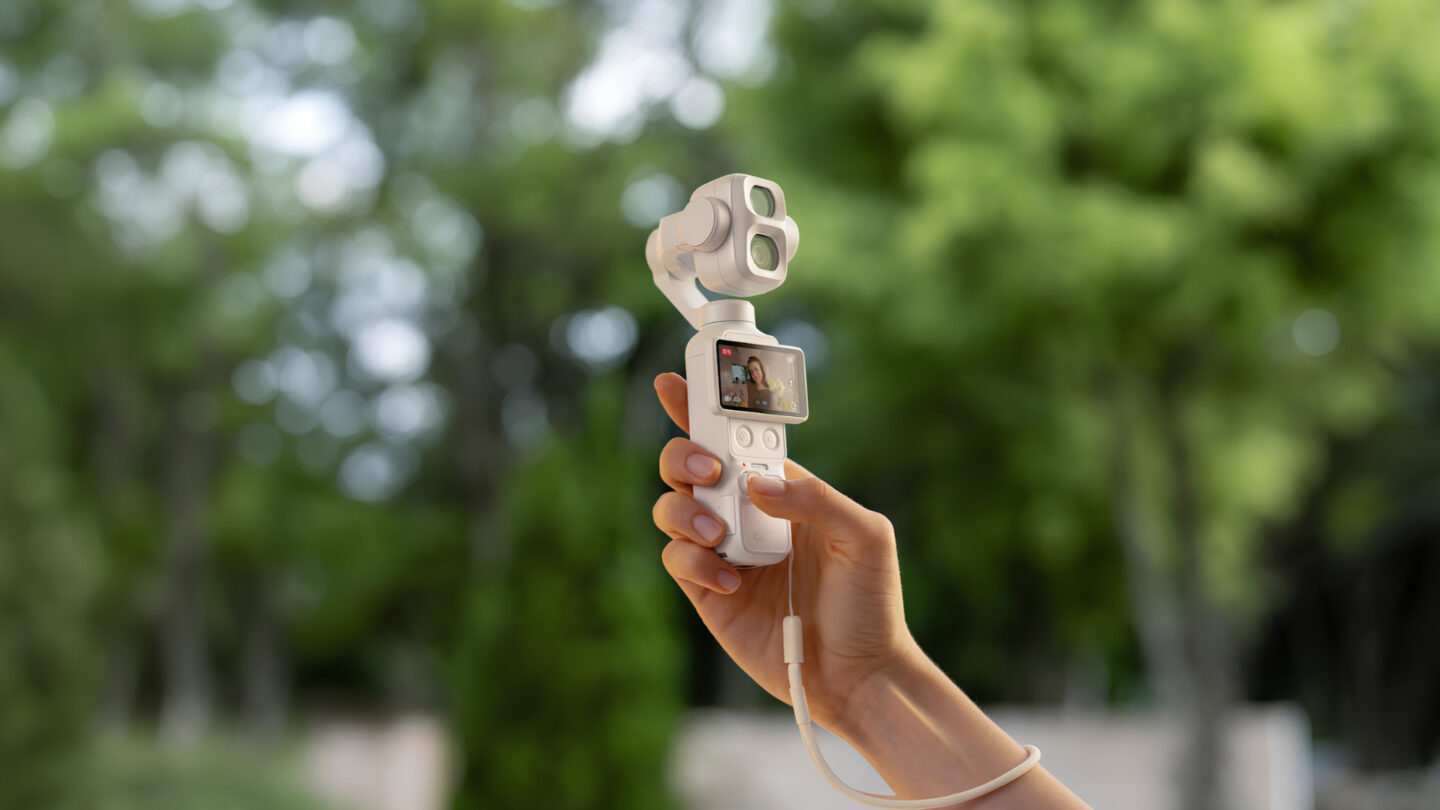
DJI has launched the Osmo Pocket 4P Pearl White in Singapore, adding a new colour option to its compact handheld gimbal camera. The edition retains the dual-lens system of the Osmo Pocket 4P, combining a 20mm wide-angle lens with a 60mm medium-telephoto lens alongside its existing video recording and photography capabilities.
Weighing 230g, the camera features a Pearl White finish made with mica-infused pearlescent pigments and a multilayer spray coating. The treatment creates subtle changes in appearance depending on lighting conditions and viewing angles.
Dual-lens system supports high-frame-rate 4K recording
The primary 20mm wide-angle lens pairs a 1-inch CMOS sensor with an f/2.0 aperture and supports video recording at up to 4K/240 fps. DJI claims the sensor delivers 17 stops of dynamic range through LOFIC technology, helping preserve detail in bright and dark areas of high-contrast scenes, including sunsets and backlit portraits. Colour grading flexibility is enhanced by a newly introduced 10-bit D-Log 2 colour profile capable of capturing more than one billion colours, providing greater flexibility when adjusting colours, shadows and highlights during editing. A separate 10-bit HDR video mode is also available, allowing footage to be viewed with its full dynamic range on compatible HDR displays.
Alongside the primary camera, the 60mm medium-telephoto lens features an f/1.8 aperture, with DJI specifying an f/6.3-equivalent depth of field. It offers 3× optical zoom and zoom of up to 12×, giving users a tighter framing option for portraits and more distant subjects. Handheld filming across different shooting situations is supported by the camera’s gimbal stabilisation system.
Capture capabilities also extend to high-frame-rate video and high-resolution stills. The Osmo Pocket 4P Pearl White can capture up to 8× slow-motion footage at 4K/240 fps, while still photographs reach up to 37 MP to allow cropping or reframing during editing. In addition, the 4K Live Photo feature provides another capture option by automatically recording a 1.5-second video clip with each photograph.
Subject tracking and file transfers support mobile production
ActiveTrack 8.0 allows the camera to follow moving subjects automatically, including people, vehicles, pets and other moving shapes. By adjusting framing as subjects move, the tracking system helps users maintain their composition when filming without manually controlling every camera movement.
Footage can be transferred to other devices through USB 3.1, with DJI specifying transfer speeds of 800 MB/s. The camera also includes an automatic media transfer feature for iOS devices, which sends newly captured footage after the camera has been powered off. For optimal transfer stability, DJI recommends using an iPhone 16 series device or later running iOS 26.4.1 or above, provided the camera’s battery level remains above 15% when using the feature.
Battery life is rated at up to 210 minutes on a single charge, while fast charging can restore the battery from 0% to 80% in 18 minutes. DJI says its published performance figures were measured using a production model under controlled conditions.
Singapore availability, accessories and protection plans
In Singapore, the Osmo Pocket 4P Pearl White is available through DJI’s authorised retail stores and online platforms, including Shopee, Lazada and TikTok. Physical retail locations include Jewel Changi Airport, Funan, VivoCity, The Heeren and NEX. The camera also remains compatible with accessories from DJI’s Osmo ecosystem, allowing users to adapt it for different recording requirements. Supported accessories, which are sold separately, include the Osmo Pocket 4 Fill Light, ND and polarising filters, wide-angle lens adapters, a battery handle and OsmoAudio microphones.
DJI Care Refresh is also available for the Pearl White edition, providing optional replacement coverage for natural wear, accidental collisions and water damage, with replacements subject to an additional charge under the protection plan. The one-year DJI Care Refresh plan provides up to two replacements within one year, while the two-year plan allows up to four replacements over two years.