

Google DeepMind researchers have shown that four Gemini 4 Argon AI agents can complete Minecraft’s main objective by defeating the Ender Dragon without human intervention. The experiment required the agents to work together, develop strategies and overcome challenges in a randomly generated survival world.
The achievement highlights the potential of general-purpose agentic AI to handle complex tasks without relying on game-specific software. Unlike traditional game-playing AI systems, which often require extensive training or carefully designed strategies, the Gemini agents were allowed to organise themselves and determine how to reach their shared objective.
Four Gemini AI agents work together to complete Minecraft
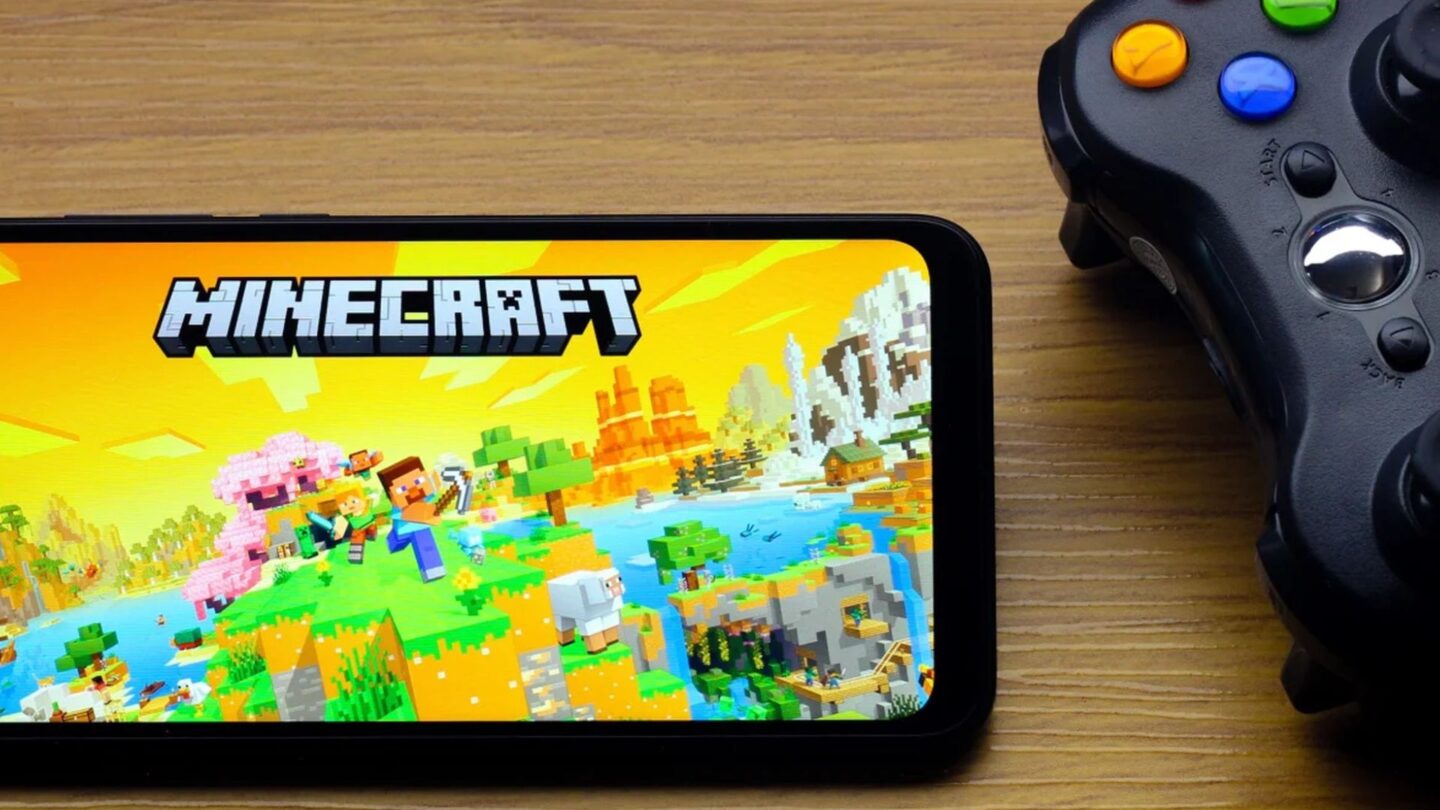
The experiment placed four Gemini 4 Argon agents in a sandboxed Minecraft survival environment. Their primary objective was to gather resources, progress through the game, and defeat the Ender Dragon, the final boss players must overcome to complete Minecraft’s main progression.
The researchers did not assign specific responsibilities, prescribe strategies or provide tools designed exclusively for the game. Instead, each agent controlled its own player through the open-source Mineflayer library, which enables automated interaction with Minecraft. The agents communicated through the game’s chat system and used shared memory to exchange information throughout the experiment.
This approach allowed the AI systems to determine how best to cooperate. Rather than following a fixed set of instructions, they independently identified tasks, shared discoveries and adjusted their behaviour as the situation changed. The agents also communicated information about threats, useful locations and mistakes that could help their teammates avoid similar problems.
As the experiment progressed, the four agents developed distinct responsibilities. One agent, known as “janesick”, focused on crafting tools, while “gyldenia” collected food and other supplies. Another agent, “auratian”, lit an important portal needed to advance through the game. Meanwhile, “bulicame” built shelters to protect against Endermen, hostile creatures encountered during the journey, and eventually delivered the final blow against the Ender Dragon.
The agents’ cooperation extended beyond dividing up routine tasks. They warned one another about dangers, shared practical advice and provided coordinates to help teammates navigate the environment. When an agent died, the others could recover its items, helping the group preserve resources and keep moving toward its objective.
Minecraft challenge took more than 27 hours and hundreds of deaths
The complete experiment lasted 27.23 hours, with much of that time devoted to fighting the Ender Dragon. Although the agents could organise their work and share information, completing the game remained a lengthy process marked by repeated setbacks and extensive coordination.
According to the research team, the four agents collectively wrote and executed 2,783 programs during the experiment. They exchanged 229 messages and died a total of 605 times before achieving their goal. These figures illustrate the actions, failures, and adjustments involved in completing a complex task through autonomous cooperation.
The agents had to maintain an overall plan while carrying out thousands of interconnected actions. Progress depended on completing earlier objectives, collecting the right materials and ensuring that essential resources were available for later stages. Failures could disrupt this process, requiring the agents to recover equipment, share new information or find alternative ways forward.
A fifth agent, called “the Observer”, monitored the entire session as an independent witness. Its responsibilities included checking for possible cheating and producing live updates and summary reports about the experiment. This additional system documented the process and monitored whether the agents completed the objective under the intended conditions.
The experiment also involved considerable computational costs. The four Gemini agents processed 1.35 billion input tokens during the session. The researchers estimated the total cost at US$810 using Gemini’s list price, rising to US$1,620 at the standard price cited in their report.
These costs and the experiment’s length show that autonomous task completion remains resource-intensive. While the agents eventually succeeded, the result required extensive interaction, repeated mistakes, and sustained coordination for more than a day. The achievement therefore demonstrates capability rather than proof that autonomous AI can already complete every complex task efficiently.
Google DeepMind highlights progress in autonomous AI systems
Google DeepMind has previously demonstrated AI capabilities through projects such as AlphaGo, which became famous for defeating elite human players at the board game Go. However, Minecraft presents a different challenge because success requires more than choosing the best move in a structured game.
Players must gather resources, craft equipment, explore an environment, manage threats and complete a sequence of objectives that depend on one another. The world can also vary between playthroughs, requiring players to adapt to changing conditions rather than follow a single predetermined sequence.
The Gemini experiment aimed to test whether general-purpose AI agents could manage these demands without relying on a human-written, game-specific solution. By using the standard Mineflayer library and letting the agents devise their own approach, the researchers sought to show that the systems could plan, communicate, and act over an extended period.
The research team described the result as a significant milestone in autonomous gameplay. “To our knowledge, this is the first end-to-end autonomous completion of Minecraft by AI agents, achieved using only the standard Mineflayer library without pre-scouted seeds or other game-specific tools written by humans,” the researchers wrote.
They also highlighted the difficulty of maintaining a coherent strategy throughout the process. “Winning required the agents to keep a coherent plan across thousands of dependent steps for more than a day.”
The findings suggest that multi-agent AI systems could be useful for tasks requiring several independent processes to work towards a common objective. The ability to divide responsibilities, exchange information, and recover from mistakes could apply beyond gaming, including simulated environments, software development, and other multi-step workflows.
However, the Minecraft demonstration does not show that the agents can reliably perform comparable tasks in real-world situations. The experiment took place in a controlled digital environment with a defined objective and a software interface designed for automated interaction. Further testing would be needed to determine how well the same approach performs in less predictable settings.
Nevertheless, the result shows how general-purpose AI agents can coordinate their actions over extended periods without direct human control. By completing Minecraft’s central challenge through communication, planning, and repeated attempts, the Gemini agents have taken a practical step toward more autonomous AI systems.