


Hewlett Packard Enterprise (HPE) and Dell Technologies are positioning themselves as fundamentally different businesses as artificial intelligence (AI) continues to reshape the enterprise technology market. Both companies have reported significant changes in their revenue structures, with AI infrastructure becoming an increasingly important growth driver. However, their latest financial results also reveal how much of this progress is being driven by rising hardware prices and ongoing shortages of memory components.
HPE chief executive Antonio Neri described the company as fundamentally transformed during its fiscal 2026 fourth-quarter earnings announcement. A day later, Dell vice chairman and chief operating officer Jeff Clarke made a similar statement during the company’s fiscal 2027 third-quarter results. Although both executives used almost identical language, their explanations reflected different business strategies.
For HPE, the transformation is closely linked to its acquisition of Juniper Networks and its expanding portfolio of AI infrastructure products. Dell, meanwhile, is seeing its Infrastructure Solutions Group (ISG), which supplies servers, storage and networking equipment, become the dominant contributor to its financial performance. Despite these differences, both companies are benefiting from a broader rise in server prices driven by limited supplies of memory and other essential components.
HPE’s AI infrastructure business grows faster than networking
HPE’s transformation initially appeared to centre on networking following its US$14 billion acquisition of Juniper Networks. The transaction was completed in July 2025 after more than 18 months of regulatory scrutiny, giving HPE a stronger position in enterprise networking and AI-related infrastructure. The acquisition also changed the company’s revenue structure, with networking becoming a major contributor to its profitability.
However, HPE’s latest financial results suggest servers now play a much larger role in its growth. Revenue for the fourth quarter rose 50% to US$14.5 billion, while its Cloud & AI segment grew 68.6% to US$11.3 billion. Within that segment, server revenue nearly doubled to US$8.8 billion.
Networking revenue rose a more modest 12% to US$3.06 billion. Its operating margin also fell from 23.4% to 22.1%, suggesting the business is no longer expanding at the same pace as HPE’s AI infrastructure operations.
The distinction between HPE’s overall Cloud & AI segment and its actual AI-related revenue is important. The US$11.3 billion figure includes storage and financial services, not sales of AI systems alone. Estimates from the earnings call put AI systems revenue at about US$2.5 billion, well below the segment’s total revenue.
Profitability figures also show a shifting balance across the company’s operations. Cloud & AI generated approximately US$2.07 billion in operating profit during the quarter, compared with around US$675 million from networking. This means networking accounted for roughly a quarter of the combined contribution from these two business areas.
HPE’s server growth has also benefited from higher average selling prices. According to information discussed during its earnings call, increased prices for traditional servers helped offset lower unit volumes caused by supply limitations. This suggests that the company’s revenue expansion is not entirely the result of stronger demand or increased shipments.
The company is also developing products designed to support larger AI deployments. HPE became the first major original equipment manufacturer partner for AMD’s Helios rack-scale platform, incorporating its own Ethernet switching technology into the system. In September 2026, it secured its first Helios order through a US$1.2 billion agreement with cloud infrastructure provider Vultr.
The deal could create additional opportunities for HPE to supply networking equipment to other manufacturers developing systems around AMD’s platform. However, the company’s ability to turn these partnerships into consistent revenue will depend on how quickly large-scale AI infrastructure projects move forward.
Dell’s server business takes the lead as hardware prices increase
Dell’s financial results show an even more pronounced shift towards infrastructure products. Its third-quarter fiscal 2027 revenue more than doubled to US$54.9 billion, largely driven by demand for servers and other equipment used in AI data centres.
The Infrastructure Solutions Group generated US$42 billion in revenue, up 198% from the previous year. By contrast, the Client Solutions Group (CSG), which includes personal computers and related products, recorded growth of just 3%, reaching US$12.9 billion.
The difference is also visible in operating income. ISG generated approximately US$7.1 billion, accounting for around 91% of the combined operating income from Dell’s two main business groups. CSG contributed approximately US$704 million.
Clarke highlighted how significantly the company’s revenue structure has changed since it began selling AI servers. ISG accounted for 38% of Dell’s revenue in fiscal 2024, but its share increased to 68% over the most recent four quarters.
AI-optimised servers were a major contributor, generating US$22 billion in revenue, up 291%. Traditional servers and networking equipment, which Dell reports separately from its AI server business, also grew substantially by 235% to US$15 billion.
However, the higher revenue figures do not necessarily mean Dell is shipping significantly more machines. During the earnings call, Clarke acknowledged that server unit shipments had declined while customers were purchasing more expensive configurations containing additional processing cores and memory.
He also noted that rising prices were affecting the overall market, saying: “There has been significant unit TAM destruction with the inflation.”
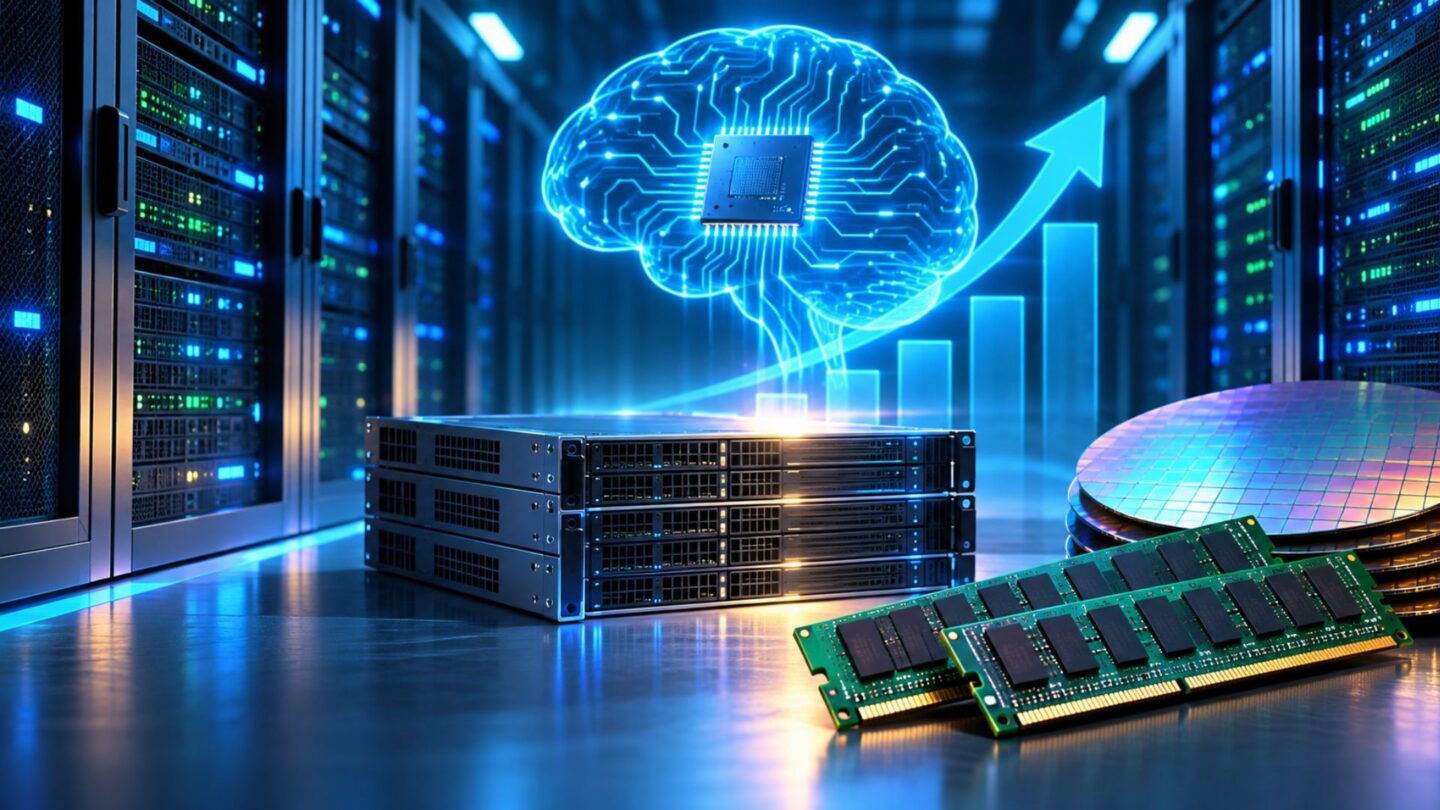
This distinction is important because it shows how component shortages are influencing reported growth. Dell can generate considerably more revenue from server sales even when fewer machines ship, provided each system contains more expensive components or sells at a higher price.
The pressure is also affecting Dell’s PC business. Clarke explained that some customers are prioritising server and storage purchases while postponing personal computer upgrades. Chief financial officer David Kennedy also said the company is redirecting some PC wafer supplies to server production for the second half of the financial year.
This shift is taking place as the wider PC market faces weaker demand. International Data Corporation reported that global PC shipments declined by 20% year on year in the third quarter. Dell’s CSG operating margin has also fallen to 5.5%.
Both HPE and Dell have acknowledged that rising component costs could eventually affect their profitability. HPE chief financial officer Marie Myers said its Cloud & AI operating margin of 18.4% had benefited from favourable pricing. However, she warned of “costs increasing faster than pricing” as the company expands its AI server operations.
HPE expects the segment’s operating margin to decline to approximately 14% in fiscal 2027. Although Neri argued that this would remain “still significantly higher than any historical margin we have had in this business”, investors reacted negatively to the outlook, sending HPE shares down 16.3% the day after the announcement.
The pricing pressure extends beyond the two companies. Reports indicate that Dell, HPE, Lenovo and Supermicro have approached customers to renegotiate AI server contracts after agreements were already signed. Some price increases have reportedly reached as high as 45%, reflecting the growing cost of memory and other components.
Clarke expects the supply shortage to continue into 2027, while Neri believes constraints affecting memory and NAND flash storage could persist until at least the second half of 2028.
AI demand will determine whether the transformation lasts
Dell appears to have a substantial pipeline of AI infrastructure orders to support its current business direction. The company ended the third quarter with a record AI backlog of US$132.3 billion after receiving US$60.2 billion in new orders. At its latest quarterly sales rate, the backlog represents approximately six quarters of AI server shipments.
Clarke said most of the new orders involve Nvidia’s Vera Rubin NVL72 systems. However, Dell is taking additional steps to assess customers’ financial and operational readiness before accepting orders. These checks include access to funding, customer reliability, export compliance, available land and electricity supply.
These considerations reflect a growing challenge for the AI infrastructure industry. Building large data centres requires substantial investment, suitable locations and reliable access to electricity. Even when companies have sufficient funding, delays in securing power connections could prevent projects from progressing as planned.
Profitability will also matter for Dell. AI servers have traditionally carried thinner operating margins than conventional server products, despite their considerably higher selling prices. Kennedy cautioned that ISG’s operating margin would moderate sequentially, suggesting that its current performance may not be sustainable.
The group’s operating margin of approximately 17% during the quarter benefited from favourable market conditions and rising prices. As supply constraints ease and competition increases, maintaining similar margins could become more difficult.
HPE’s longer-term transformation depends on a slightly different combination of opportunities. Beyond its expanding server business, the company is looking to strengthen its position in AI networking, particularly through Juniper’s technology and its work on AMD’s Helios platform.
It also expects to generate greater savings from the Juniper acquisition. HPE is targeting annual cost savings of US$800 million by fiscal 2028, an increase from its original target of US$450 million.
However, the company’s AI networking outlook still faces questions. HPE has set a fiscal 2027 AI networking orders target of US$7.5 billion to US$8 billion. According to JPMorgan analyst Joseph Cardoso, this target suggests relatively flat quarterly orders compared with the fourth quarter.
The timing of new product deployments will therefore be important. AMD only began recognising revenue from Helios shipments during its third quarter, while Myers indicated that contributions from Helios and Oracle-related business would be weighted towards the second half of HPE’s fiscal 2027.
This makes the coming quarters particularly important in determining whether HPE can turn its AI infrastructure investments into sustained growth.
Both companies have clearly become more dependent on AI infrastructure than they were a year ago. Dell has established a substantial server order backlog, while HPE is combining its networking business with new AI systems and partnerships. However, the long-term strength of these changes remains uncertain while the market continues to experience unusually high hardware prices.
If memory supplies improve and component prices return to more normal levels, both companies will need to demonstrate that their growth comes from sustained demand rather than temporary pricing advantages. Until then, their claims of becoming different companies reflect not only their changing strategies but also the unusual conditions shaping the AI hardware market.