



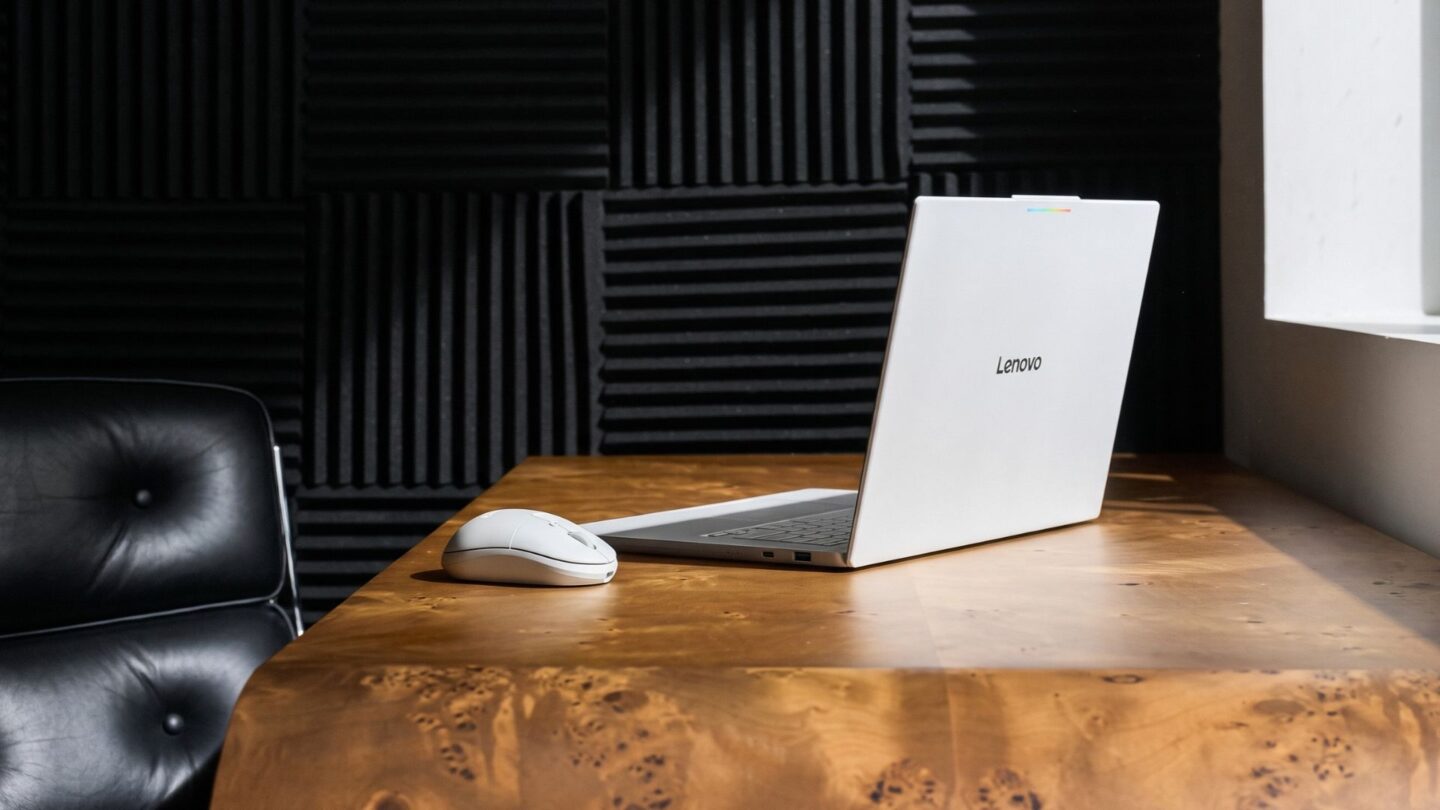
Lenovo’s upcoming detachable tablet, officially dubbed the Lenovo Googlebook Duet 13, could debut in January. Fresh promotional renders shared online by prominent technology tipster Evan Blass indicate the device is “launching in January”, after months of anticipation following its failure to materialise alongside other autumn releases.
Lenovo Googlebook Duet 13, launching in January. https://t.co/4DIv2qxSq2
— Evan Blass (@_evanblass_) November 15, 2026
Earlier reports in July suggested the two-in-one would arrive in autumn alongside two traditional laptops. While those standard clamshell models reached consumers as planned, the detachable tablet remained absent from Lenovo’s autumn lineup. A January release window aligns closely with the annual Consumer Electronics Show in Las Vegas, suggesting the trade event could serve as the official unveiling. Neither Lenovo nor Google has officially confirmed the launch schedule or the product name.
Design and hardware specifications
Visuals of the Lenovo Googlebook Duet 13 reveal a design language heavily inspired by the company’s existing Chromebook Duet series. The primary 13-inch display unit connects to a removable keyboard featuring curved keys, a compact trackpad, and distinct Googlebook branding positioned directly beneath the Ctrl key. Previous leaked imagery also highlighted a dedicated stylus that attaches magnetically to the tablet’s upper edge for wireless charging.
Around the back, the tablet utilises a detachable cover that folds diagonally to act as a kickstand. This rear panel displays prominent Lenovo branding alongside Google’s signature Glowbar light strip, which sits adjacent to the rear camera module. Along the left edge of the chassis, users will find a physical power button and a USB-C port. An unusual pill-shaped cutout is also visible on the top-right edge, which industry observers suspect could house a second USB-C connector in an unconventional position.
While the newly surfaced images did not include an accompanying specification sheet, previous hardware reports offer a clear picture of what to expect inside. The tablet is rumoured to run on a MediaTek Dimensity CX C10 Max processor paired with 16GB of memory. Details regarding internal storage configurations and retail pricing remain undisclosed at this stage.
Position in the Googlebook market
The arrival of the Googlebook Duet 13 represents a notable expansion for the broader Googlebook hardware ecosystem. Currently, every Googlebook available to consumers features a fixed laptop form factor. Although models such as the Acer Googlebook 14 include a convertible hinge that lets the screen fold back into a tablet orientation, none of the existing devices let users fully detach the keyboard.
During the Android Dev Summit, Google officially confirmed that detachable form factors were in development for the platform, positioning Lenovo’s upcoming tablet as a likely pioneer in this category. By offering a lightweight slate that transitions between a laptop replacement and a standalone tablet, the Duet 13 aims to fill a clear gap in the current product lineup.
Software challenges and pricing hurdles
Despite the promising hardware layout, the underlying operating system still requires refinement before a tablet-first device can truly shine. Core elements of the Googlebook software interface, including the main home screen and the application drawer, are currently restricted to landscape orientation. Addressing portrait-mode usability will be essential to ensure a seamless experience when the keyboard is removed.
Furthermore, Lenovo must justify the value proposition of a detachable design in a competitive market. With entry-level Googlebook laptops starting at US$99, consumers will need clear incentives to choose a two-in-one model over a conventional clamshell notebook or a standard Android tablet paired with an accessory keyboard case. Industry watchers will be looking closely at the final retail price and software updates when the device is expected to appear in January.


