


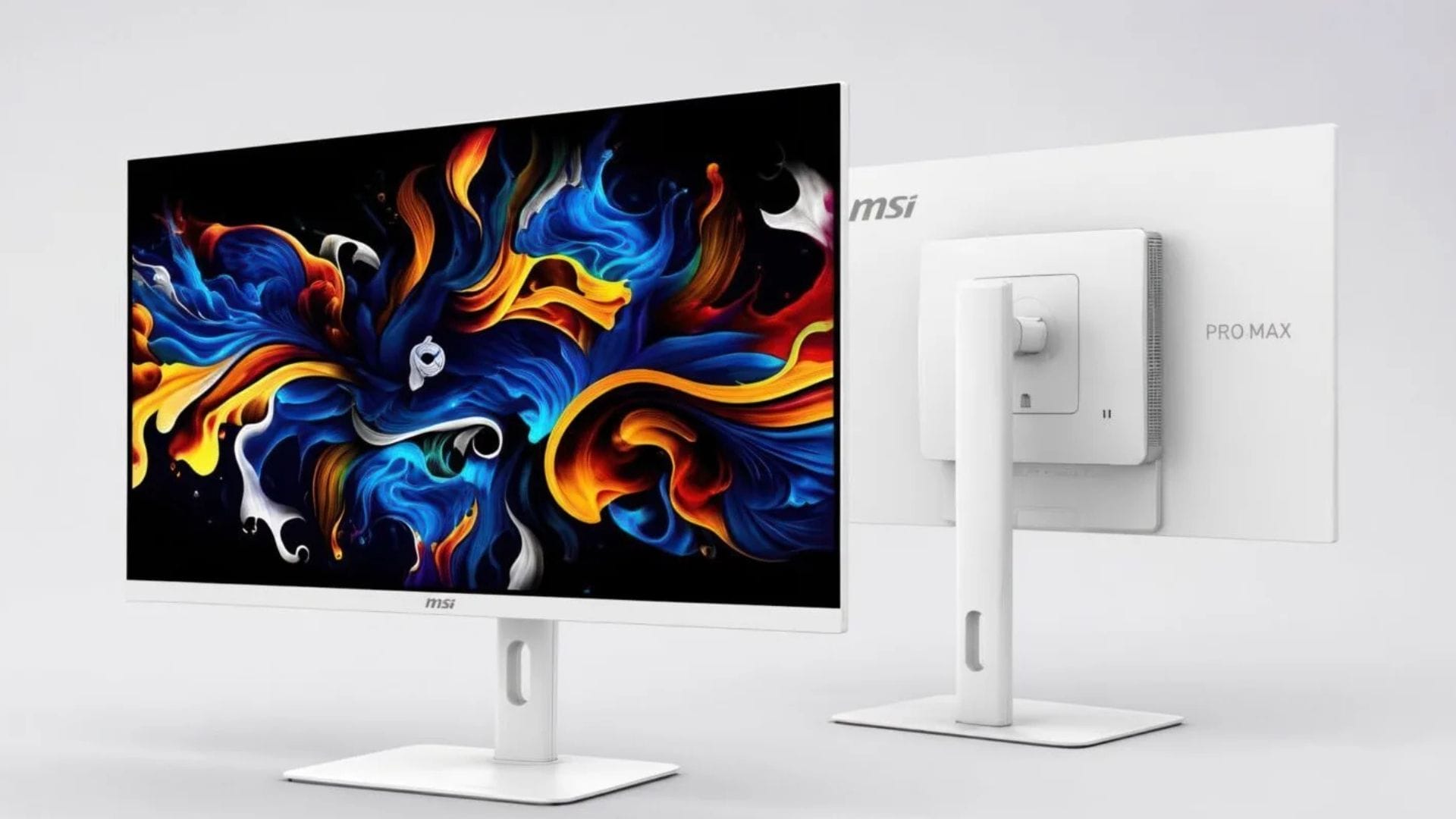
OLED monitor technology could be moving towards a more affordable future after MSI and TCL CSOT introduced what they describe as the world’s first 27-inch 4K desktop monitor built with inkjet-printed OLED technology. The announcement marks an important milestone for display manufacturing, bringing a production method that has largely remained in research and prototype stages closer to commercial use.
The new monitor, called the MSI Pro Max OLED 271UPJW12, uses a display panel developed by TCL CSOT via inkjet printing. Instead of relying on traditional manufacturing methods, the technology prints organic light-emitting materials directly onto the panel. This approach reduces material waste and could lower production costs if it is adopted on a larger scale.
Inkjet printing offers a new approach to OLED production
Conventional OLED panels are produced using complex vacuum deposition equipment and fine metal masks, both of which contribute to high manufacturing costs. Inkjet printing replaces much of this process by depositing organic materials onto the display in carefully controlled patterns, similar to the way a standard printer applies ink to paper.
TCL CSOT has been developing the technology for several years, with earlier demonstrations limited to prototypes and experimental displays. The company has now begun bringing the manufacturing method into commercial production. Lenovo recently introduced the first laptop with a 240Hz inkjet-printed OLED display, while reports suggest that TCL CSOT has begun limited production of 27-inch 4K OLED panels using the same process.
Industry estimates have previously suggested that inkjet printing could reduce overall manufacturing costs by around 20%. However, whether these savings eventually benefit consumers will depend on several factors, including production yields, manufacturing scale, market demand, and pricing strategies adopted by monitor makers. As with many emerging technologies, the first generation of products is expected to command premium prices despite the potential for lower future production costs.
New monitor combines high-end specifications with OLED protection
Beyond its manufacturing process, the MSI Pro Max OLED 271UPJW12 is positioned as a premium desktop monitor. It features a 3840 × 2160 resolution on a 27-inch panel and supports a 120Hz refresh rate, making it suitable for both professional work and entertainment.
The monitor uses a vertical RGB stripe pixel layout, a familiar sub-pixel arrangement designed to improve text clarity. This layout can reduce the coloured fringes sometimes visible around letters on certain OLED displays, helping deliver sharper text for everyday productivity tasks.
MSI states that the display can reach a peak HDR brightness of 1,000 nits while covering 99% of the DCI-P3 colour gamut. It also carries VESA DisplayHDR True Black 500 certification and delivers a pixel density of 164 pixels per inch, offering detailed images and strong colour performance for creative professionals and media consumption.
To help extend the OLED panel’s lifespan, MSI has integrated an OLED protection system that automatically compensates the panel in the background. Unlike some earlier OLED maintenance routines, the process is designed to minimise interruptions during normal use.
Commercial launch highlights growing confidence in the technology
The MSI Pro Max OLED 271UPJW12 also includes a range of features to improve productivity and connectivity. These include a built-in KVM switch that allows users to control multiple devices with a single keyboard and mouse, picture-in-picture and picture-by-picture display modes, USB-C connectivity with 15W charging support, and a fully adjustable stand for improved ergonomics.
Although MSI has confirmed the monitor’s specifications, the company has not announced pricing or availability. As a result, it remains unclear when the display will reach the market or how much it will cost. Given its advanced technology and premium specifications, early models are likely to be positioned at the higher end of the market.
Even so, the monitor represents more than just another OLED display. Its introduction signals that inkjet-printed OLED technology is moving beyond the prototype stage and into commercial products. If production expands successfully and manufacturing efficiencies improve, the technology could eventually reduce production costs and make high-quality OLED monitors more widely available to consumers in the years ahead.