


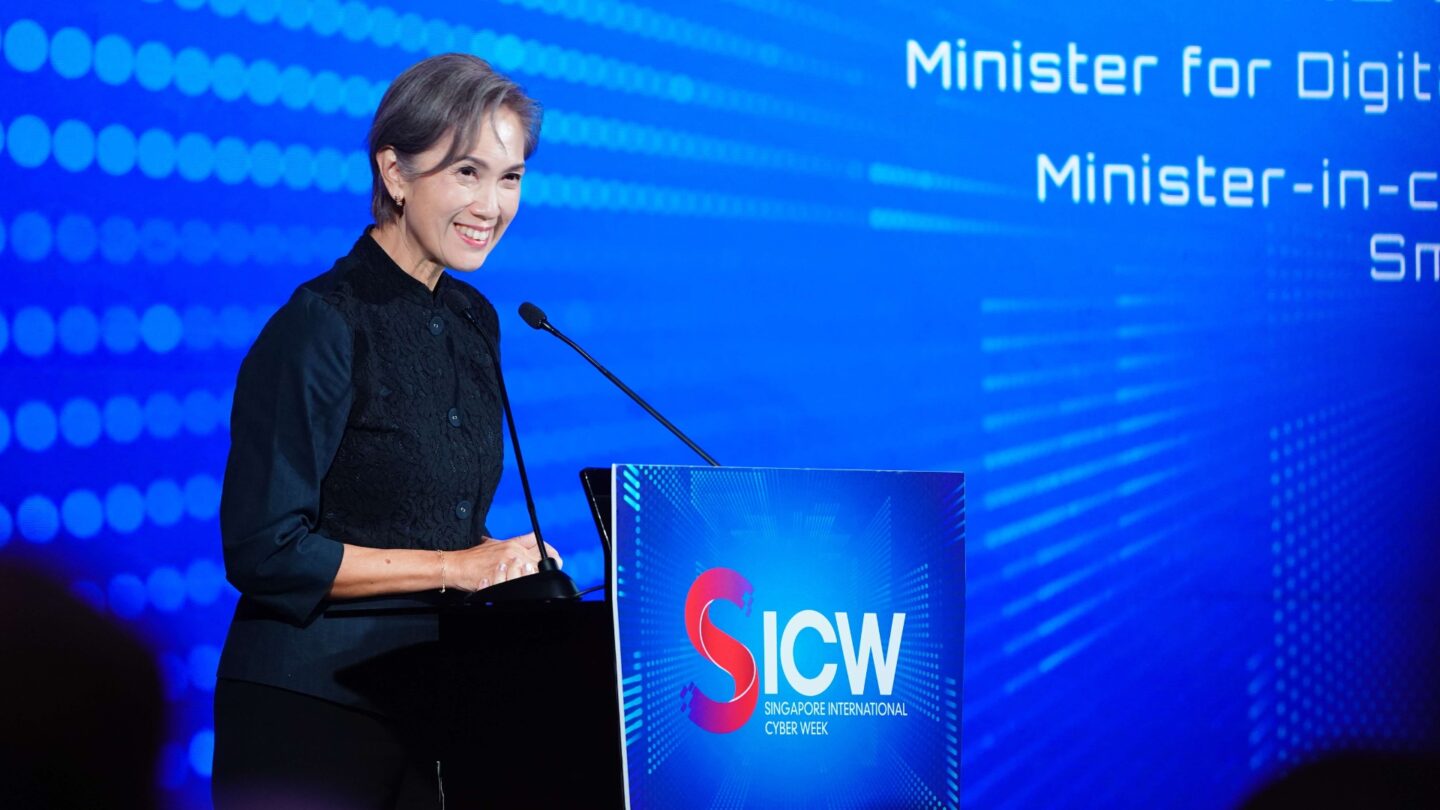
Singapore has called for stronger safeguards for autonomous AI systems alongside closer cooperation between governments and industry to address cyber threats. Outlining these priorities at Singapore International Cyber Week 2026 on 12 October, Minister Josephine Teo warned that advances in AI are outpacing efforts to understand and manage their risks.
Her remarks came ahead of the planned launch of the Singapore Cybersecurity Strategy 2026 by Senior Minister K. Shanmugam the following day. Teo said maintaining trust in digital technologies would require better testing, continued oversight and cooperation across borders, particularly as countries face growing concerns over critical infrastructure and technology supply chains.
AI assurance must continue after deployment
Increasingly capable AI agents can plan, reason and act across digital systems with less human intervention, creating new security and accountability concerns. Because these systems can make mistakes, be manipulated or behave in unintended ways, their connection to sensitive information or critical systems carries potentially serious consequences. Teo cautioned that AI capabilities are developing faster than the ability to assess and address their risks, warning that without sufficient confidence in digital systems, businesses may hesitate to digitalise further, while citizens could become more cautious about adopting new technologies.
Greater assurance is therefore needed before autonomous AI systems are deployed, particularly when they can access sensitive data or perform actions with significant consequences. Teo stressed the importance of retaining human judgement, oversight or control where necessary, stating, “Ultimately, accountability cannot be outsourced. Least of all, to machines.”
Security responsibilities must also continue after deployment. Ongoing monitoring can help identify problems early, while timely reporting of serious incidents can support containment, shared learning and improvements to safeguards. Earlier in 2026, the Cybersecurity Agency of Singapore (CSA) released its Securing Agentic AI Addendum to provide organisations with guidance on securing increasingly autonomous AI systems, developed with industry, government and international partners.
Critical infrastructure and technology supply chains
Cyber threats targeting essential services are also growing increasingly sophisticated, Teo pointed out, citing UNC3886’s campaign against Singapore’s telecommunications sector as a recent example alongside persistent ransomware and cybercrime threats. AI adds to these risks by allowing malicious actors to operate at greater speed and scale.
Concerns extend equally to the reliability of critical technologies and their supply chains. According to Teo, countries are increasingly questioning whether essential technologies and supply chains will remain secure, reliable and accessible during a crisis. Strategic competition is further complicating decisions about technologies, suppliers, standards and interoperability.
CSA is working with industry to prepare Singapore’s critical infrastructure for the transition to quantum-safe systems. Leading operational technology (OT) manufacturers and technology providers have also committed to attaining Singapore’s Cyber Trust Mark, with the aim of strengthening cybersecurity across technology supply chains supporting critical infrastructure.
Because the private sector builds and operates much of the digital infrastructure on which economies depend, Teo emphasised that industry possesses information about cyber threats that governments may not have access to. She called for closer collaboration on security standards, safeguards, threat intelligence sharing, incident reporting and operational coordination, as well as testing technologies before deployment.
Cyber cooperation extends to ASEAN
Cyber threats cross national borders more easily even as international coordination becomes increasingly difficult. Teo described Singapore International Cyber Week as a platform for governments, companies, researchers and cybersecurity professionals to address shared challenges despite differences in their priorities. This year’s event brings together more senior representatives from government and industry, including frontier AI companies with growing influence over digital technologies. Among the international attendees, Teo welcomed Estonia’s Minister of Justice and Digital Affairs, Liisa-Ly Pakosta, who was scheduled to join a fireside chat with CSA Chief Executive Gwenda Fong that evening.
She identified autonomous AI, the transition to quantum-safe systems, ransomware and advanced persistent threats as challenges that countries cannot address independently. Discussions at the event should therefore focus on identifying areas for cooperation and translating dialogue into action.
Singapore intends to apply the same approach when it assumes the ASEAN Chairmanship in 2027. Teo said the country would work with its ASEAN partners to strengthen collective cyber resilience, deepen cooperation and build cybersecurity capabilities across the region’s 11 member states, including closer collaboration with industry partners.
Singapore also intends to maintain an open and connected digital environment while continuing to adopt technologies that deliver real value. This approach will require safeguards and capabilities to manage the associated risks.