



TikTok has redesigned Family Pairing to give parents a clearer view of how their teenagers use the platform. Refreshed daily, the updated dashboard brings together information on screen time, account connections, content interests and public posts.
These updates are intended to help parents understand their teens’ online activity and decide when to adjust settings or start a conversation. Alongside the dashboard overhaul, TikTok is developing an alert for repeated searches associated with self-harm and has introduced an Educator’s Guide for schools.
Parents gain a clearer view of screen time and activity
Screen-time information now appears first in Family Pairing, making existing data on average usage, night-time activity and time-management settings easier to access. These insights sit alongside preset safety, privacy and security measures already active on teen accounts, including private accounts for teenagers, age-appropriate content policies and a default screen-time limit of 60 minutes.
Beyond usage limits, the redesigned dashboard offers more detail about teenagers’ interactions. Parents can view changes in follower and following counts, see which accounts their teen is connected with and check which accounts they have blocked. In the coming months, TikTok plans to extend this functionality to show whom teenagers are messaging on the platform.
To shed light on what teens watch and share, a new content interests section lets parents view a sample of content from verified creators their teenager follows, offering an indication of the topics and communities they engage with. According to TikTok, more than 80% of the parents of teenagers it consulted wanted this type of visibility. Parents can also review what their teenager has posted publicly each week, along with how many views those posts received.
TikTok built the redesign around three principles: making information understandable and useful, providing context alongside settings parents can manage, and respecting teenagers’ privacy. The company reported that more than 70% of parents it consulted wanted tools to help them start conversations with their teens, rather than focusing exclusively on controlling their online experience.
By checking the daily insights, parents can spot changes over time and decide whether to adjust settings directly from the dashboard. Access is not limited to mobile devices either, as Family Pairing is also available through web browsers, allowing parents to use it from a computer without needing the TikTok app.
TikTok develops alerts for potentially harmful searches
TikTok is working on an alert intended to inform parents when their teenager repeatedly searches for known terms associated with self-harm. Still under development, the planned notification would indicate that a teenager may have attempted to find potentially harmful content and provide guidance on how parents could check in and begin a conversation.
To shape the alert and its accompanying guidance, TikTok is working with the Digital Wellness Lab at Boston Children’s Hospital alongside Dr. Dan Reidenberg, Founder and Director of Safe Online Standards and Affiliate Faculty at Johns Hopkins Center for Suicide Prevention.
Wendy Orchard, Chief Executive Officer of the International Association for Suicide Prevention, emphasised the importance of evidence and specialist involvement when designing notifications concerning a young person’s mental health.
“When designing features that respond to signs of suicide and self harm risk, every word matters, both for the young person and for the parent who receives an alert. Getting that balance right means engaging closely with the evidence base and with experts who understand it, including where the evidence is still emerging. We welcome TikTok’s commitment to working with suicide prevention experts and to keep refining this approach as the research develops.”
New Educator’s Guide supports online safety discussions
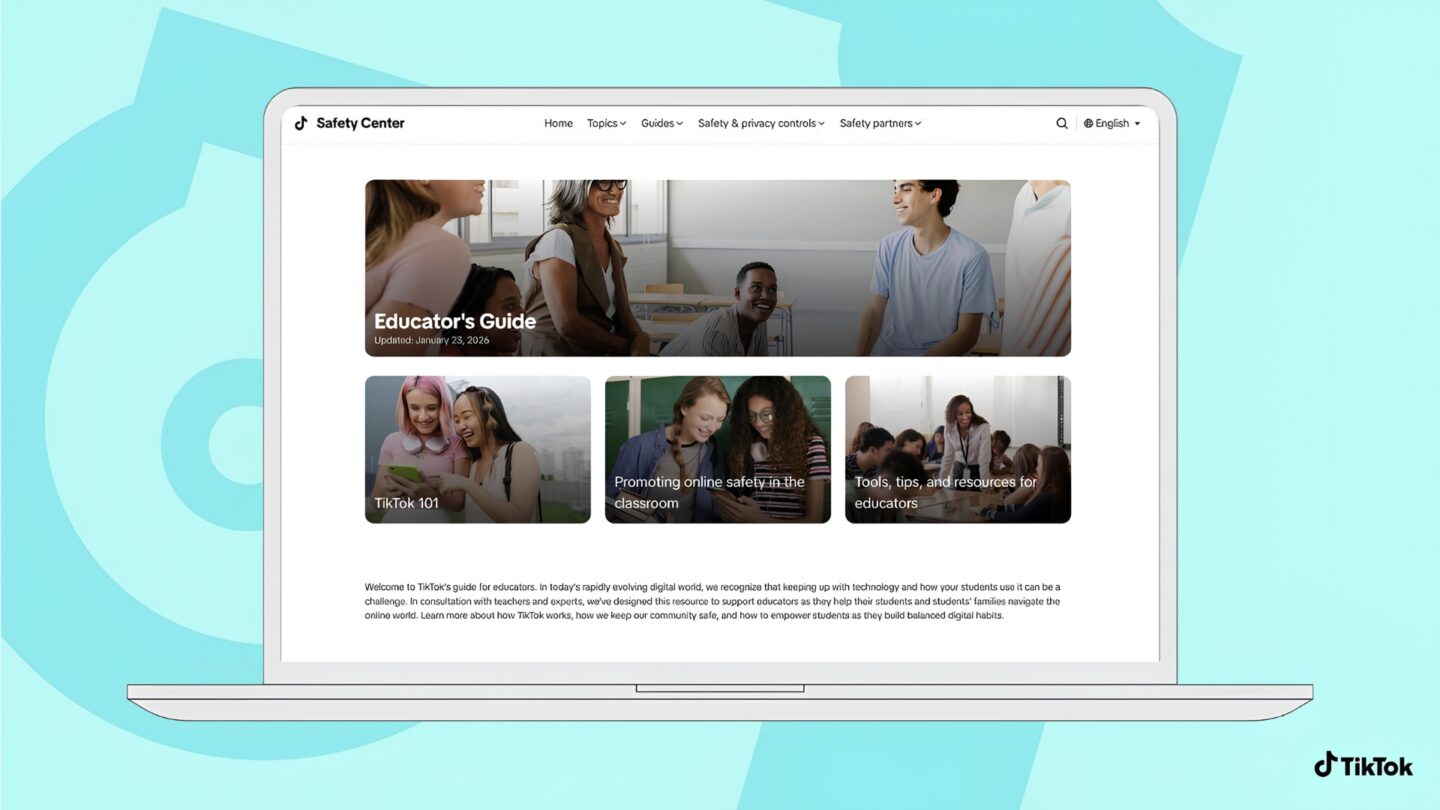
TikTok has also introduced an Educator’s Guide developed in consultation with teachers and youth safety experts. The resource is intended to help school communities understand the platform and support conversations with students and families about online safety, digital wellbeing and media literacy.
Its release follows discussions with teachers who wanted clearer information about how TikTok works, classroom resources and guidance for addressing online experiences with young people. Bringing together information, tools and guidance for educators, the guide is available through TikTok’s Safety Centre alongside other youth safety resources, with additional classroom resources planned for the coming weeks.