



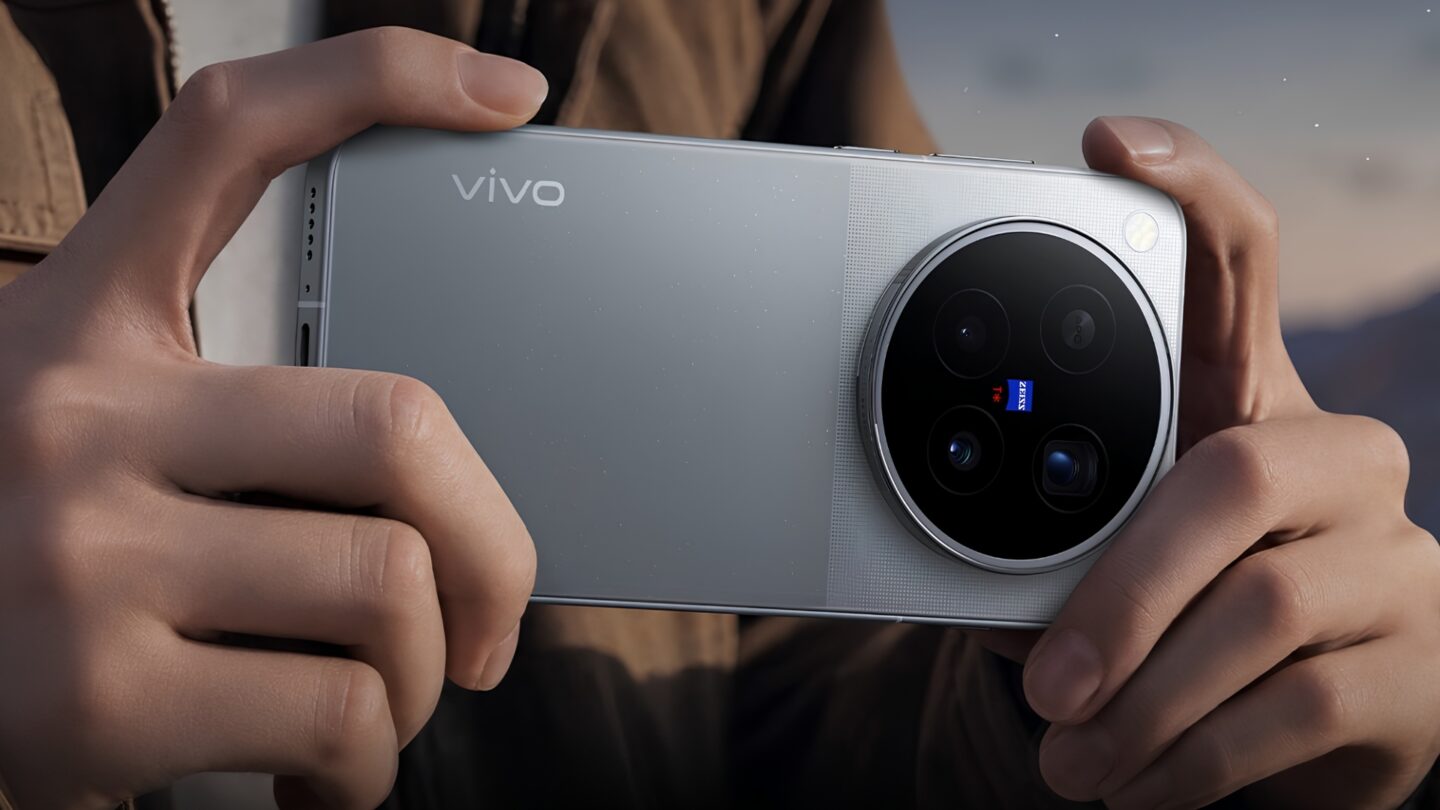
vivo has expanded its flagship smartphone lineup with the introduction of the X500 Pro Max and X500, the two models confirmed for Singapore, bringing upgraded ZEISS telephoto cameras, broadened video recording capabilities and larger batteries to the range. Leading the series, the X500 Pro Max arrives with a 200 MP ZEISS APO Telephoto Camera, native 4K 240 fps video recording and support for a 400 mm equivalent telephoto extender.
Both handsets debut with OriginOS 7, introducing refreshed cross-device connectivity and AI-assisted productivity tools. Silicon choices diverge between the two devices: the X500 Pro Max relies on MediaTek’s Dimensity 9600 Pro processor, whereas the standard X500 is powered by the Dimensity 9600M.
ZEISS telephoto cameras extend long-range photography capabilities
Optical performance on the X500 Pro Max centres on a 200 MP ZEISS APO Telephoto Camera paired with an 85 mm equivalent focal length and a 1/1.4-inch Ultra-Sensing Sensor HP0. Handheld capture is reinforced by a CIPA 7.0 Professional Stabilization system designed to suppress motion blur and enable longer exposures, particularly when framing subjects in low light. For reaching subjects further in the distance, the handset supports the 400 mm Equivalent vivo ZEISS Telephoto Extender Gen 2 Ultra. Compatible across more than 10 shooting modes, such as Stage, Snapshot and Pro, the accessory broadens options for capturing wildlife, performers and sporting action.
Subject tracking across both stills and video has been updated through vivo’s X-Track Engine. Its Lock-On Subject Tracking function maintains focus even if an individual briefly exits the frame or becomes obscured, although the capability is limited to human subjects. In Snapshot Mode, the X500 Pro Max delivers autofocus tracking at up to 60 fps, complemented by 30x Long-Range Motion Snapshot through the Super Snapshot Engine. On the video front, moving subjects can be followed and kept accurately composed using dedicated tools including 4K 120 fps Pro AF Tracking Video and Auto Framing Video.
The standard X500 adopts a different optical arrangement, pairing a 72 mm equivalent ZEISS APO Telephoto Camera with a ZEISS Pro-Level Ultra-Sensing Camera built around a 50 MP, 1/1.28-inch sensor. According to vivo, this primary sensor is similar to the unit used in the X300 Pro. On the X500, portraiture gains refined creative controls through Cinematic Portrait, which adjusts lighting across daylight, dusk and indoor environments while applying film-inspired styles. Photographers can also fine-tune portrait aesthetics with the X500’s vivo Color Palette feature, which provides granular adjustments for tone, glow and grain.
High-frame-rate recording and cinematic video tools
Cinematic video capture on the X500 Pro Max is anchored by its ZEISS TrueDynamic Main Camera, which introduces a range of production-focused capabilities. Among them, Cinematic Pro Log Video is designed to preserve detail across both highlights and shadows, giving creators greater flexibility when grading footage in post-production. vivo states that the camera supports 17 EV of dynamic range under specific recording conditions, though this capability applies strictly to Video mode when the Golden and Vivid colour styles are selected, and does not extend to photography. For portrait videography, the primary sensor supports 4K Dolby Vision Portrait Video to maintain tonal fidelity and natural skin tones under challenging lighting, complemented by a dedicated 4K Cinematic Portrait Video mode featuring Sunny Day and Vibrant colour styles co-developed with ZEISS to offer distinct treatments for lighting and colour reproduction.
High-speed capture is another core highlight, with the X500 Pro Max supporting native 4K video recording at 240 fps alongside extended recording times. Available across Video, Pro Video and Slo-mo modes, this high-frame-rate option allows rapid action to be captured for slow-motion playback and subsequent editing, backed by a 3° Gimbal-Grade OIS system that provides mechanical stabilisation during takes.
Across the broader X500 lineup, recording flexibility is extended through Multi-Focal 4K 120 fps High-Spec Video and 4K Cinematic Color Video, which includes Paris Afterglow, Golden Hour and Pastel colour treatments. A specialised Film Style mode adopts a 2.4:1 aspect ratio combined with cinematic effects such as motion blur, halation and grain. For concertgoers, Stage Mode 3.0 provides dedicated video tools including Auto Framing Fancam Video, 4K Dual-View Stage Video and 4K Stage All-in-One Recording, alongside Super Telephoto Stage Snapshot photography, enabling users to capture the performers, the person behind the camera, or both. Further creative controls are gathered in Movie Workshop, where Auto Framing tracks subjects to keep them centred, and Vortex Shot produces stabilised 360° rotating shots via a single-tap command.
OriginOS 7 expands cross-device connectivity and AI tools
In OriginOS 7, multitasking and interface fluidity receive notable updates through Origin Workbench, which enables task switching via floating windows alongside drag-and-drop file transfers between applications. Underpinning day-to-day responsiveness is the Origin Smooth Engine, which introduces interruptible animations backed by Ultra-Core Computing, Memory Fusion and Dual Rendering to regulate system fluidity over time. Beyond its native environment, OriginOS 7 builds extensive bridges to third-party hardware: according to vivo, the platform supports interoperability with Apple devices such as AirPods and Apple Watch, alongside direct connectivity with iCloud. Local file sharing can be conducted via Quick Share’s interoperability with AirDrop, although vivo notes that reliance on third-party services may affect availability and functionality. For handset upgrades and desktop workflows, Seamless Device Switch transfers essential information between devices without carrying over unnecessary cached data, while the vivo Office Kit supplies tools such as Jovi PC and Camera Sharing for Mac users to support collaboration and content sharing between vivo smartphones and Mac computers.
The updated operating system also integrates a suite of AI-assisted productivity tools. Snap & Go recognises information captured in screenshots, while AI Next Up converts detected scheduling details into automated reminders displayed on the home screen. For voice documentation, AI Recorder provides speaker recognition, transcript outlining, transcript refinement and automated summaries. By offering six specialised templates, including Meeting Summary, Lecture Notes and Interview Summary, the tool organises recorded conversations into structured notes, though the availability of these AI features may vary depending on applications, device settings, country, region and language. Visual personalisation rounds out the software updates, adding Dynamic Translucent Material, Wiggle (Boing) for animating static images, and StickIt, which isolates subjects from photographs so they can be placed elsewhere across the interface.
Larger batteries, upgraded displays and Singapore pricing
Hardware architecture is led by MediaTek silicon. The X500 Pro Max is powered by the Dimensity 9600 Pro, manufactured on TSMC’s 2 nm process with a 2+3+3 architecture, while the standard X500 relies on the Dimensity 9600M. Both handsets introduce vivo’s BlueVolt Battery System, incorporating a 7,800 mAh battery in the X500 Pro Max and a 7,500 mAh battery in the X500, setting the highest battery capacities ever offered in the brand’s X series. These quoted figures represent typical capacities, with the rated capacities standing at 7,605 mAh and 7,270 mAh respectively. The power cells utilise 2nd-Gen Semi-Solid-State Battery Technology, which vivo states supports operation in temperatures as low as -20°C. Thermal management during powered usage is handled by Bypass Charging, designed to manage heat when operating the handset while charging, while on-device AI learns individual usage patterns to adjust battery consumption.
Charging specifications remain uniform across both models, with support for 90W wired FlashCharge and 40W wireless FlashCharge. Reaching the stated wireless charging capability requires a compatible vivo 50W Vertical Wireless Flash Charger 2 or iQOO 50W Vertical Wireless Charger 2 used in conjunction with the appropriate charger and cable. First-generation versions of these wireless chargers are not compatible with the X500 series, and actual charging power varies according to usage conditions. On the front, both handsets feature ZEISS Master Color Display technology, delivering up to 2,000 nits of global peak brightness alongside 100% P3 colour gamut coverage. The X500 Pro Max carries a 6.85-inch, 2K screen, which vivo describes as its largest flat-screen smartphone display.
The two handsets adopt distinct exterior designs. The standard X500 introduces a squared Floating Camera Module and comes in Dusk Black and Sunny White finishes, whereas the X500 Pro Max adopts a Tideline Design featuring a gently sloping transition between the camera module and body, available in Starry Gray and Sunset Orange. Common hardware specifications across the lineup include IP68 and IP69 dust and water resistance ratings, 3D Ultrasonic Fingerprint Scanning, USB 3.2 connectivity and an infrared blaster. vivo notes that the water and dust resistance ratings are based on controlled laboratory testing and may diminish through normal use.
In Singapore, both smartphones will be available in a single configuration comprising 12GB of RAM and 512GB of storage. The standard vivo X500 is priced at S$1,999, while the flagship vivo X500 Pro Max retails at S$2,499.
Pre-orders will run from 20 to 30 October through vivo Experience Stores, Shopee, Lazada, TikTok and authorised retailers, including Challenger, Best Denki, Courts, Harvey Norman and Gain City, with Singtel pre-orders available from 23 to 30 October. Customers placing orders by 30 October will be eligible for a S$200 pre-order discount. Additional purchase benefits include a complimentary 200 mm Telephoto Extender with case, valued at S$399 and subject to stock availability, two years of international warranty coverage and three months of screen protection coverage. An exclusive Jay Chou gift box, valued at S$69, is also offered for in-store purchases. General retail availability begins on 31 October through authorised retailers and participating telecommunications partners.