



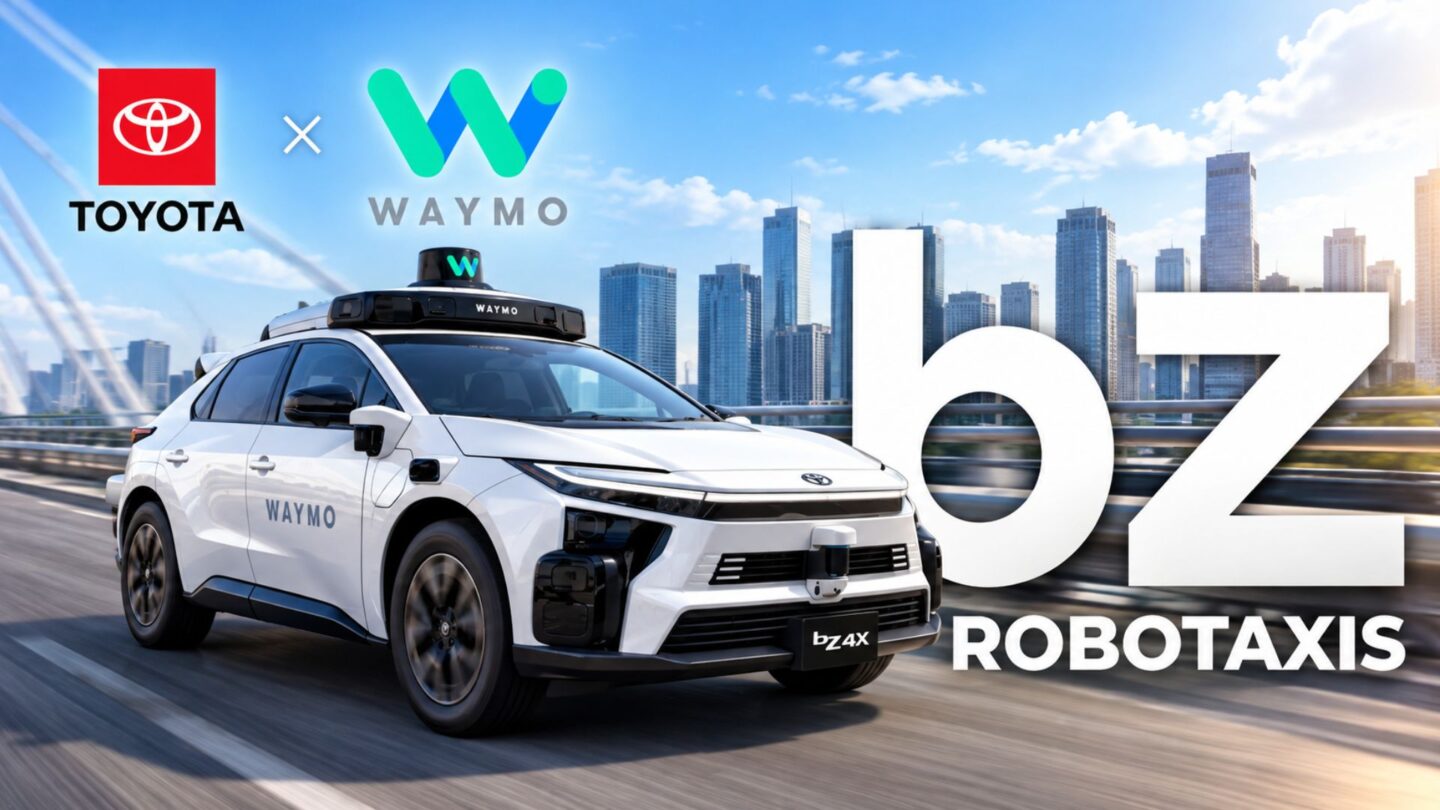
Waymo and Toyota are preparing to begin testing a new fleet of autonomous electric vehicles in Japan in 2027, marking another step in their partnership to expand self-driving technology into international markets.
The companies confirmed that the initial tests will use Toyota bZ4X electric vehicles equipped with Waymo’s autonomous driving technology. The project follows a preliminary agreement announced in April 2025, when the two companies first outlined plans to collaborate on developing and deploying robotaxis.
Japan will serve as the first international testing ground for the jointly developed vehicles. Following the Japanese trials, the companies intend to expand their operations to the UK and other markets where vehicles drive on the left-hand side of the road.
The partnership combines Toyota’s experience in vehicle engineering and large-scale manufacturing with Waymo’s expertise in autonomous driving systems. Both companies aim to accelerate the development and wider adoption of self-driving vehicles while maintaining safety standards.
Toyota bZ4X electric vehicles to support autonomous driving tests
The upcoming testing programme will use Toyota’s bZ4X, an electric SUV developed on the e-TNGA platform. Toyota and Subaru jointly developed the architecture to support their electric vehicle offerings. The bZ4X was Toyota’s first modern mass-market electric vehicle and will now support the company’s efforts to advance autonomous mobility.
Toyota will manufacture the vehicles intended for the project at its Takaoka plant in Toyota City, Aichi Prefecture, Japan. The facility will also install Waymo’s autonomous driving hardware, preparing the electric SUVs for testing on Japanese roads.
The manufacturing arrangement lets Toyota leverage its existing vehicle production capabilities while integrating the technology required for autonomous operation. Rather than developing an entirely new vehicle platform, the partnership will use an existing electric vehicle model as the foundation for the robotaxi programme.
The companies believe combining their respective technologies and expertise will help accelerate the development of autonomous vehicles for different international markets.
“By pairing Toyota’s global manufacturing and vehicle development expertise with Waymo’s fully autonomous technology, the companies will accelerate scaling safety-validated Level 4 autonomous vehicles globally,” they said in a statement.
Level 4 autonomous driving refers to a system that can perform all driving tasks within specific operating conditions without requiring a human driver to take control. This makes it suitable for robotaxi services operating within defined areas and under approved conditions.
Waymo continues expanding its autonomous vehicle programme in Japan
The Toyota bZ4X fleet will join Waymo’s existing autonomous vehicle testing activities in Japan. The company began testing its Jaguar I-PACE self-driving vehicles in the country in 2025 as part of its efforts to understand local driving conditions and prepare its technology for the Japanese market.
As part of the programme, Waymo worked with Nihon Kotsu Co., a Tokyo-based taxi operator. Drivers from the Japanese company operated the Jaguar I-PACE vehicles around the capital, helping Waymo collect information about the city’s roads, traffic patterns and driving environment.
The collaboration provides Waymo with an opportunity to adapt its autonomous driving technology to conditions that may differ from those in the United States, where the company already operates commercial robotaxi services. Tokyo presents particular challenges for autonomous vehicles because of its busy streets, complex road layouts, pedestrian activity and dense urban traffic.
The data gathered through these initial testing activities is expected to support Waymo’s preparations for launching a fully autonomous ride-hailing service in Tokyo.
The company plans to introduce the service in 2027, although it has not confirmed the exact timing of its commercial launch or the areas it will initially cover. It also remains unclear when Toyota bZ4X vehicles will join Waymo’s commercial robotaxi fleet.
Partnership targets expansion into the UK and other markets
Beyond Japan, Waymo and Toyota are looking to extend their autonomous vehicle partnership to additional international markets. The companies have identified the UK and other right-hand-drive countries as potential destinations for future deployment.
Expanding into these markets will require the companies to adapt their vehicles and autonomous driving systems to different road environments, traffic regulations and local operating requirements. Testing the bZ4X in Japan will provide an important opportunity to evaluate how the technology performs in a country where vehicles travel on the left side of the road.
The UK could become a significant market for the partnership because of its established transport infrastructure and growing interest in autonomous mobility. However, the companies have not announced specific launch dates or locations for their planned expansion beyond Japan.
The collaboration also reflects a broader effort by traditional car manufacturers and autonomous driving technology companies to combine their strengths. Toyota brings established vehicle development, manufacturing and global distribution capabilities, while Waymo contributes its self-driving technology and experience operating autonomous ride-hailing services.
For Toyota, the project creates another opportunity to explore how its electric vehicles could support future mobility services. For Waymo, working with a major global manufacturer could help it expand its autonomous fleet without relying solely on its existing vehicle partnerships.
Although the initial testing programme is still some time away, the planned introduction of the Toyota bZ4X fleet in 2027 represents an important milestone for both companies. Its progress in Japan could help determine how quickly the partnership moves towards commercial operations and expansion into other right-hand-drive markets.