


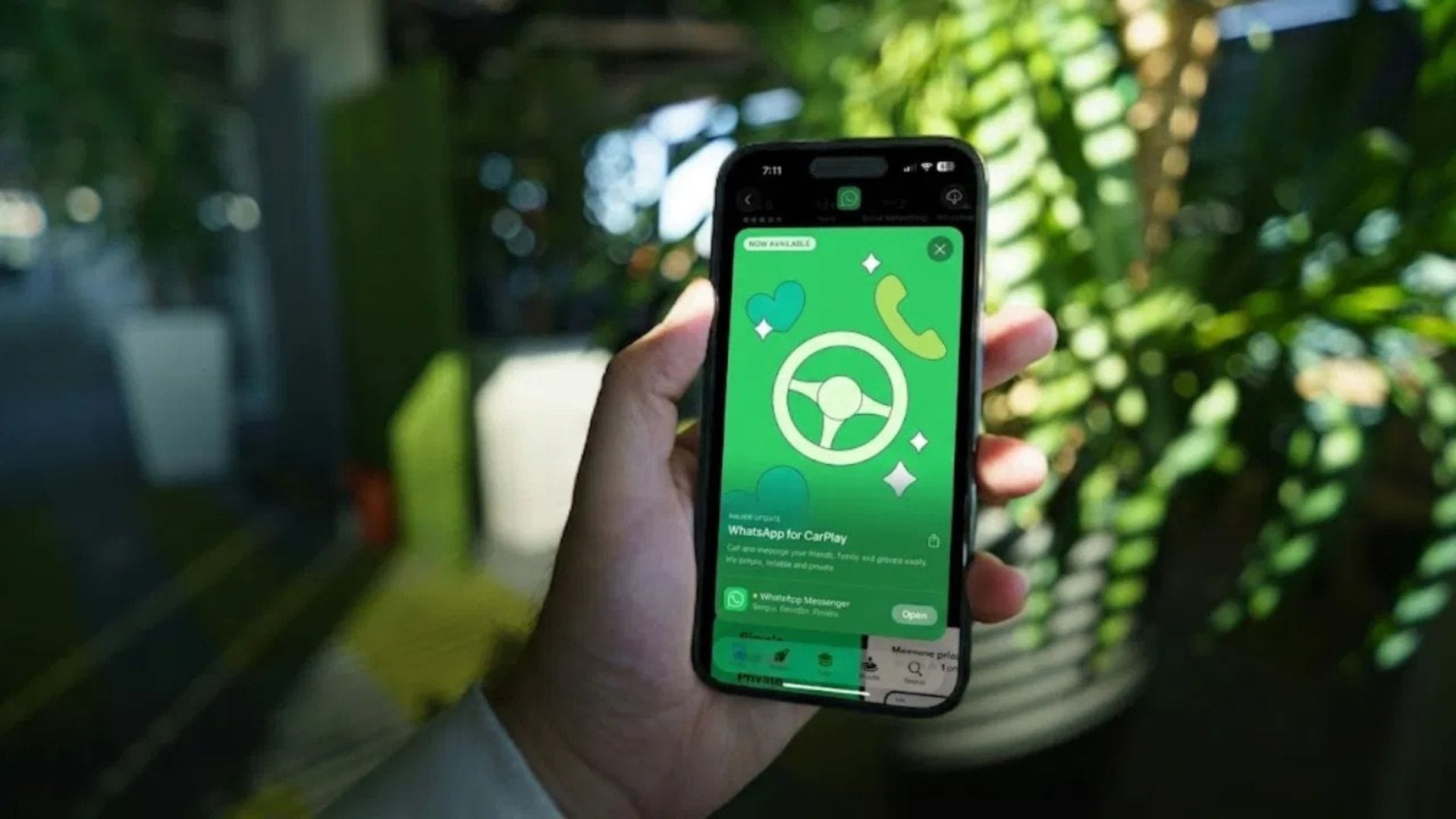
Meta has released an updated version of WhatsApp for Apple CarPlay, introducing a redesigned interface that lets drivers interact with the messaging service more directly on their vehicle displays. The update marks a notable shift from earlier versions, which relied heavily on Siri voice commands and offered limited visual interaction.
The new version is designed to improve usability and accessibility while driving, providing clearer access to contacts, messages, and call history without requiring constant voice interaction. The update follows a period of beta testing. It is now being rolled out more widely to users who update their iOS application and connect their devices to compatible infotainment systems.
Improved navigation and contact access
The updated WhatsApp experience on CarPlay introduces a native interface that gives users visual access to key features previously handled almost entirely through voice commands. Earlier versions of the application allowed users to send messages or make calls primarily through Siri, with minimal on-screen controls available.
With the new interface, users can now browse a contact information section that displays profiles saved within their WhatsApp accounts. This change allows drivers to quickly locate people they wish to contact without relying solely on spoken commands. The addition of a favourites section further simplifies communication by placing frequently contacted individuals within easy reach.
The redesign also introduces a clearer layout that reflects modern in-car interface standards. By displaying contacts and key actions directly on the dashboard, the update aims to reduce the number of steps required to perform routine tasks. This visual approach may prove particularly useful for drivers who prefer tapping simple icons rather than speaking instructions aloud, especially in situations where voice commands are impractical.
Meta’s decision to introduce a more interactive interface appears to reflect growing demand for messaging tools that integrate seamlessly with in-car technology. As infotainment systems continue to evolve, users increasingly expect familiar mobile applications to function in ways that mirror their smartphone experience while still prioritising safety.
Access to chats, calls, and shortcuts
In addition to improved contact navigation, the updated version provides users with access to a list of recent chats and call history directly within the CarPlay interface. This addition allows drivers to review their most recent conversations and interactions without returning to their mobile devices.
The new layout also introduces shortcut buttons designed to make communication faster and more flexible. These shortcuts allow users to dictate messages or initiate calls with a single tap, offering an alternative to voice-only control. Such options may be particularly valuable in situations where voice assistants cannot accurately recognise speech due to background noise or other distractions.
By integrating chat and call information into a single dashboard, the update aims to reduce the time required to complete common communication tasks. The presence of visible message threads also provides drivers with a clearer sense of conversation history, making it easier to maintain context during ongoing discussions.
Meta began beta testing the redesigned application at least a week before its broader release. During this testing period, selected users were able to try the new features and provide feedback. With the public rollout now underway, access to the enhanced interface is available through a standard app update on compatible iOS devices.
Users who install the latest version of WhatsApp and connect their devices to CarPlay-enabled vehicles will automatically gain access to the new features. This streamlined rollout method avoids the need for additional installations or separate downloads, allowing the improvements to reach a wide audience with minimal effort.
Wider developments in in-car communication technology
The introduction of a native WhatsApp interface for CarPlay reflects a broader shift in how technology companies approach in-car communication tools. Messaging platforms are increasingly being adapted for use in vehicles, with developers focusing on safety, simplicity, and convenience.
As vehicles become more connected, drivers are seeking ways to stay in touch without compromising their attention on the road. Interfaces designed specifically for automotive environments aim to reduce distraction by presenting only essential information in large, readable formats. The latest WhatsApp update fits into this trend by offering simplified navigation and clear visual controls.
Other technology developments are also expanding the range of features available to drivers through CarPlay. Recent updates from various companies have introduced conversational tools and voice-based assistants that enable drivers to interact with digital services more naturally. One notable development is the rollout of voice-based conversational features that allow users to engage in spoken interactions while driving.
These advancements highlight the growing importance of integrating communication tools into vehicle systems in ways that remain intuitive and safe. As more applications adopt native in-car interfaces, drivers may find that their vehicles become increasingly capable communication hubs, offering messaging, calls, and other services through a single dashboard display.
Meta’s latest update signals a continued effort to keep WhatsApp competitive amid rapidly advancing in-car technology. By expanding beyond voice-only functions and introducing a more complete visual interface, the company is aligning its platform with user expectations for convenience and reliability.
Looking ahead, further enhancements are likely as developers refine their understanding of how drivers interact with technology on the road. Future updates may include additional customisation options, improved voice recognition, and deeper integration with vehicle systems, reinforcing the role of messaging services as a central part of modern driving experiences.