

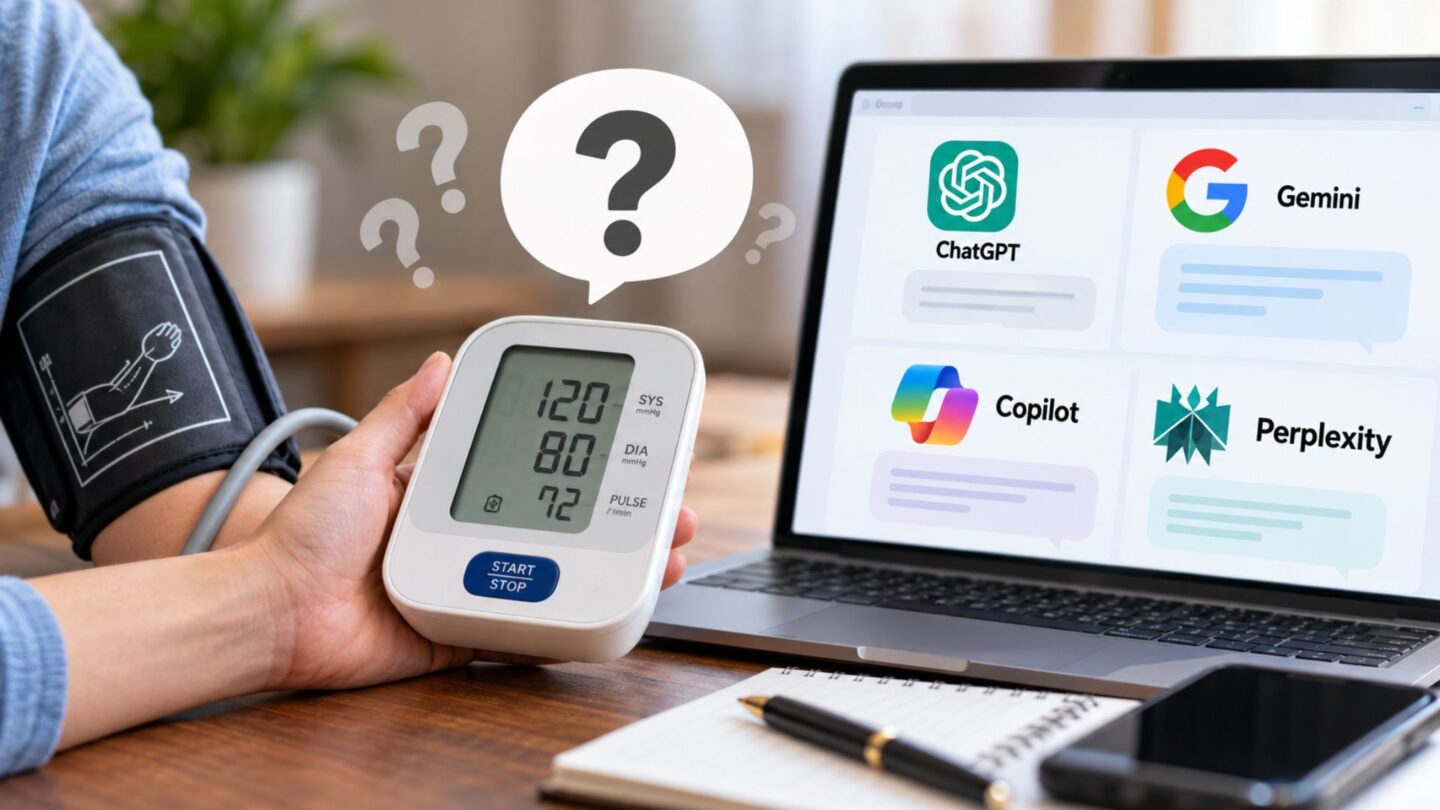
AI chatbots may not be reliable enough to help consumers choose a clinically validated home blood pressure monitor, according to new research presented at the American Heart Association’s Hypertension Scientific Sessions 2026. The study found that popular artificial intelligence tools sometimes struggled to distinguish devices that had passed independent accuracy testing from those that had not.
The findings raise concerns about the growing use of AI-powered search tools for health-related decisions. Although chatbots can quickly provide information about medical products, their answers may be inconsistent or incorrect, potentially leading consumers to purchase devices that do not meet established clinical standards.
AI tools struggle to verify blood pressure monitor accuracy
Researchers evaluated four widely used AI tools: Google Gemini, Microsoft Copilot, ChatGPT and Perplexity. They tested the systems using information about 324 home blood pressure monitors, including devices that had been independently validated and others that had not met the relevant testing requirements.
The researchers asked each chatbot to determine the validation status of the devices using three different approaches. The aim was to assess how reliably the systems could identify monitors that had undergone independent testing to confirm their accuracy.
Validation is an important distinction when selecting a home blood pressure monitor. It means a device has undergone independent testing to determine whether it produces sufficiently accurate and consistent readings. Consumers may find it difficult to establish this status simply by examining a product’s description or marketing claims.
The study found that Gemini achieved the highest overall accuracy, with results ranging from 86% to 91%, depending on the question asked. The other three tools performed less consistently, recording accuracy rates ranging from 63% to 83%.
However, the results also revealed a weakness shared by all four systems. They were generally less successful at confirming that a monitor had been validated than at identifying devices that had not received validation. This problem persisted even when an official registry provided the correct information the AI tool could access.
The researchers also examined whether the systems would produce consistent answers when the same question was repeated. In some cases, asking the same chatbot about the same device on another day or using a different computer resulted in a different response. This inconsistency suggests that an answer cannot necessarily be treated as dependable simply because it comes from a widely used AI service.
Study author Dr Anna Soriano said most tools performed only slightly better than a coin toss, and even Gemini sometimes failed to identify readily available information. The findings highlight the difference between an AI system producing a confident answer and providing properly verified information.
Why choosing a validated monitor matters
Home blood pressure monitors are widely used by people who need to track their readings between medical appointments. These measurements can help healthcare professionals assess whether blood pressure is under control and decide whether further investigation or treatment adjustments are needed.
For these reasons, the device’s accuracy is essential. A monitor that produces unreliable readings could give someone a misleading picture of their blood pressure. Consistently high or low readings may affect conversations with healthcare professionals and influence decisions about diagnosis, monitoring, and treatment.
The researchers warned that consumers who rely on an incorrect AI response could mistakenly believe that an unvalidated device meets recognised clinical standards. A chatbot might recommend or approve a monitor based on incomplete information, potentially giving users false confidence in the readings it produces.
The study also illustrates a broader limitation of AI tools in healthcare-related searches. These systems can gather and summarise information quickly, but they may overlook relevant details, misinterpret available records or provide different answers to identical questions. Their responses should therefore not replace verification through authoritative sources, particularly when the information could affect medical decisions.
The results do not mean every answer an AI chatbot generates is incorrect or that all monitors these systems recommend are unsuitable. Instead, they show that chatbot responses alone are not a reliable way to determine whether a particular blood pressure monitor has passed independent validation testing.
Consumers should also recognise that product popularity, online reviews, and manufacturer claims do not necessarily establish clinical accuracy. Checking a device against a recognised source provides a more reliable basis for determining whether it has undergone the appropriate assessment.
Where consumers should check a blood pressure monitor
Rather than relying on a chatbot to confirm a device’s status, the researchers recommend checking recognised validation registries directly. One resource available to consumers is ValidateBP.org, which lists blood pressure devices that have met established validation criteria.
Consulting a registry lets consumers compare the monitor they plan to buy with the devices listed as validated. Check the specific model rather than relying solely on a manufacturer’s name, because validation applies to particular devices and does not automatically cover every product from the same company.
Consumers can use these records to compare monitors before buying. If a device isn’t listed in a recognised registry, don’t assume it’s validated. A pharmacist or healthcare professional may also help identify an appropriate monitor and explain how to use it correctly.
The findings remind us that AI chatbots are useful starting points for gathering general information, but their responses require independent verification. When selecting equipment to monitor a medical condition, rely on established clinical resources rather than accepting an AI-generated answer at face value.
As AI-powered search tools become more common, their ability to provide accurate and consistent health information remains an important area for further evaluation. Until these systems prove more reliable at identifying validated medical devices, consumers should consult recognised registries before choosing a home blood pressure monitor.