


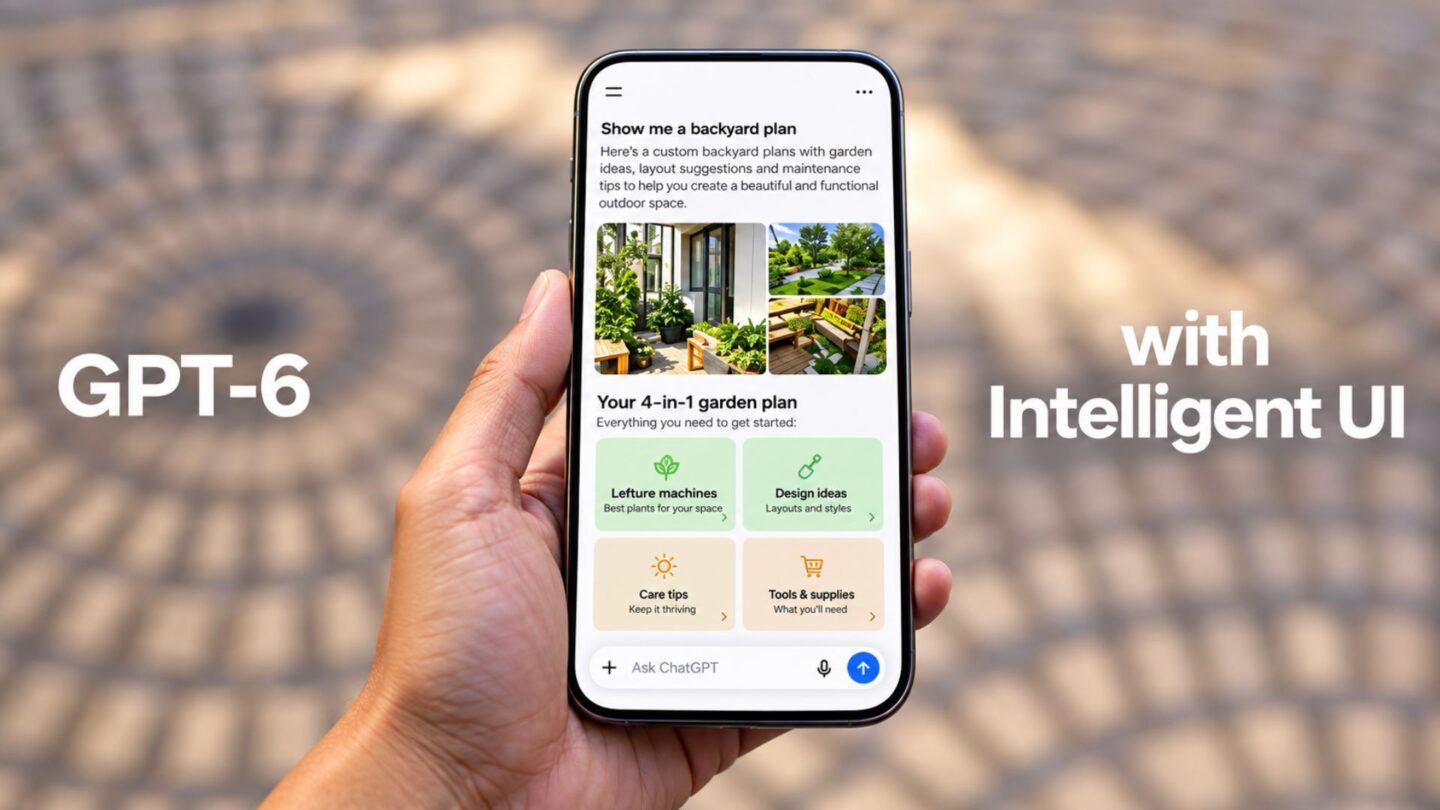
OpenAI has begun a broader rollout of GPT-6 alongside a new feature called Intelligent UI, which allows ChatGPT to present information through interactive elements rather than relying solely on text responses.
The update, which began on 7 October 2026, is designed to make ChatGPT responses more useful for tasks that benefit from visual or interactive tools. Instead of simply explaining how to split a restaurant bill, for example, ChatGPT can create an interactive bill splitter that calculates it within the conversation.
GPT-6 and Intelligent UI, now rolling out in ChatGPT for everyone. Intelligent UI in ChatGPT delivers fast, interactive answers that make everyday questions more visual, complex topics easier to grasp, and interactive tools for your task available on the spot. https://t.co/XL2gDCPBwG
— OpenAI (@OpenAI) October 7, 2026
ChatGPT can now build interactive responses
An intelligent UI allows ChatGPT to decide how to present information based on the user’s request. Responses can combine traditional text with elements such as charts, buttons, forms and diagrams, giving users a way to interact directly with the information rather than simply reading it.
For example, someone planning a road trip could receive a map alongside information about potential detours. Users asking for help with calculations could also receive an interactive calculator or bill-splitting tool directly within the chat. The feature could also support education by presenting explanations of unfamiliar subjects as interactive visual lessons rather than static text.
OpenAI has developed Intelligent UI, which uses a collection of ready-made interface components and a compiler. The model generates the content and instructions, while the system assembles the corresponding visual interface on screen. This approach also lets parts of an interface appear progressively, rather than requiring the complete response before anything is displayed.
The company acknowledges that the system’s ability to select and arrange interface elements is still developing. This means some responses may not always use the most effective layout or presentation, particularly as the feature continues to evolve.
GPT-6 reaches more ChatGPT users
The Intelligent UI rollout accompanies a broader expansion of GPT-6 across ChatGPT. GPT-6 had previously been available to paying customers, but 7 October marked the start of a wider rollout that brings the new model and Intelligent UI to more users.
Plus, Pro, Business and Enterprise customers are receiving access first through the Chat tab. Free and Go users are scheduled to receive the update from 8 October.
The model available depends on the user’s ChatGPT plan. Paid subscribers receive GPT-6 Sol, while Free and Go customers receive GPT-6 Luna. The different versions are intended to provide varying levels of capability while extending access to the GPT-6 generation across more of ChatGPT’s user base.
The rollout also focuses on improving how quickly ChatGPT responds to questions that require web searches. According to OpenAI, GPT-6 Instant answers such questions 44% faster on average than GPT-5.6 Instant.
OpenAI has also improved the model’s ability to determine when a web search is necessary. The company says GPT-6 makes better decisions about when to search and is more reliable when identifying information that supports its answers.
New interface could change how people use AI
The introduction of Intelligent UI represents a broader shift in how ChatGPT can deliver information. Rather than treating the chatbot as a text-based question-and-answer system, OpenAI is giving it more control over how it structures and presents an answer.
For users, the practical benefit could be less time spent translating written instructions into actions. Someone asking for help calculating a cost, planning a journey, or understanding a complicated concept could receive a tool designed specifically for that task within the same conversation.
However, some performance claims about GPT-6 will need independent assessment. OpenAI’s reported 44% improvement in response speed for web-search questions is based on the company’s own measurements, and independent testing will be needed to determine how consistently users experience the claimed improvement.
As GPT-6 becomes available to Free and Go users from 8 October, Intelligent UI is likely to become one of the most visible changes in the ChatGPT experience. Its success will ultimately depend not only on the quality of the underlying model but also on how accurately it chooses when an interactive component is more useful than a conventional text response.