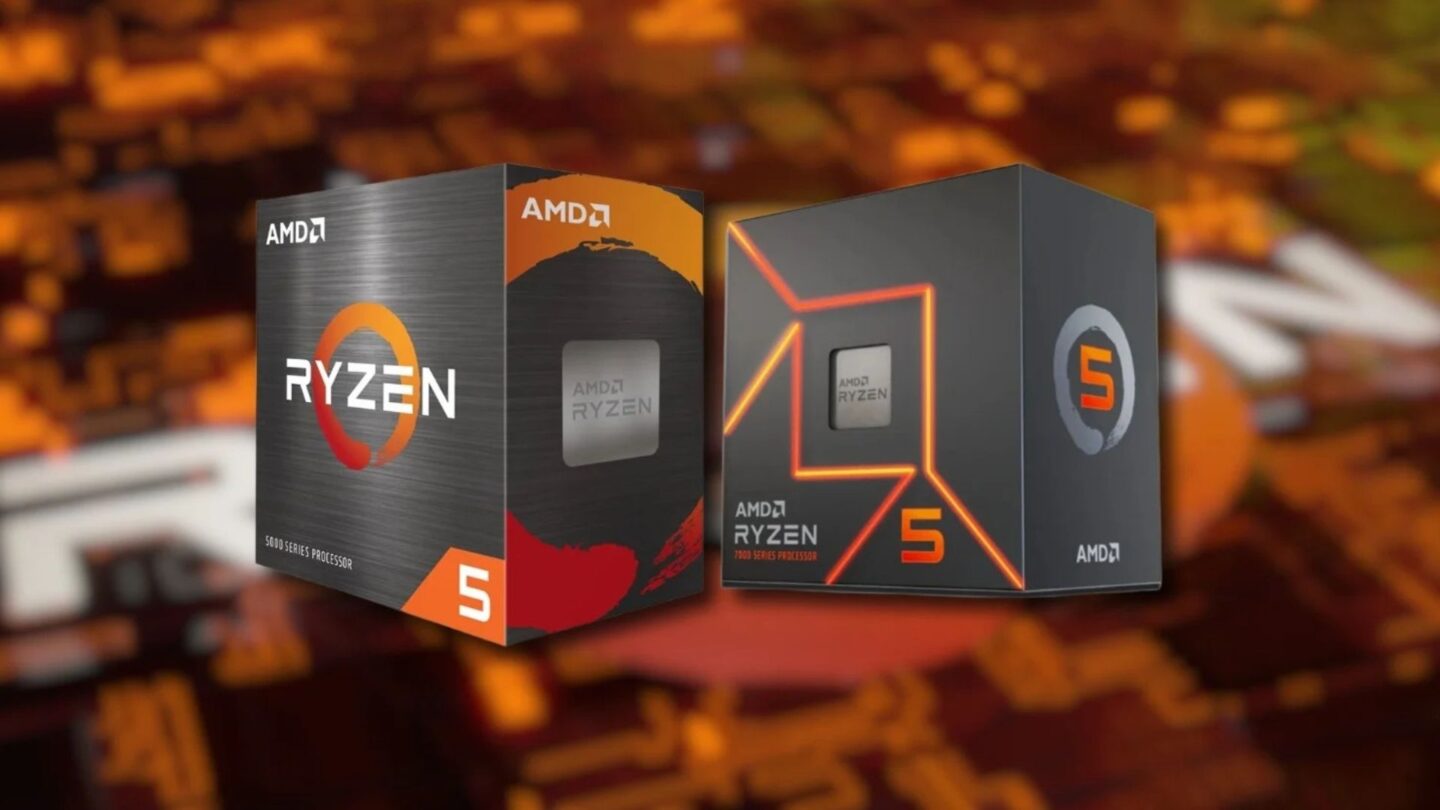
AMD has expanded its desktop processor range with two new six-core chips for users who want to keep PC upgrade costs under control. The Ryzen 5 5500F targets the older AM4 platform with Zen 3 architecture and is priced at around US$99, while the Ryzen 5 7500 uses the newer AM5 platform and Zen 4 architecture at around US$189.
The two processors suit different PC builders. The Ryzen 5 5500F is designed to provide an inexpensive upgrade for systems that already use AM4, letting owners keep their existing motherboard and DDR4 memory. The Ryzen 5 7500, meanwhile, offers a more modern platform with DDR5 support and includes integrated Radeon graphics.
The new chips arrive as the cost of building a current-generation PC remains a concern for budget-conscious buyers. Moving to AM5 requires a new compatible motherboard and DDR5 memory, while memory prices have risen sharply in 2026. For existing AM4 users, the 5500F could extend the life of an older system without replacing several major components at once.
Ryzen 5 5500F offers a low-cost AM4 upgrade
The Ryzen 5 5500F is based on AMD’s Zen 3 architecture and features six cores and 12 threads. It operates at a 3GHz base clock speed and can reach up to 4.4GHz under boost conditions. The processor also includes 16MB of L3 cache, supports PCIe 4.0, and works with DDR4-3200 memory.
With a 65W TDP, the chip balances performance and power consumption. AMD also includes its Wraith Stealth stock cooler, which can reduce the additional cost for buyers building or upgrading a budget system.
One important limitation is the lack of integrated graphics. A separate graphics card is required to produce a display, meaning the 5500F is better suited to systems that already have a dedicated GPU. This may be less of an issue for existing gaming PCs, where you can keep the graphics card while upgrading the processor.
AMD’s continued support for AM4 also plays an important role in the chip’s appeal. The company has previously said the older platform remains relevant for lower-priced systems and users who want to improve their computers without replacing the motherboard and memory.
In an interview with Digital Trends, AMD product management lead Sourabh Dhir explained the reasoning behind the company’s continued commitment to the platform. He said AM4 still serves lower price bands and gives value-conscious users the option to improve a PC without replacing the motherboard and memory at the same time.
That approach could make the Ryzen 5 5500F particularly attractive to owners of older AM4 systems. Rather than moving immediately to AM5 and paying for a new motherboard and DDR5 memory, users can make a more targeted processor upgrade while keeping much of their existing hardware.
Ryzen 5 7500 moves to the newer AM5 platform
The Ryzen 5 7500 takes a different approach, offering a newer foundation for users building a PC from scratch or transitioning to AMD’s AM5 platform. It features six Zen 4 cores and 12 threads, with a 3.7GHz base clock and boost speeds of up to 5GHz.
The processor comes with 32MB of L3 cache and supports PCIe 5.0 alongside DDR5-5200 memory. Like the Ryzen 5 5500F, it has a 65W TDP, giving it a relatively modest power requirement for a six-core desktop processor.
The biggest practical advantage over the 5500F is its integrated Radeon graphics. The Ryzen 5 7500 has two graphics cores running at up to 2.2GHz. These are not meant to match the performance of a dedicated gaming graphics card, but they let the system run without a separate GPU.
That capability could help PC builders who want to complete their systems gradually. With graphics cards often representing a significant portion of a gaming PC’s total cost, a buyer could build an AM5 system around the Ryzen 5 7500 and add a dedicated graphics card later.
The integrated graphics can also provide a practical fallback for troubleshooting. If a discrete graphics card stops working or needs to be removed for testing, the processor’s built-in graphics can keep the computer running and connected to a display.
The Ryzen 5 7500 therefore offers a more flexible starting point than the 5500F, although the AM5 platform comes with higher overall system costs. Buyers need an AM5-compatible motherboard and DDR5 memory, making the platform more expensive to assemble than an equivalent AM4 system.
Two processors target different budget priorities
AMD’s decision to introduce both processors highlights the different upgrade paths available to budget PC users. The Ryzen 5 5500F focuses on keeping the initial cost as low as possible, particularly for people who already own compatible AM4 hardware. At around US$99, it provides a relatively inexpensive way to add six Zen 3 cores and 12 threads to an existing system.
The Ryzen 5 7500, priced at around US$189, targets users willing to invest in the newer AM5 platform. Its Zen 4 architecture, DDR5, and PCIe 5.0 support give it a more modern spec, while the integrated Radeon graphics add flexibility for users who don’t yet have a dedicated GPU.
The choice between the two will largely depend on the hardware a buyer already owns. An AM4 system with usable DDR4 memory and a dedicated graphics card can potentially be upgraded for considerably less by choosing the 5500F. Someone building a new PC, however, may prefer AM5’s longer-term upgrade potential despite the higher entry cost.
Rising component prices also make the distinction more significant. A processor that appears inexpensive on its own can still lead to a costly upgrade if it requires a new motherboard, memory and graphics card. By retaining compatibility with existing AM4 hardware, the 5500F avoids some of those additional expenses.
The Ryzen 5 7500 instead offers a compromise for new builders who want to build an AM5 system without immediately buying a graphics card. Its integrated graphics will not replace a dedicated GPU for demanding games, but they can keep the PC functional while a graphics upgrade is delayed.
Together, the two chips give AMD’s budget desktop range options for both existing PC owners and new system builders. The Ryzen 5 5500F extends the useful life of AM4 machines, while the Ryzen 5 7500 offers a more modern starting point with built-in graphics fallback.