

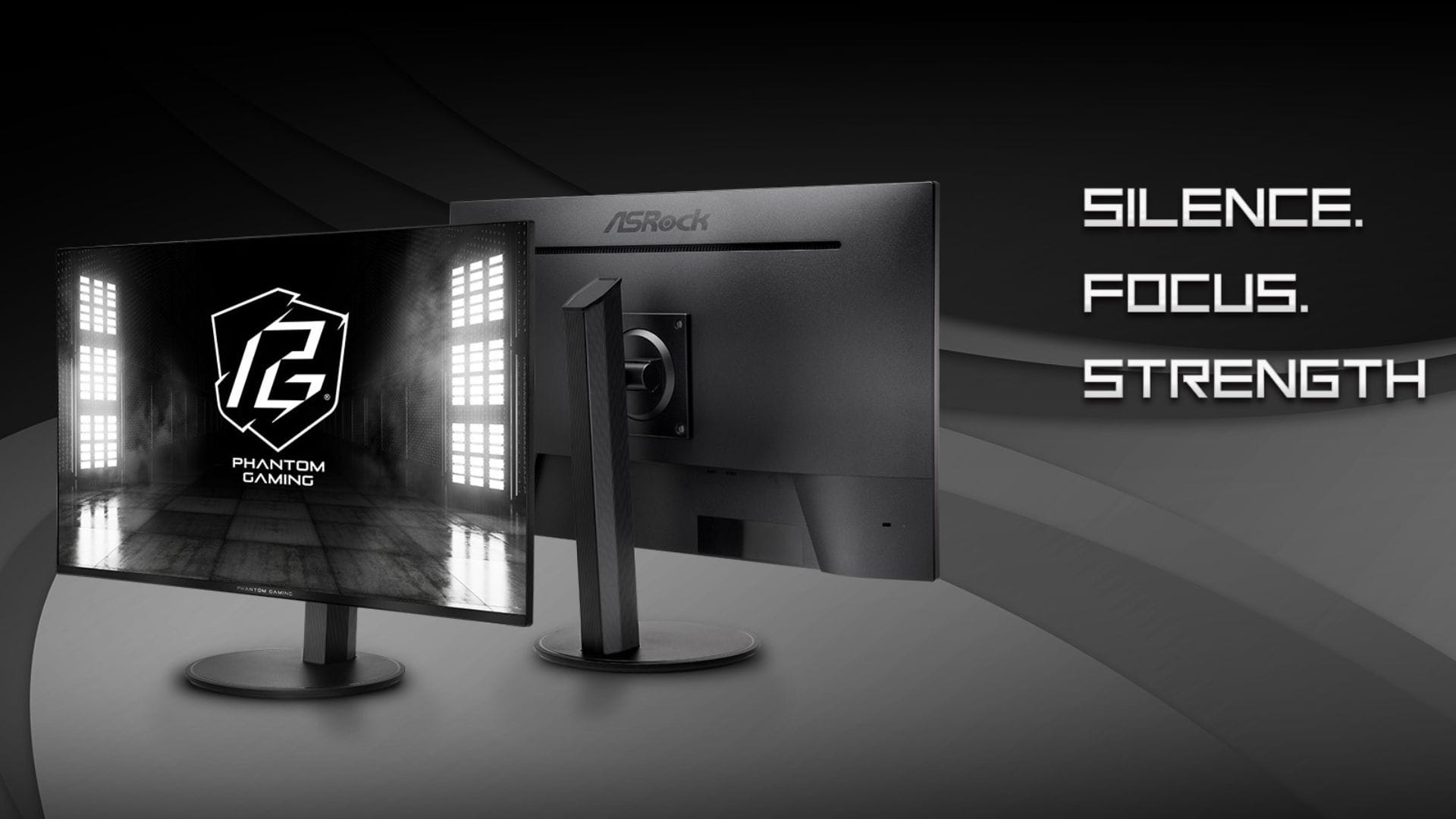
ASRock has introduced a new range of gaming monitors under its Phantom Gaming and Challenger series, expanding its presence in the competitive display market. The latest announcement features several 27-inch models with high refresh rates aimed at both performance-focused players and those seeking more affordable upgrades.
The new lineup reflects a broader industry shift towards making high-performance gaming displays more accessible. By combining premium features with lower entry-level prices, the company appears to be targeting a wider range of users, from competitive gamers to casual players upgrading from standard monitors.
High refresh rates target performance gamers
At the core of the launch are three Phantom Gaming models: PG27FFS2E, PG27FFS2E-W, and PG27FFS1A. Each monitor features a 27-inch Full HD IPS panel with a 240Hz refresh rate and a 1ms response time, specifications designed to deliver smooth visuals and quick responsiveness in fast-moving games.
All three models support AMD FreeSync Premium, which helps reduce screen tearing and stuttering by aligning the monitor’s refresh rate with the output of compatible graphics cards. This feature is particularly beneficial in competitive gaming, where fluid motion can affect gameplay performance.
The displays also offer 99 per cent sRGB colour coverage, providing accurate and vibrant colours that extend their usefulness beyond gaming to general multimedia consumption. One notable addition is the PG27FFS2E-W, a white variant that marks the company’s first move towards alternative colour options in its gaming monitor range, catering to users who prefer coordinated or themed setups.
This combination of performance specifications and design variation highlights an effort to balance technical capability with visual appeal, as gaming setups increasingly become part of personal workspace aesthetics.
Focus on ergonomics and everyday usability
In addition to raw performance, the new monitors emphasise comfort and usability. The higher-end models are equipped with fully adjustable stands, allowing users to modify height, tilt, swivel, and pivot settings for improved viewing angles during extended gaming sessions.
The PG27FFS1A retains many of the same core display features but adopts a simpler stand design to reduce costs, making it more accessible while still delivering high-refresh-rate performance. This differentiation suggests a deliberate attempt to offer tiered options within the same product family.
All models feature slim bezels on all sides, enhancing immersion and making them suitable for multi-monitor configurations. A five-way joystick control system is included to simplify navigation through on-screen display menus, enabling users to switch between presets for gaming or general use with ease.
Additional features, such as Dark Boost, improve visibility in darker scenes, while Overdrive technology reduces motion blur. Together, these enhancements aim to provide a more refined gaming experience without requiring users to invest in top-tier hardware.
Entry-level models expand accessibility
Alongside the 240Hz monitors, ASRock has introduced the Challenger series CL25FFB and CL27FFB models. These displays are aimed at entry-level users and offer Full HD resolution at 144Hz, providing a noticeable upgrade over standard 60Hz screens.
Despite their lower positioning, the Challenger models still include support for AMD FreeSync and comply with ENERGY STAR 8.0 standards. This indicates a focus on balancing performance with energy efficiency, an increasingly important consideration for both consumers and manufacturers.
The dual-tier strategy allows the company to appeal to a broad audience. Competitive gamers can opt for higher refresh rates and advanced features, while casual users can enjoy smoother gameplay at a more affordable price point.
Industry observers note that the introduction of more competitively priced 240Hz monitors reflects a wider trend in the gaming sector, where advanced display technologies are gradually becoming mainstream. As more manufacturers enter this space, pricing pressure is expected to increase, potentially lowering the barrier to entry for high-performance gaming equipment.
The latest release suggests that ASRock is positioning itself to compete more directly with established monitor brands. Future developments may include higher-resolution panels, OLED displays, and even faster refresh rates, as the company continues to expand its gaming portfolio.