



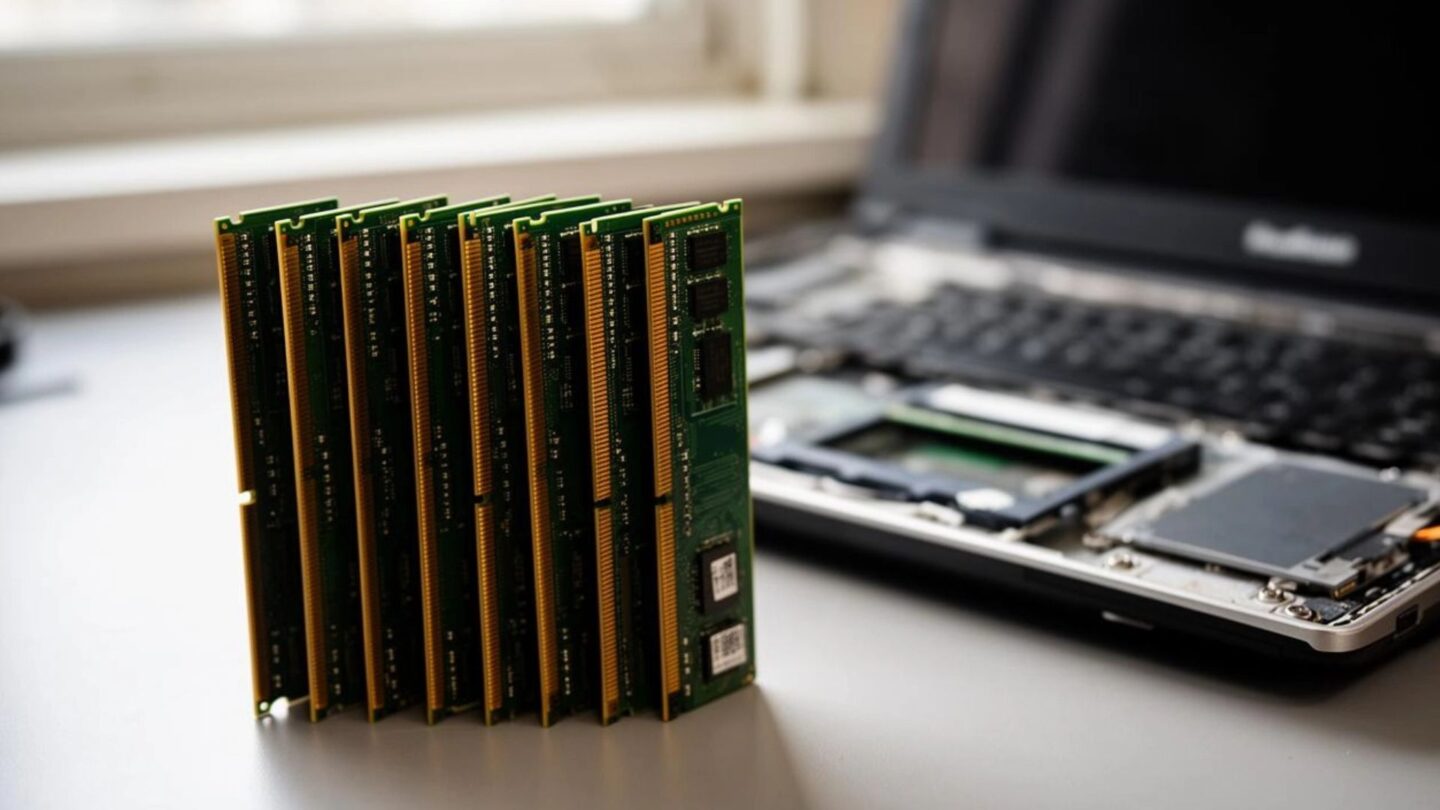
Rising memory prices could force ASUS to reduce the RAM in its entry-level and mid-range computers, potentially reversing years of progress toward making 16GB the standard configuration. The company’s Co-CEO, S.Y. Hsu, has said some lower-tier systems could return to 8GB of memory as manufacturers struggle to manage rising component costs without further raising retail prices.
The potential change reflects growing pressure across the PC industry as demand for memory continues to increase, particularly from data centres and artificial intelligence infrastructure. With manufacturers facing tighter supply and higher prices, affordable computers are becoming harder to produce at previous price points.
During ASUS’s third-quarter 2026 earnings call, Hsu said the company had already raised PC prices throughout the year to reflect rising memory costs. However, higher prices have made consumers more reluctant to buy new devices, forcing manufacturers to consider alternative ways to keep entry-level products affordable.
Rising memory prices could bring back 8GB PCs
For several years, 16GB of RAM has increasingly become the expected starting point for modern Windows computers. The configuration provides sufficient capacity for everyday activities, including web browsing, office applications, video streaming and moderate multitasking. However, rising memory prices are making it harder for manufacturers to maintain this specification in their more affordable product ranges.
ASUS has already responded to higher component costs by increasing prices across its PC portfolio during 2026. However, Hsu explained that passing the full increase on to customers is not practical, particularly in the mid-range and budget segments, where buyers tend to be more sensitive to price changes.
Reducing the memory in these machines could help manufacturers control production costs without triggering another round of retail price increases. Under this approach, some computers that would previously have shipped with 16GB could instead come with just 8GB.
The adjustment would allow ASUS to maintain more competitive starting prices, although customers could receive less capable hardware than they might have expected from similarly priced computers in previous years.
The potential reduction also highlights how quickly the memory shortage is affecting product development decisions. Rather than simply increasing prices, manufacturers are reconsidering the specifications that have become standard across different product categories.
For consumers planning to purchase an affordable laptop or desktop, the change could mean paying a similar amount for a system with less memory. This may be especially noticeable among buyers who run multiple applications at once or regularly use demanding software.
ASUS is working with Microsoft to optimise Windows for 8GB systems
ASUS is not relying solely on hardware changes to make lower-memory configurations more practical. Hsu confirmed that the company has been working with Microsoft to improve the operating system’s performance on computers equipped with 8GB of RAM.
According to Hsu, the previous 16GB baseline was largely intended to ensure an acceptable user experience. However, improvements to the newer operating system are expected to make computers with smaller memory configurations more usable.
The collaboration reflects Microsoft’s broader efforts to improve Windows performance, particularly on devices with limited hardware resources. Earlier in November, Microsoft announced performance optimisations that could make computers equipped with 8GB of RAM up to 40 per cent faster under certain conditions.
Such improvements could help reduce the impact of lower memory capacities on everyday computing tasks. However, software optimisation cannot completely replace the additional capacity provided by physical memory, especially when users run several demanding applications at the same time.
An 8GB system may remain suitable for basic activities such as browsing, document editing and video playback. More demanding workloads, including content creation, intensive multitasking and certain modern applications, could still benefit considerably from 16GB or more.
This distinction matters because manufacturers increasingly rely on memory configurations that cannot be upgraded after purchase. Many modern laptops use soldered RAM, so customers cannot simply add more memory as their needs grow.
As a result, buyers considering an 8GB computer may need to think beyond its initial performance. A machine that handles basic tasks comfortably today could become less suitable as applications and operating systems demand more resources in the coming years.
Microsoft’s optimisation work could make lower-cost configurations more practical, but it does not necessarily mean that 8GB will offer the same flexibility or long-term usability as 16GB.
PC shipments could decline as manufacturers face higher costs
The pressure on memory supplies is not expected to disappear immediately. DRAM prices continue to rise as demand from artificial intelligence infrastructure and data centres competes with the requirements of traditional consumer electronics manufacturers.
Memory producers have increasingly prioritised higher-margin products used in data centres, including components designed for advanced AI systems. This shift has tightened supply across the broader electronics market, leaving PC manufacturers with higher procurement costs.
During the earnings call, Hsu also warned that the situation could have a wider impact on the global computer market. He projected that worldwide PC shipments could decline by 10 to 15 per cent over the next year as higher prices discourage consumers from replacing their existing devices.
The forecast suggests that manufacturers could face challenges beyond simply adjusting product specifications. Higher production expenses, reduced consumer demand and limited component availability could affect sales across several price categories.
For budget-conscious buyers, the possible return of 8GB computers presents a difficult trade-off. Lower memory configurations could help keep entry-level devices affordable, but they may also limit multitasking capabilities and reduce the useful lifespan of computers that cannot be upgraded.
The situation could also make comparing specifications more important when purchasing a new laptop or desktop. Buyers may need to consider whether the savings from an 8GB configuration justify the compromises, particularly if they intend to keep the device for several years.
ASUS’s comments illustrate how rising component costs are beginning to reverse some of the improvements consumers have come to expect from affordable computers. While software optimisations may help manufacturers maintain acceptable performance, returning 8GB as a standard option would represent a significant change in the entry-level PC market.