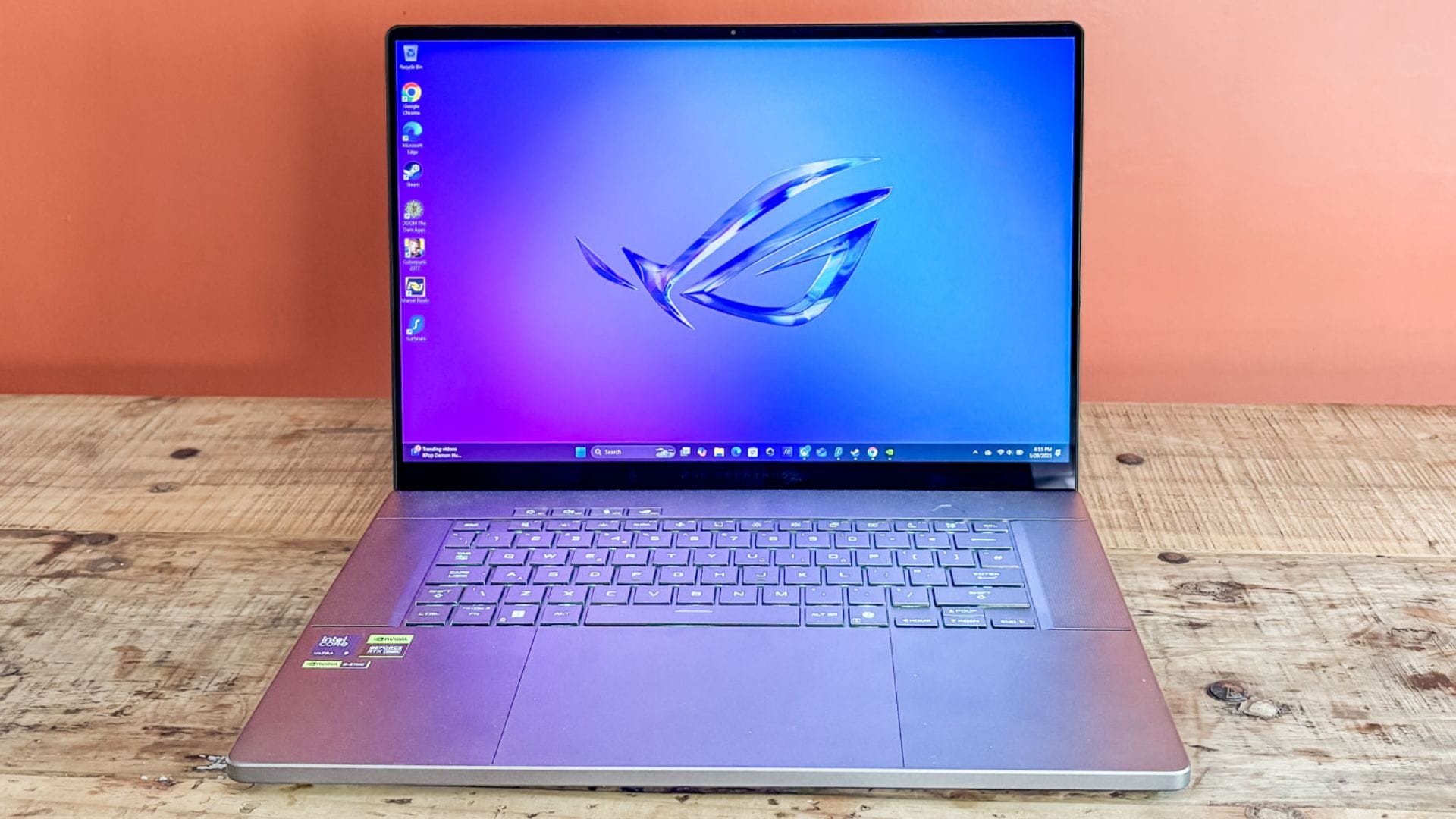
Asus has introduced a new configuration of its ROG Zephyrus G16 (2026) gaming laptop in the United States, featuring Nvidia’s GeForce RTX 5080 graphics card. The new model is priced at US$4,799, placing it among the company’s most expensive gaming laptops.
The launch has drawn attention because the pricing exceeds that of the previous-generation ROG Zephyrus G16 equipped with the more powerful RTX 5090 graphics card. The 2025 version is currently available through online retailers for around US$4,599, creating an unusual situation in which a newer model with a lower-tier graphics processor costs more than its predecessor.
The pricing difference raises questions about how Asus is positioning its latest premium gaming laptop and whether the hardware upgrades are enough to justify the increased cost.
New hardware brings memory and power upgrades
The latest ROG Zephyrus G16 combines Nvidia’s GeForce RTX 5080 graphics processor with Intel’s new Core Ultra 9 386H processor, based on the Panther Lake architecture. Asus has also increased system memory to 64GB, doubling the 32GB found in the RTX 5070 Ti version, which was previously the only configuration available in the US market.
In addition to the memory upgrade, the RTX 5080 model benefits from a higher Total Graphics Power (TGP) rating. The graphics card can operate at up to 160W, which is 20W higher than the RTX 5070 Ti variant. The additional power allocation is designed to help the graphics processor deliver stronger gaming and content creation performance under heavy workloads.
Asus has also introduced a silver colour option for the new configuration, offering buyers an alternative to the finishes available on earlier models. While the design remains largely consistent with the existing Zephyrus G16 range, the new colourway gives the premium model a slightly different appearance.
The upgraded specifications suggest that Asus is targeting users who require high performance for demanding applications such as video editing, 3D rendering, artificial intelligence workloads, and high-end gaming. The combination of a newer processor, increased memory capacity and higher graphics power budget places the system firmly in the premium segment of the gaming laptop market.
Significant price increase over the RTX 5070 Ti version
The RTX 5080-equipped ROG Zephyrus G16 carries a substantial premium compared with the RTX 5070 Ti model already available in the United States. At US$4,799, the new configuration costs approximately US$1,100 more than its lower-spec counterpart.
Part of that increase can be attributed to the stronger graphics hardware and the jump from 32GB to 64GB of memory. Both upgrades are likely to appeal to power users who need additional performance and multitasking capability.
However, the scale of the price increase may prove difficult for some buyers to justify. While premium gaming laptops often command higher prices for top-tier components, consumers typically expect a clear performance advantage that aligns with the additional cost.
The RTX 5080 model does offer meaningful improvements over the RTX 5070 Ti configuration. The newer graphics processor should provide higher frame rates in games and improved performance in GPU-intensive professional applications. The larger memory capacity also benefits users running demanding software or multiple applications simultaneously.
Nevertheless, buyers evaluating value for money may find themselves comparing the new model not only with the RTX 5070 Ti version but also with older high-end alternatives still available on the market.
Older RTX 5090 model complicates buying decisions
The most notable challenge facing the new RTX 5080 configuration is the continued availability of last year’s ROG Zephyrus G16 equipped with Nvidia’s RTX 5090 graphics processor. Despite being part of the previous generation, that model currently sells for approximately US$4,599 through online retailers.
On paper, the older machine appears particularly competitive. It includes the more powerful RTX 5090 graphics card and 64GB of memory, yet costs around US$200 less than the newly announced RTX 5080.
This creates an unusual situation in which consumers who prioritise graphics performance may find greater value in purchasing the older model. For gamers and professional users whose workloads rely heavily on GPU power, the RTX 5090 remains the stronger option.
The newer laptop does have advantages. Its Intel Core Ultra 9 386H processor is based on the latest Panther Lake platform, while the previous generation relies on Intel’s Arrow Lake architecture. Buyers interested in obtaining the latest processor technology may therefore see merit in choosing the 2026 model despite its higher price.
Even so, the comparison highlights the challenges manufacturers face when introducing new premium hardware while older flagship products remain available at discounted prices. For many consumers, purchasing decisions are influenced as much by value as by having the newest technology.
As a result, the RTX 5080 version of the ROG Zephyrus G16 enters the market with impressive specifications but also faces scrutiny over its pricing, particularly when a faster RTX 5090-equipped predecessor can currently be purchased for less.