


Asus has introduced a new AMD-powered version of its ExpertBook A7 business laptop, bringing a high-resolution OLED display, modern artificial intelligence capabilities and a lightweight aluminium design to the professional computing market. The 14-inch machine pairs Ryzen AI processors with a 120Hz screen, positioning it for businesses and professionals who want more than the standard features found in office laptops.
The new model stands out for its display, which offers a resolution of 2880 × 1800 pixels, HDR support, and a peak brightness of 600 nits. These specifications could make the laptop suitable for professionals who spend long hours working with documents, presentations, images and other visual content. The high refresh rate should also deliver smoother scrolling and a more responsive experience for everyday tasks.
Although Asus has announced the main specifications, the company has not yet confirmed the AMD model’s pricing and release date. Those details will be important in determining how it compares with other premium business laptops currently available in the market.
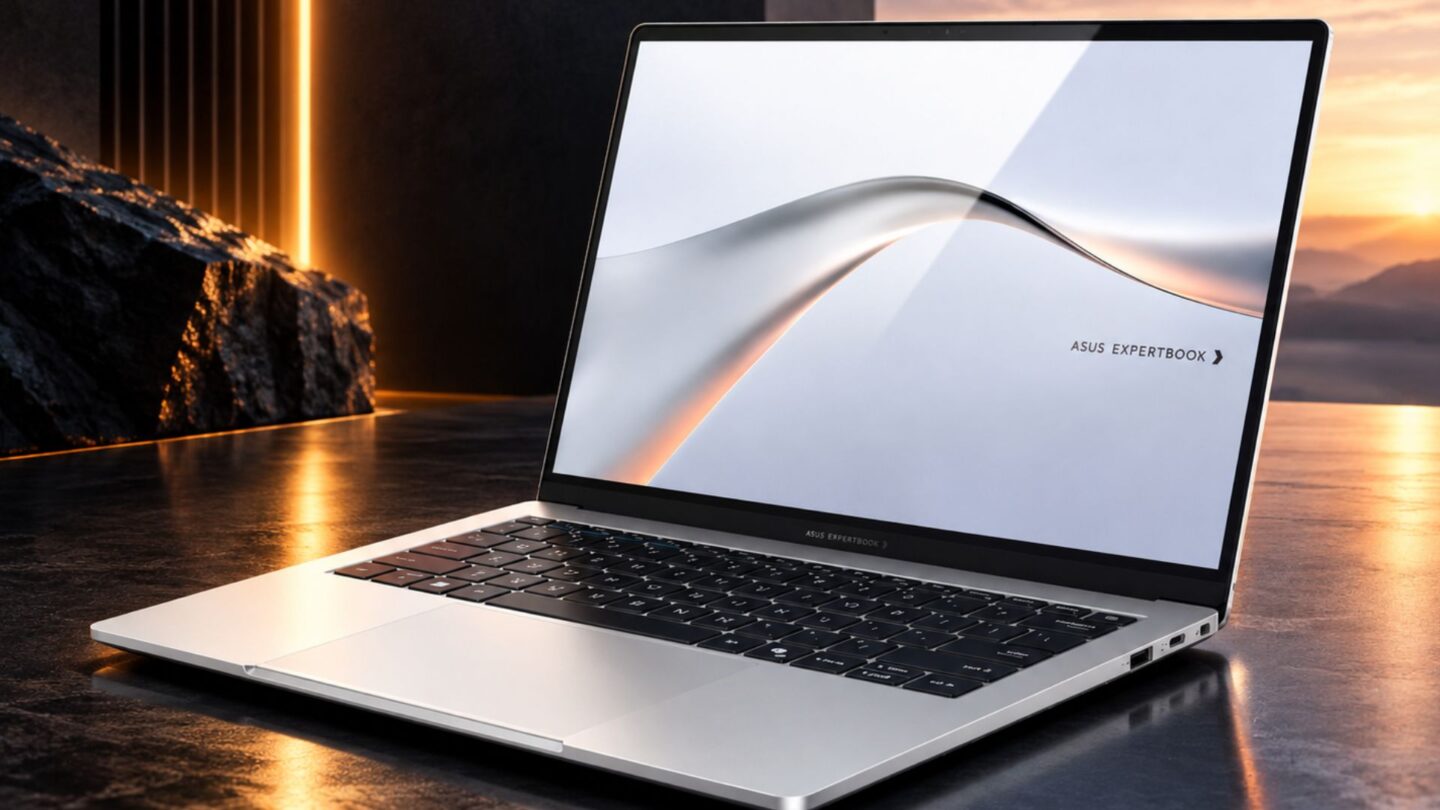
Asus ExpertBook A7 combines AMD processors with a high-quality OLED display
The AMD version of the ExpertBook A7 will be available with two processor options: the Ryzen AI 5 330 and the Ryzen AI 7 345. Both configurations support up to 16GB of memory and 512GB of storage. This combination should provide sufficient capacity for typical business workloads, including multitasking, office applications, video calls and general productivity tasks.
However, the display is arguably the new laptop’s most notable feature. Its 14-inch OLED panel offers a 2880 × 1800 resolution and supports a 120Hz refresh rate. OLED technology delivers deep blacks, strong contrast, and vivid colours, while the high resolution adds detail to text, photographs, and other on-screen content.
The screen also reaches a peak brightness of 600 nits and supports HDR content. These features can improve visibility in bright environments and enhance compatible video and visual content. For professionals who regularly work with presentations, creative applications or media, the display could provide a more enjoyable experience than the conventional panels commonly used in business machines.
The processors also put the ExpertBook A7 in Microsoft’s Copilot+ PC category. This classification identifies Windows computers that meet specific hardware requirements for on-device artificial intelligence features. One key requirement is a neural processing unit capable of delivering at least 40 trillion operations per second (TOPS), though the wider system must also meet Microsoft’s other eligibility criteria.
Local AI processing can support compatible features without relying entirely on cloud-based computing. Depending on software support and the applications being used, these capabilities may help with productivity, content creation and other tasks. Nevertheless, the practical benefits will depend on the features available to users and how effectively they integrate into everyday business workflows.
Asus has also committed to providing five years of BIOS security updates, along with updates for the system’s firmware and drivers. This support could be particularly important for organisations that need to maintain business laptops over several years. Regular security updates can help address vulnerabilities, while longer support periods may make equipment easier to manage across a company’s workforce.
Pricing and release details remain unconfirmed
Despite the announcement, Asus has not yet disclosed when the AMD-powered ExpertBook A7 will reach the market or how much it will cost. These missing details make it difficult to assess its overall value against competing business laptops.
The existing Intel-powered ExpertBook A7 is available in the United States for US$1,299.99 to US$1,599.99, depending on the processor configuration. This may indicate where the AMD model could sit in the market, although its final price may differ. Until Asus confirms the details, any comparison with the Intel version remains provisional.
Battery life is another key consideration for professionals who travel frequently or work away from a desk. Asus claims that the AMD model can deliver up to 21 hours of use on a single charge. The figure comes from the company’s own testing, which involved playing locally stored 1080p video with the display brightness set to 50 per cent.
Actual battery performance will likely vary with workload, screen brightness, wireless connectivity, and background activity. Video playback generally places different demands on a computer than intensive multitasking, video conferencing or running AI applications. As a result, users should not assume that the advertised figure will translate directly into a full working day under every set of conditions.
The laptop’s final price and real-world battery performance will therefore be central to evaluating its competitiveness. Businesses considering a purchase will also need to weigh the available memory and storage against their specific requirements, particularly if employees regularly work with demanding applications or large files.
Slim aluminium construction gives the business laptop a premium design
Beyond its internal hardware, the ExpertBook A7 features a unibody chassis made from a single block of 6000-series aluminium. Asus says the design measures about one centimetre thick, while the laptop starts at just 1.2kg. These dimensions could make it an attractive option for professionals who carry their computers between meetings, offices and other work locations.
The lightweight construction matters in the business laptop category, where portability often needs to be balanced against durability, performance, and battery capacity. The aluminium body gives the machine a premium look, while the slim profile should fit comfortably in a work bag alongside documents and accessories.
Asus will offer the AMD version in two colour options: Eclipse Black and Lunar Silver. The understated finishes suit the professional market, letting the laptop maintain a conventional business look without sacrificing the visual appeal often associated with higher-end consumer devices.
Another design feature is the glass haptic touchpad. Unlike a conventional touchpad that relies on a physical clicking mechanism, a haptic model uses feedback to simulate the sensation of a click. This approach provides a consistent response across the touchpad surface and supports the laptop’s modern design.
Taken together, the display, slim aluminium construction and haptic touchpad give the ExpertBook A7 several features that extend beyond basic office functionality. Its combination of AMD Ryzen AI processors, a high-refresh-rate OLED screen, and a long-term security-update commitment could appeal to professionals seeking a portable computer for everyday work.
However, the laptop’s overall appeal will ultimately depend on its confirmed price, availability and performance outside controlled testing conditions. Until Asus releases those details, the AMD-powered ExpertBook A7 remains a promising addition to the business laptop market rather than a fully assessed alternative to established competitors.