

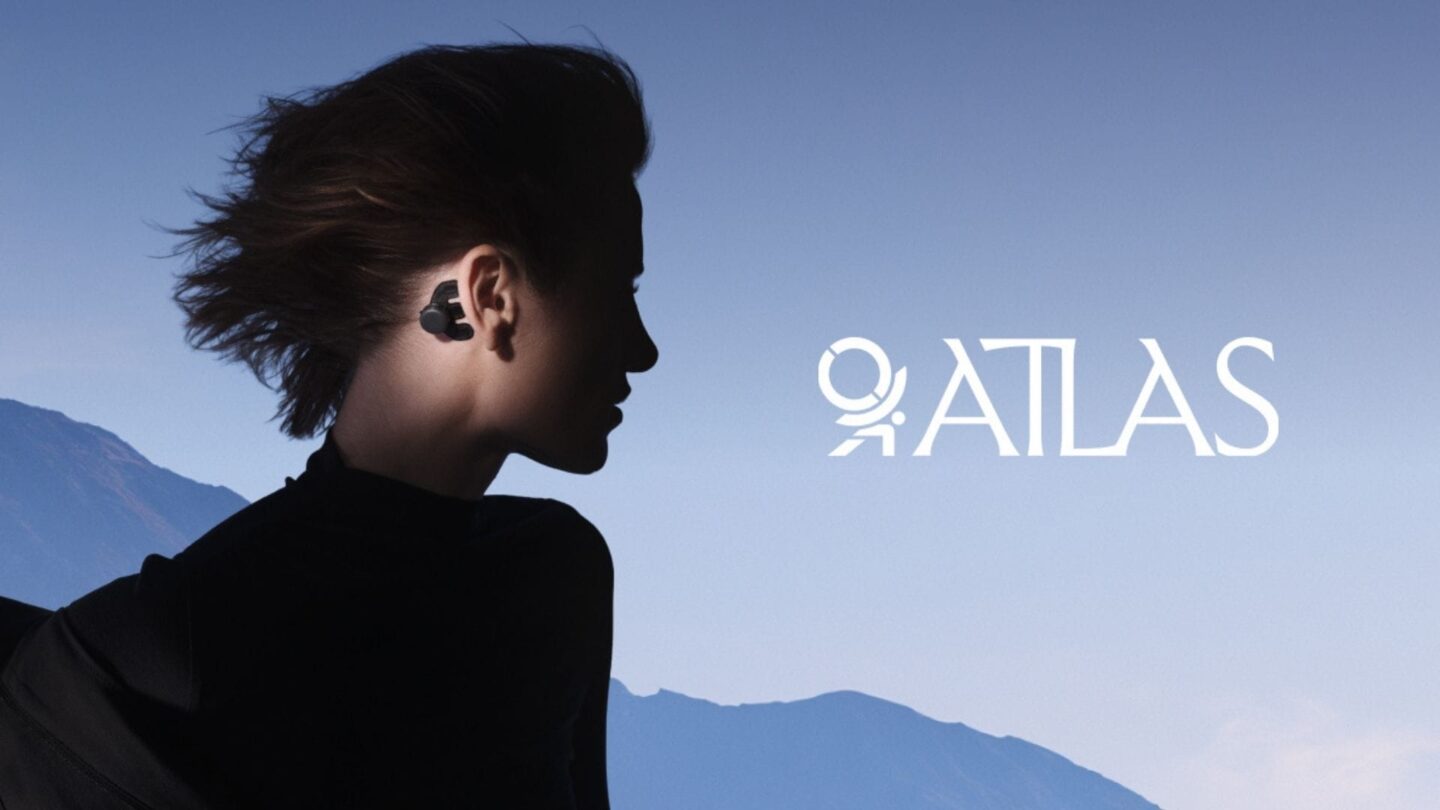
Atlas has introduced a wearable device designed to track a person’s level of presence and attention by monitoring signals from the brain and body. The company says its first product, Atlas 1.0, is intended to help users understand when their attention is directed towards the world around them and when it becomes focused inward.
The device is aimed at people who want to better understand their concentration, stress response and behaviour throughout the day. Rather than relying solely on self-reported information, Atlas uses physiological data to build a picture of a user’s mental and attentional state.
Wearable monitors brain and body signals
Atlas 1.0 is a small EEG wearable that attaches to the skin behind the ear using an adhesive pad. It records several types of information, including brain activity, electrodermal activity, movement and patterns associated with speaking. The company then processes these signals using an algorithm designed to estimate where a person’s cognitive and attentional resources are directed.
The idea is to indicate whether someone is engaged with their surroundings or concentrating more on their internal thoughts. For example, if the system identifies a period of inward-focused attention while a person is spending time with family, it could suggest that they were less engaged with the people around them at that moment.
Atlas says the wearable is designed to turn these measurements into information that users can review rather than simply providing raw sensor data. This approach is intended to give people a clearer understanding of how their attention changes across different situations and activities.
The company also stresses that the device does not record what users are saying. Although Atlas 1.0 monitors aspects of speaking activity and a person’s voice-related patterns, it is not designed to capture or store the actual content of conversations. These signals are instead used as another indicator that can help the system assess a user’s state.
App turns measurements into daily insights
The Atlas experience is centred around an iOS app, where users can review information about their level of presence and how they respond to different circumstances. The system is also intended to assess performance under pressure and how effectively a person recovers after experiencing stress.
Users can connect the measurements to activities throughout their day. By recording what they were doing during different periods, they can compare their experiences with the data collected by the wearable. Over time, this could help reveal patterns between particular activities and the mental states associated with them.
The broader goal is to help users recognise circumstances in which they feel and perform at their best. Someone might discover, for instance, that certain environments or activities are associated with greater focus, stronger engagement or better recovery from stressful situations. The intention is then to use those observations to make more informed choices about how time is spent.
Atlas is positioning the product as a tool for self-awareness rather than simply another fitness tracker. While conventional wearables often focus on metrics such as heart rate, sleep, or physical activity, Atlas aims to provide insight into cognitive attention and presence.
However, the technology remains relatively new, and it is not yet clear how accurately the system can measure a concept as complex as being “present”. Human attention can change for many reasons, and interpreting brain and physiological signals does not necessarily provide a complete picture of a person’s thoughts or emotional state.
Atlas targets users seeking small improvements
Atlas 1.0 is entering the market with a focus on people interested in making incremental improvements to their daily performance. The company appears to be targeting users who are already interested in tracking their behaviour and looking for data that could help them refine their routines.
The approach reflects a wider interest in wearable technology that goes beyond conventional health and fitness measurements. As sensors become smaller and more capable, companies are exploring ways to use physiological signals to provide insights into concentration, stress, recovery and other aspects of everyday life.
Privacy considerations also surround technology that monitors brain activity and other personal signals. Atlas’ clarification that the device does not capture speech is likely to be important for users who may otherwise be concerned about wearing a device capable of detecting voice-related information throughout the day.
Atlas is currently taking pre-orders for the first production run of Atlas 1.0. The hardware costs US$500, while users will also need to pay a US$30 monthly subscription for replacement sensors and adhesive supplies.
The product’s effectiveness will ultimately depend on how accurately its algorithms can interpret the signals collected by the wearable and whether those insights translate into useful changes in users’ everyday lives. For now, Atlas 1.0 represents an early attempt to quantify an aspect of human behaviour that has traditionally been difficult to measure: how fully a person is engaged with the present moment.