

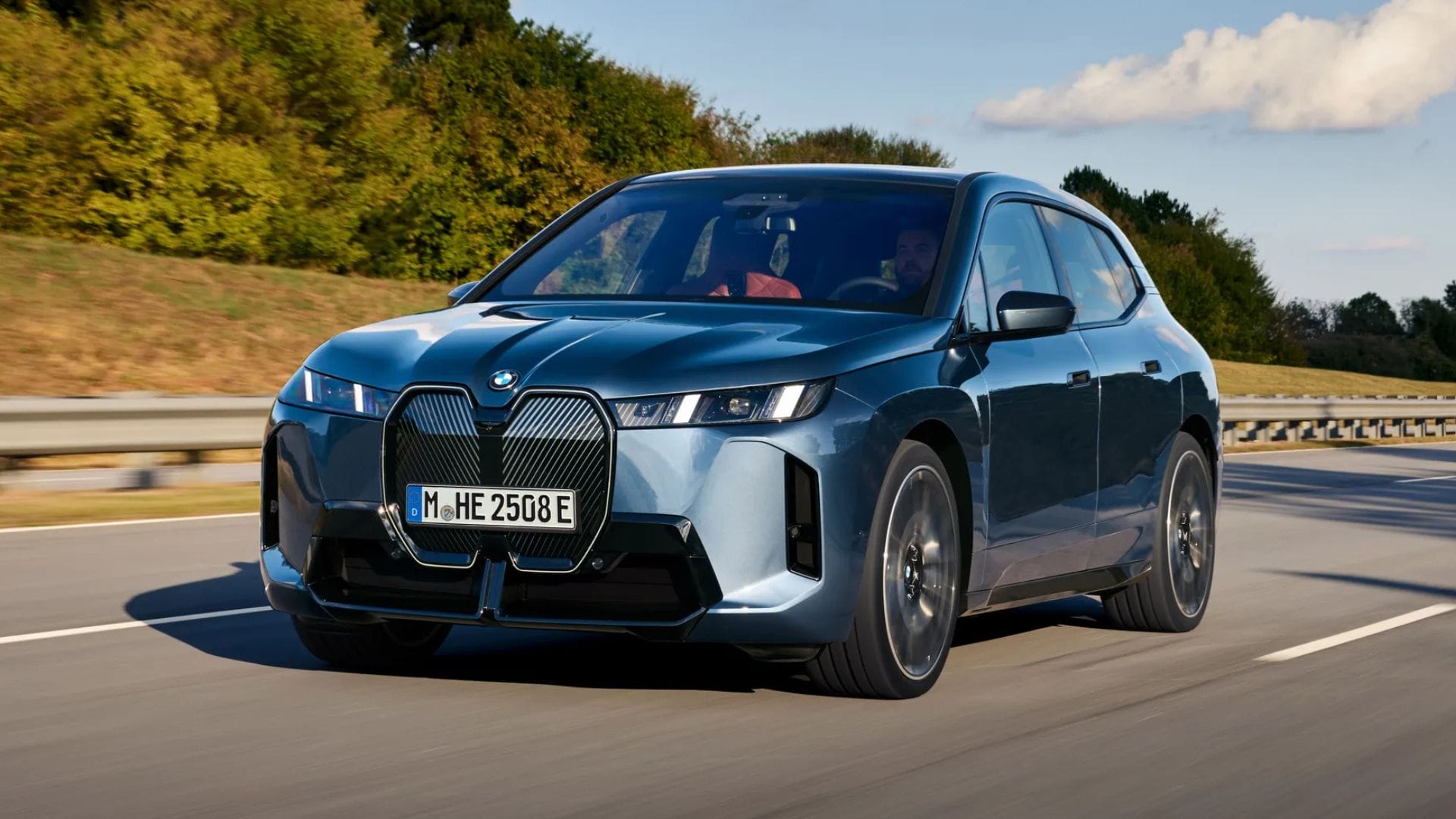
BMW has revealed its updated 7 Series range for 2027, describing the overhaul as the most extensive update in the model’s history. The refreshed luxury saloon line-up includes two fully electric i7 variants, a plug-in hybrid model, two petrol-powered versions and a V8-powered M model, all built on the company’s Neue Klasse technology platform and featuring a redesigned exterior and interior.
The announcement signals BMW’s continued investment in electrification alongside traditional powertrains. The new models were presented at Auto China 2026 in Beijing and during a separate event at Grand Central Terminal in New York City. Production of the new electric variants is scheduled to begin in July 2026, with initial prices starting from US$106,200 for the i7 50 xDrive and US$124,700 for the i7 60 xDrive, excluding destination and handling costs.
Updated design language and upgraded in-car technology
BMW has introduced a new exterior styling approach for the 7 Series, which it describes as “monolithic”. The design includes slim crystal headlights and the brand’s illuminated kidney grille, known as the Iconic Glow, which has drawn mixed reactions since its introduction on earlier models. The bodywork also features a new character line intended to create a streamlined appearance reminiscent of a boat-tail shape when viewed from certain angles.
The company has also highlighted a new paint option called Individual Dual-Finish. This combines a matte finish along the lower body with a hand-applied metallic finish on the upper surfaces. BMW says the approach creates what it calls a “discrete but supremely elegant look”, aimed at customers seeking a more distinctive appearance in the premium segment.
Inside the cabin, BMW has expanded its digital entertainment features, particularly for rear-seat passengers. The upgraded 31.3-inch 8K BMW Theatre Screen supports high-resolution streaming, gaming, and video conferencing, including Zoom. The system is designed to offer passengers a cinema-like experience during journeys, particularly in chauffeur-driven settings.
Additional features are available through the Digital Premium package, which includes built-in 5G connectivity. This package adds access to a TiVo-powered video application, selected games and the BMW Drive Recorder, which captures exterior footage that can be useful in the event of a collision. Apple CarPlay and Android Auto integration are included as standard across the range.
The new 7 Series models also introduce enhanced welcome and farewell animations. Drivers can select between Relaxed, Balanced, and Excited display modes, which adjust the lighting sequence as they approach or leave the vehicle. A feature known as the Ceremonial Light Carpet projects animated lighting patterns onto the ground beside the doors, intended to improve visibility and create a sense of occasion.
Electric i7 models promise improved range and charging speed
Central to the updated line-up are two new fully electric saloons, the i7 50 xDrive and i7 60 xDrive. Both models use newly developed cylindrical battery cells that offer a 20 per cent increase in energy density compared with previous designs. Battery capacity reaches up to 112.5 kWh, supporting longer driving distances between charges.
BMW estimates that the i7 60 xDrive can achieve up to 350 miles on a single charge under EPA testing conditions. Improvements in drivetrain efficiency are expected to extend range, while redesigned electric motors aim to reduce cabin noise and deliver smoother acceleration. The company said the models provide “instantaneous” power delivery, improved comfort, and a quieter driving environment.
Charging performance has also been enhanced. The vehicles support charging speeds of up to 250 kW when connected to compatible fast-charging infrastructure. According to BMW, this allows the battery to be replenished from 10 per cent to 80 per cent capacity in approximately 28 minutes.
Performance figures vary between the two electric models. The i7 50 xDrive features dual electric motors producing up to 449 horsepower and 487 lb-ft of torque. This configuration allows the car to accelerate from 0 to 60 mph in 5.3 seconds and reach a top speed of 130 mph. The more powerful i7 60 xDrive delivers 536 horsepower and 549 lb-ft of torque, reducing the 0 to 60 mph acceleration time to 4.6 seconds, with an electronically limited top speed of 149 mph.
Both electric versions include an adaptive recuperation system designed to improve efficiency during braking. The technology can detect traffic signals and automatically adjust braking behaviour, helping recover energy more effectively. Drivers can select from high, medium or low levels of energy recuperation, with the highest setting offering a one-pedal driving experience.
BMW has also added an artificial intelligence-based route-planning system that automatically calculates charging stops when needed. The system can prepare the battery to reach its ideal temperature before charging begins, enabling faster energy transfer once the vehicle is connected to a charger.
Hybrid and petrol models expand drivetrain choices
Alongside the electric variants, BMW has confirmed the introduction of the 750e xDrive plug-in hybrid, expected to arrive in 2027. This version combines a 308-horsepower inline-six-cylinder engine with a 194-horsepower electric motor, delivering a combined 483 horsepower and 516 lb-ft of torque.
Although BMW has not yet provided an official electric-only driving range for the hybrid, it has stated that the vehicle will reach a maximum speed of 87 mph when operating solely on electric power. Production of the plug-in hybrid is scheduled to begin in the fourth quarter of 2026, with pricing details to be announced closer to launch.
The updated line-up also includes petrol-powered 740 and 740 xDrive models. These vehicles deliver up to 394 horsepower and 398 lb-ft of torque, enabling 0-60 mph acceleration in under 5 seconds and top speeds of 155 mph. These models are expected to arrive later in 2026 with starting prices of US$99,800 and US$102,800 respectively.
BMW confirmed that all variants of the updated 7 Series, including electric, hybrid and petrol versions, will be produced on a single assembly line at its Group Plant in Dingolfing. This unified production approach is intended to improve manufacturing flexibility and support the transition towards electrified vehicles while maintaining support for multiple drivetrain technologies.