


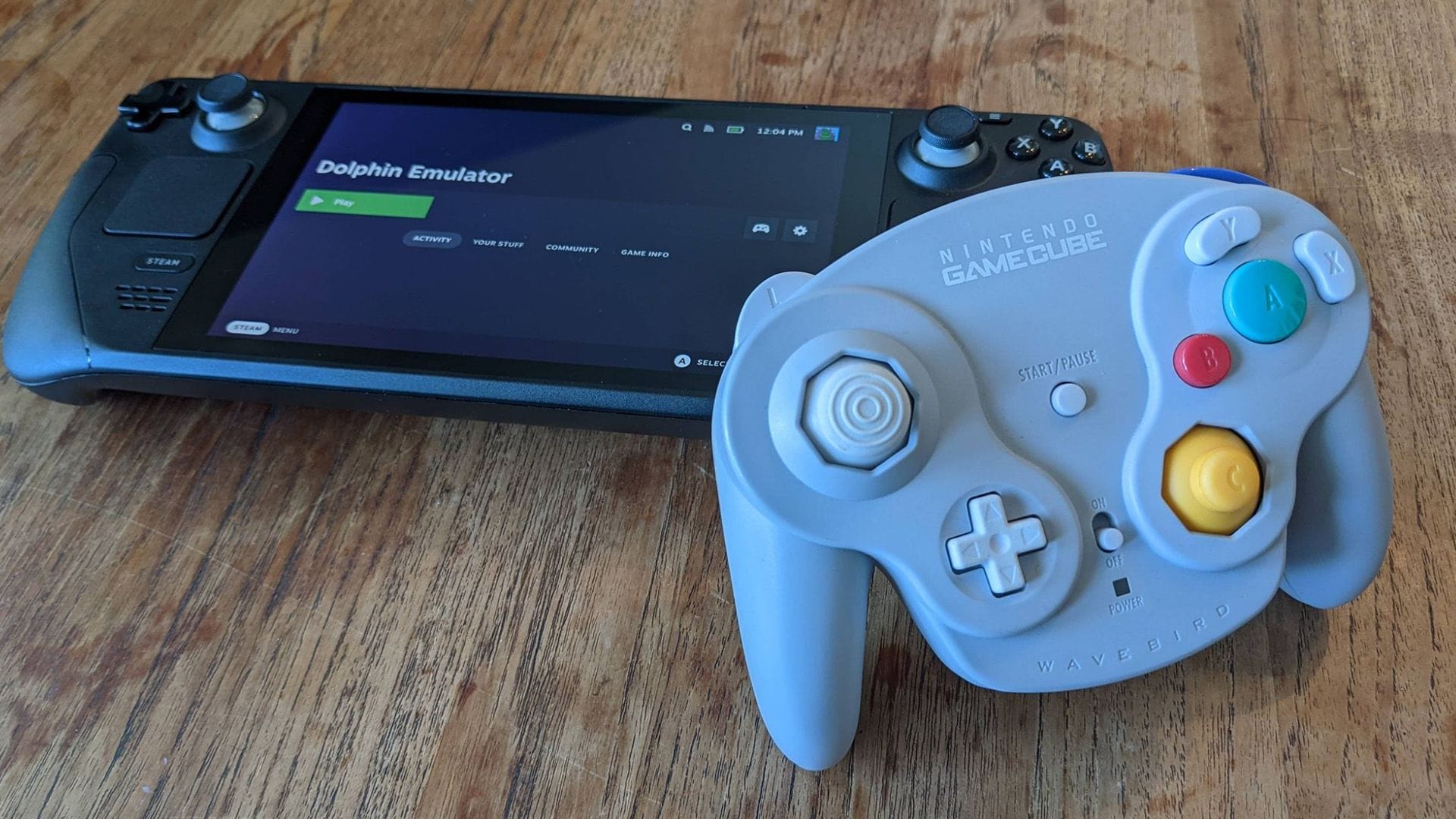
The GameCube emulation scene is gaining a new option as Gecko begins attracting attention as an alternative to the long-established Dolphin emulator. While Nintendo has brought a limited selection of GameCube titles to Nintendo Classics on the Switch 2, many popular games remain unavailable.
Physical GameCube games have also become increasingly difficult and expensive to find. For players who no longer have their original discs or consoles, emulation can provide a way to revisit older titles. It also helps preserve games that could otherwise become harder to access as original hardware ages and physical copies disappear from the market.
Gecko takes a different approach to GameCube emulation
For years, Dolphin has been the main option for people looking to emulate GameCube and Wii games. The open-source emulator has been in development since 2003 and supports features such as 1080p output, broader controller compatibility and online multiplayer. Its long development history has also given the project considerable time to improve performance and compatibility across a large library of games.
Gecko, however, is beginning to offer another choice. Developed by GitHub user Layle, the emulator is intended to support both homebrew development and reverse engineering while also providing a more traditional gaming experience. Layle’s interest in creating Gecko reportedly came from a desire to play the Wii game Final Fantasy Crystal Chronicles: The Crystal Bearers using an emulator they had built themselves.
The developer is already familiar with emulation, having previously worked on open-source emulators for systems including the Game Boy, PlayStation 1 and Game Gear. That background has helped Gecko gain interest despite being considerably newer than Dolphin.
This question might be rude, but what features does it offer that Dolphin doesn't?
— quantumv(aleradx) (@valeradx) May 19, 2026
In terms of features, Gecko is not currently positioned as a direct technical replacement for Dolphin. When Layle was asked on X what Gecko offered that Dolphin did not, the developer’s response was simply, “Probably none.” The comment highlights the project’s early stage rather than suggesting that Gecko has no potential.
Dolphin’s longer development history gives it a substantial advantage, particularly in reliability. Gecko is still in development, so its performance and feature set could change considerably as more developers and users contribute.
Compatibility remains Gecko’s biggest challenge
The clearest difference between the two emulators at present is game compatibility. Dolphin has had many years to address problems across the GameCube library, and its playable games tracker currently reports no GameCube titles as completely broken. That doesn’t mean every game runs perfectly, but it shows the project’s maturity.
Gecko’s own GitHub documentation presents a much less complete picture. Although several games are already reported to run well, the project warns that “most will likely have varying degrees of visual glitches or will be outright broken.” This means users should expect a less consistent experience while the emulator continues to develop.
A community compatibility database has been created to track how games perform on Gecko. Such a database could become increasingly useful as more players test titles and report their results. Open-source projects often benefit from this kind of community involvement, allowing developers to identify problems across a much wider range of hardware and games than they could test alone.
The gap between Gecko and Dolphin may therefore narrow over time. Dolphin’s current advantages largely result from more than two decades of development, testing, and community contributions. Gecko doesn’t need to match that level immediately to be useful. Instead, its continued development could give GameCube enthusiasts another open-source project focused on improving emulation and preservation.
For players seeking the most reliable experience today, Dolphin remains the more established choice. Gecko is better viewed as an emerging project that could become more capable as development continues.
Legal issues remain separate from emulator development
The existence of an emulator does not automatically make its use illegal. The legal concerns generally centre on how copyrighted game software is obtained and used. Players can legally use an emulator for software they have created themselves or, depending on applicable laws and circumstances, create copies of games they legitimately own for personal use.
Game data extracted from a physical game is commonly called a ROM, although disc-based software is technically stored as an ISO or another disc-image format. Dolphin’s frequently asked questions section addresses the issue directly with the statement: “You don’t. Buy games and dump them with a Wii.” The guidance reflects the project’s position that users should obtain their own game data rather than downloading unauthorised copies.
Downloading copyrighted game files from unofficial sources can constitute copyright infringement and piracy. The precise legal rules surrounding personal copies and emulation can vary between countries, so users should consider the laws applicable to their location rather than assuming that owning a physical game automatically permits every form of digital copying.
Nintendo has historically taken a strong position against unauthorised distribution of its games and software. In 2024, the company filed a US$2.4 million lawsuit against the creator of Yuzu, a Nintendo Switch emulator, arguing that the emulator facilitated piracy “at a colossal scale”. Nintendo had also previously issued a DMCA notice to Valve when Dolphin was due to be released through Steam, resulting in the planned release being postponed indefinitely.
Those actions indicate the potential legal risks surrounding Nintendo-related emulation projects. Gecko could face scrutiny in the future if its distribution or associated services were to raise similar concerns. For now, however, the project remains an emerging open-source emulator, and its developers can continue to emphasise the use of legally obtained game software as Gecko develops.