



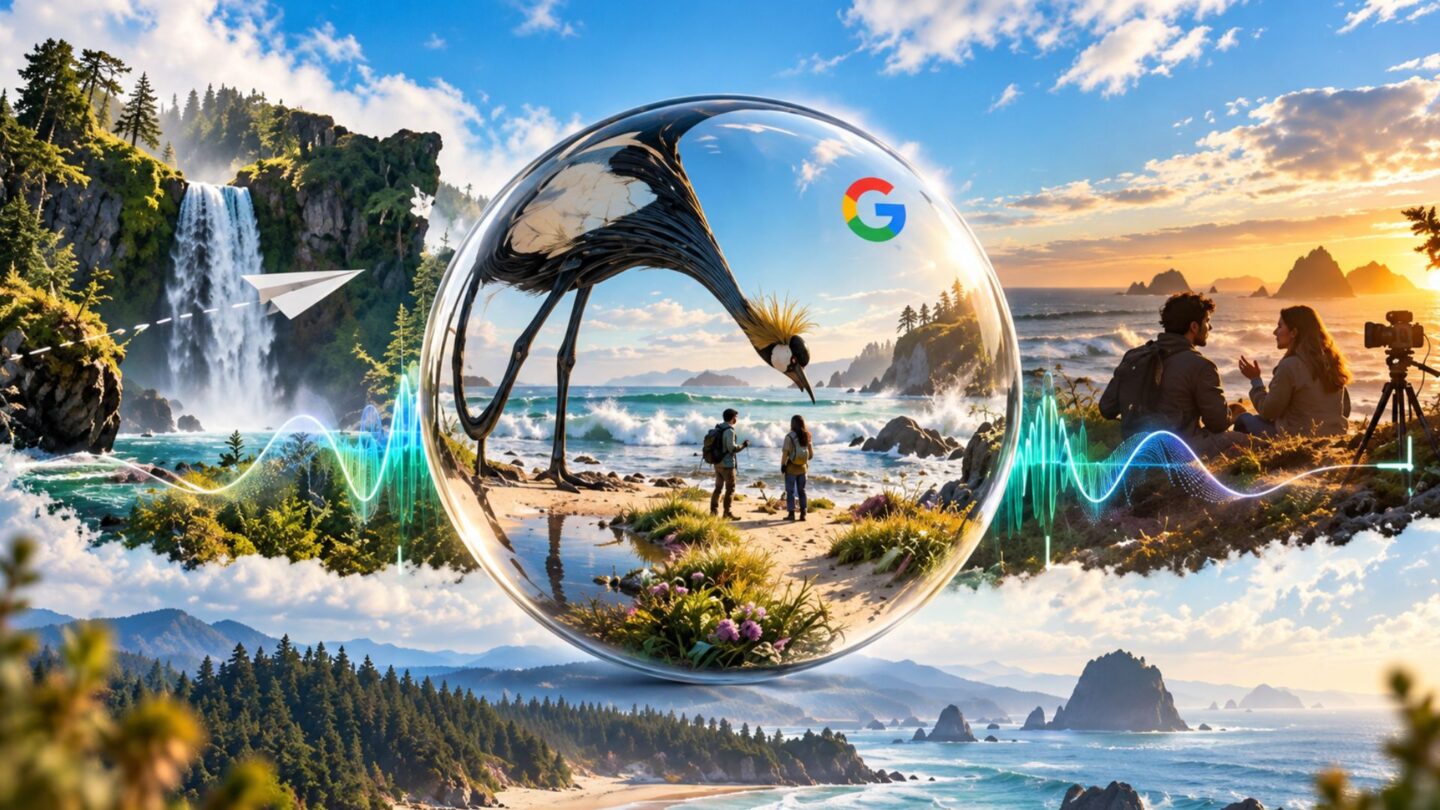
Google DeepMind has introduced Genie 4, an artificial intelligence (AI) world model that creates interactive digital environments users can explore and modify while they run. The technology builds on its predecessor, Genie 3, with improvements to visual realism, physical interactions and human movement. It also generates sound effects, background music and dialogue that respond to activity within the simulated world.
Unlike conventional AI video generators, which primarily produce fixed sequences of images, Genie 4 allows users to influence the environment as they interact with it. Users can change weather, objects, and camera angles without restarting the entire simulation. The approach could open new possibilities for game development, filmmaking, robotics research, and creating training environments for AI systems.
Google DeepMind sees interactive world models as a potential step towards AI systems that can better understand and respond to their surroundings. By simulating environments that behave more like the physical world, the technology could help developers test ideas and train intelligent systems before deploying them outside a digital setting. However, the model remains a research technology, and limitations in maintaining consistency over longer sessions still need to be addressed.
Genie 4 improves realism and interactive world building
Genie 4 can generate interactive environments lasting approximately two minutes from a simple text prompt. This lets users create digital settings without manually building every object, scene, or interaction. Demonstrations show that users can also modify the environment during a session, request changes, and see the simulation respond while preserving much of the existing world.
The ability to edit an environment without starting again distinguishes the system from tools that generate predetermined video clips. A user could alter the weather, introduce new objects or adjust the camera perspective as the experience unfolds. Such flexibility could make the technology useful for quickly testing creative concepts, exploring alternative scenarios and developing early versions of interactive experiences.
The model also aims to improve how objects and characters behave. Compared with earlier generations, Genie 4 is designed to produce more natural human movement and more convincing representations of physical interactions. These improvements include handling collisions and aerodynamic effects, which help make virtual environments feel more consistent with real-world behaviour.
Google’s approach incorporates reasoning and planning capabilities to help guide the simulation. The supplied material identifies Gemini 3.8 Flash as the model used to help organise goals into steps and assess the generated frames. This process aims to improve the relationship between a user’s instructions and the resulting environment. However, the simulation’s quality will depend on how consistently the model maintains its understanding of the scene.
Audio is another significant part of the update. Genie 4 can generate environmental sounds, music and dialogue alongside the visual experience. These elements can respond to user actions, making the simulated world feel more immersive. Combining interactive visuals with responsive sound could be particularly useful for games and virtual experiences, where audio often communicates environmental changes and character actions.
Despite these advances, the technology still has limitations. Google acknowledges that simulations can lose consistency after a few minutes, with details becoming less reliable and objects not always remaining consistent throughout the experience. Maintaining object permanence and remembering a world’s state are major challenges for systems that generate environments dynamically rather than relying on fixed, pre-built assets.
Potential applications in games, filmmaking and robotics
Game developers could use Genie 4 to explore concepts and build early prototypes more quickly. Instead of building every environment by hand, designers could generate a starting world with text prompts, then iterate on changes while testing how the setting responds. This could help teams evaluate gameplay ideas before committing significant time and resources to full production.
The technology could also support filmmaking, particularly during previsualisation, when directors and production teams plan scenes before filming begins. Interactive environments could let creative teams experiment with camera angles, atmosphere, movement, and other visual elements. Real-time changes could help them assess different approaches without repeatedly rebuilding a scene.
Robotics is another area where world models may prove useful. Training robots in simulated environments lets researchers test how machines respond to objects, movement, and changing conditions before conducting physical trials. More realistic simulations could offer additional opportunities to evaluate robotic systems’ behaviour in controlled settings. However, performance in a generated environment would not automatically guarantee equivalent results in the real world.
AI agents could also benefit from interactive simulations. Researchers could use virtual environments to examine how an AI system interprets instructions, responds to unexpected events and completes multi-step tasks. These settings could provide a controlled way to investigate decision-making and problem-solving without exposing physical equipment or real-world environments to unnecessary risks.
However, these applications’ usefulness depends on the model’s reliability. A simulation that changes details unexpectedly or fails to preserve object states could produce misleading test results. For this reason, Genie 4’s current limitations matter especially for robotics and other applications where accurate physical behaviour matters. Developers would need to establish how closely the generated environments represent the conditions they intend to simulate.
Google’s longer-term interest in world models reflects a broader effort to develop AI systems that can understand environments through interaction rather than simply generating isolated outputs. Genie 4’s combination of visual generation, physical simulation, and responsive audio represents progress toward that goal. However, the technology will need further development before it can be relied on for demanding professional applications.
How to access Google Genie 4
Google is initially making Genie 4 available as a research preview to selected testers. The early group includes filmmakers exploring previsualisation, game developers testing concepts and robotics teams developing simulated training environments. This limited rollout will allow Google to gather feedback and assess how the technology performs across different use cases.
Google also plans to make the model available to developers through the Gemini API and Google AI Studio. These platforms could provide a route for integrating world-generation capabilities into development workflows and experimental applications. However, the announcement did not confirm pricing for developer access, leaving costs and commercial availability unclear.
Consumers are expected to access it through Project Genie, Google’s initiative to explore AI-generated environments. The initial rollout targets subscribers to Google AI Ultra, a premium plan priced at US$100 per month, according to the supplied information. Google may later extend access to AI Pro and AI Plus subscribers, though broader availability will depend on its rollout plans.
Interested users can join the available waitlist to express interest in early access. Google has not provided a firm timeline for when the technology will become available to a wider audience, so joining the list does not guarantee immediate access.
The staged release reflects the complexity of delivering interactive AI-generated worlds to a broad audience. Running these environments requires more than producing realistic images; the system must also respond to user input, maintain continuity, and generate suitable audio. These demands may affect both the technology’s availability and the resources needed to run it.
For now, Genie 4 remains an early-stage technology rather than a fully established development tool. Its ability to generate and modify interactive environments could benefit creative professionals and researchers, but short simulation durations and consistency issues show that important challenges remain. Wider access and further testing should help clarify whether the model can deliver reliable results across the range of applications Google is targeting.