

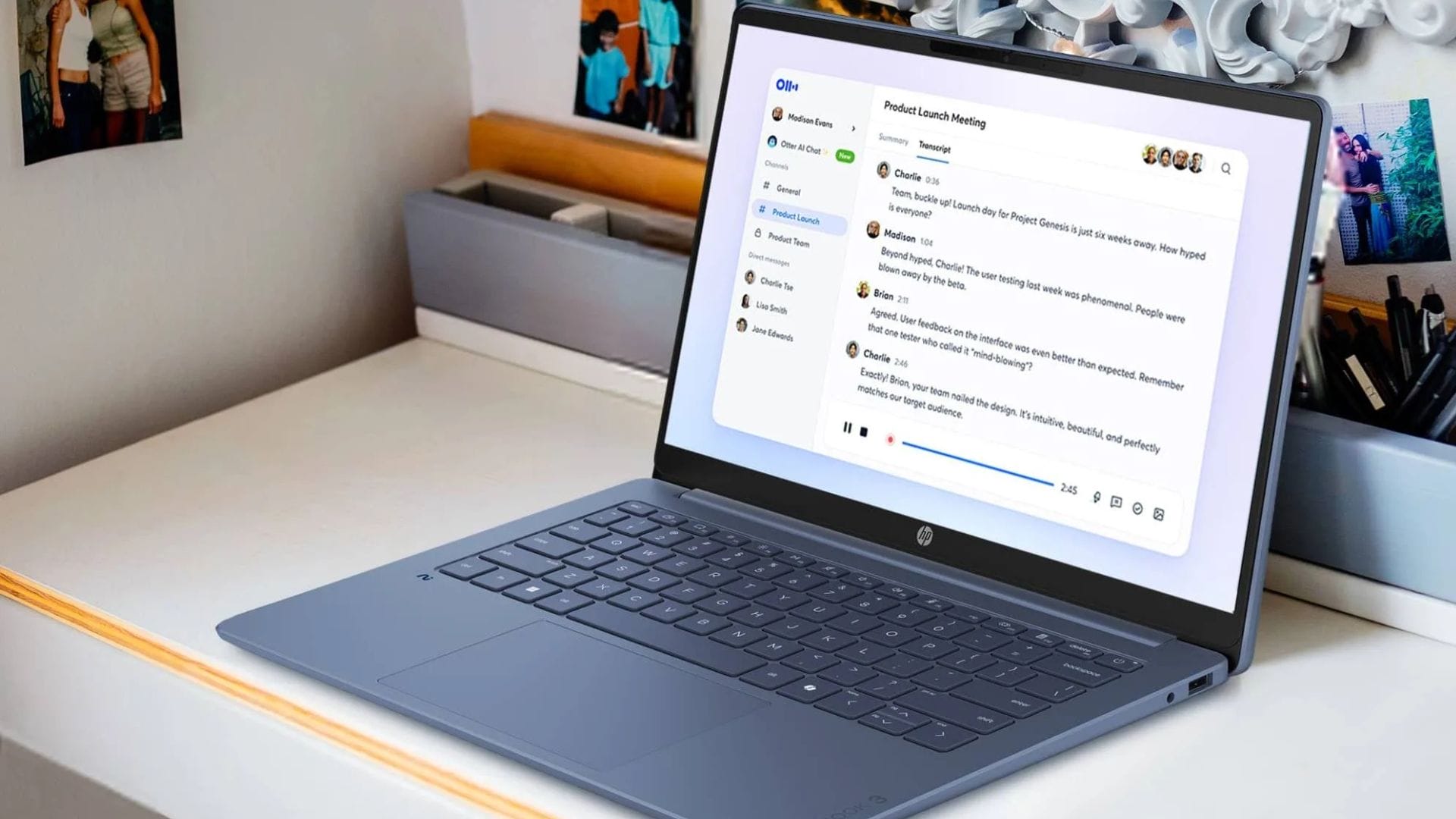
HP is aiming at Apple’s affordable MacBook Neo with a new Windows laptop that combines an OLED display, a Qualcomm Snapdragon processor and a much larger battery. The OmniBook 3 is priced at US$599.99, positioning it as a lower-cost option for students, casual users and buyers looking for a capable everyday computer without moving into premium laptop pricing.
The new model arrives as Apple’s MacBook Neo continues to attract attention in the budget laptop market, despite a US$100 price increase introduced in late June. HP’s approach is notably different, prioritising display technology, battery capacity and connectivity rather than matching Apple feature for feature.
The OmniBook 3 is already available for preorder, while a temporary Best Buy promotion has lowered its price further to US$499.99. That discount makes HP’s new machine particularly competitive for shoppers considering an affordable laptop for work, study, entertainment, or general home use.
OLED display gives HP a different advantage
The HP OmniBook 3, model 14-hz0488nr, features a 14-inch OLED screen with a 1920 x 1200 resolution and full 100% DCI-P3 colour coverage. The display technology gives HP an important advantage in contrast and black levels, potentially making the laptop better suited to films, photos and other content where richer blacks are noticeable.
Apple takes a different approach with the MacBook Neo, which uses a smaller 13-inch IPS display. Its 2408 x 1506 resolution is considerably higher than the OmniBook 3’s 1920 x 1200 resolution, giving the MacBook Neo an advantage in pixel density and overall sharpness.
Brightness also favours Apple. The MacBook Neo is rated at up to 500 nits, while HP lists 300 nits for the OmniBook 3. That difference could be important for users who frequently work in bright rooms or near windows. However, HP’s OLED panel could still appeal to users who value contrast and colour reproduction over peak brightness.
Processing performance also reflects the two companies’ different priorities. HP equips the OmniBook 3 with Qualcomm’s Snapdragon X X1-26-100, an eight-core processor that includes a neural processing unit capable of 45 trillion operations per second. Reported performance comparisons suggest the Snapdragon chip can outperform Apple’s A18 Pro in some multi-core workloads, although Apple maintains an advantage in single-core performance and graphics.
The processor also gives the OmniBook 3 access to Windows-based AI capabilities while maintaining the efficiency associated with Qualcomm’s Arm-based Snapdragon platform. For everyday tasks such as web browsing, office applications, streaming and video calls, the combination is aimed at providing enough performance without pushing the laptop into a higher price category.
Bigger battery and more ports strengthen HP’s value proposition
Battery capacity is one of the most significant differences between the two laptops. HP puts a 60Wh battery inside the OmniBook 3 and claims the machine can deliver up to 41 hours and 45 minutes of battery life under its testing conditions.
Apple’s MacBook Neo has a considerably smaller 36.5Wh battery. Apple rates it for up to 16 hours of video streaming or up to 11 hours of web browsing. These figures should not be treated as a direct comparison because the two manufacturers use different testing methods and workloads.
Even so, HP’s claimed endurance is striking for a laptop in this price range. If real-world testing comes close to the company’s figures, long battery life could become one of the OmniBook 3’s strongest selling points for students and mobile workers who spend significant periods away from a power outlet.
Connectivity is another area where HP takes a more generous approach. The OmniBook 3 has two USB-C ports capable of 10Gbps transfer speeds, two USB-A ports, an HDMI 2.1 connection and a headphone jack. This gives users more options for connecting older peripherals, external displays, accessories and other equipment without relying as heavily on adapters.
The MacBook Neo offers two USB-C ports and a headphone jack, but one USB-C port is limited to USB 2 speeds. For users who regularly connect multiple accessories, HP’s broader port selection may be more convenient.
Both laptops begin with 8GB of memory and 256GB of storage. The configuration keeps the entry-level prices low, although 8GB of RAM can be restrictive for demanding workloads. Windows 11 also generally requires more memory than macOS, so prospective buyers should consider the base configuration carefully.
Microsoft has been working to reduce Windows’ memory demands as the pressure on affordable systems increases. Improvements in Windows efficiency could eventually benefit lower-cost machines such as the OmniBook 3, particularly as manufacturers continue offering 8GB configurations at entry-level prices.
Temporary discount makes the OmniBook 3 more competitive
At its regular price of US$599.99, the OmniBook 3 undercuts the MacBook Neo by US$100 while offering several specifications that Apple’s machine does not match, including an OLED display, a larger battery and a wider selection of physical ports. The trade-off is that Apple provides a sharper and brighter display alongside stronger single-core and graphics performance.
HP’s laptop therefore appears less like a direct technical replacement for the MacBook Neo and more like an alternative built around different priorities. Buyers who value display contrast, battery capacity and connectivity may find the OmniBook 3 particularly appealing, while those who prioritise display resolution, brightness or graphics performance may prefer Apple’s approach.
The current Best Buy promotion makes the comparison even more favourable to HP. The retailer is offering the OmniBook 3 for US$499.99 as part of its 60th Anniversary Sale, with the promotion running through 24 August 2026. At that price, the laptop becomes a particularly notable option for budget-conscious Windows buyers.
The OmniBook 3 is also available to preorder through Amazon, giving prospective customers another route to the new model. With its combination of an OLED panel, Snapdragon X processor, substantial battery and extensive connectivity, HP’s latest entry could give Apple considerably more competition in the affordable laptop market.
For users who don’t specifically need macOS, the OmniBook 3 offers a compelling alternative at a lower starting price. Its ultimate appeal, however, will depend on real-world battery performance, software compatibility and how the Snapdragon-based Windows experience performs once the laptop reaches more users.