

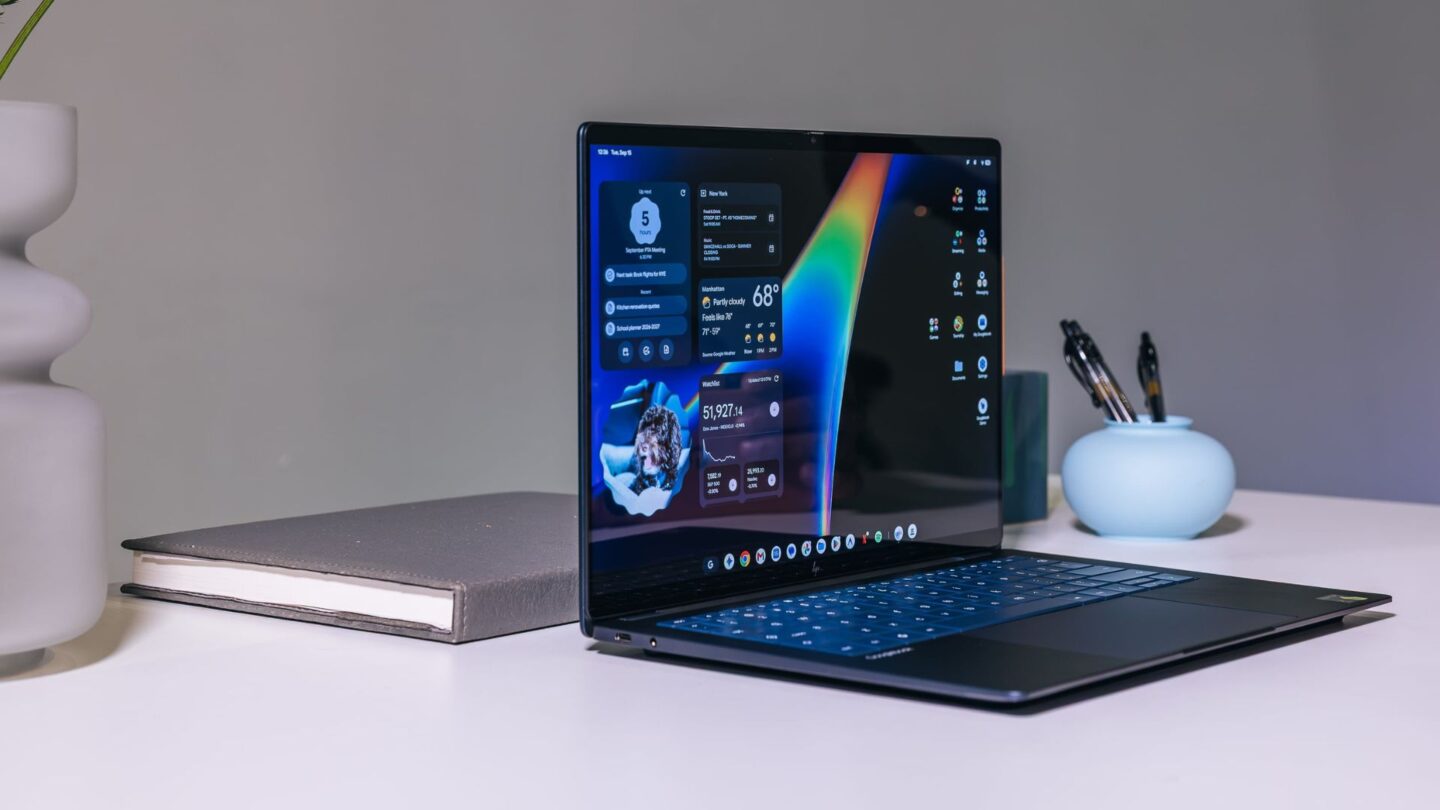
Lenovo has officially unveiled its first Googlebook laptop, marking the company’s entry into Google’s new premium laptop category. The Lenovo Googlebook 15 runs Googlebook OS and Gemini Intelligence, with a focus on high-end hardware, AI features, and integration with Android devices.
The new laptop is scheduled to go on sale on 4 October, with prices starting at US$1,099.99. That puts it well above the pricing traditionally associated with Chromebooks and positions the Googlebook 15 against premium Windows laptops and Apple’s MacBook range.
Lenovo Googlebook 15 combines a large OLED display with lightweight design
The Lenovo Googlebook 15 features a 15.3-inch OLED touchscreen with a 2880 x 1800 resolution and a 120Hz refresh rate. The display can reach 500 nits of brightness and covers 100% of the DCI-P3 colour space, making it suited to everyday productivity as well as tasks that benefit from a wider colour range.
Despite its relatively large screen, Lenovo says the laptop weighs just 1.29kg. The company describes it as the lightest 15-inch laptop in its portfolio, giving the device a focus on portability alongside its larger display. This combination could appeal to users who want a bigger workspace without carrying a heavier notebook.
Power comes from an Intel Core Ultra 5 325 processor, which includes an NPU capable of up to 47 trillion operations per second. Lenovo will offer configurations with either 16GB or 32GB of LPDDR5X memory, with storage up to 512GB via an SSD.
The laptop also includes a 70Wh battery, with Lenovo claiming more than 12.5 hours of use. Connectivity includes two Thunderbolt 4 ports, a USB-A port, an HDMI 2.0 connection and a headphone jack. Wireless connectivity includes Wi-Fi 7 and Bluetooth 6.0.
Other hardware features include quad speakers supporting Dolby Atmos, a 5MP webcam, a fingerprint reader and facial authentication. A physical camera shutter is also included, giving users a way to block the webcam when it is not being used.
Gemini brings AI tools into everyday laptop tasks
Artificial intelligence is central to the Googlebook experience, with Google’s Gemini technology integrated into several parts of the operating system. One feature is Magic Pointer, which lets users move or “wiggle” the cursor to activate Gemini and access contextual actions.
Magic Pointer can be used for tasks such as combining images or adding information directly to a calendar. Rather than requiring users to open a separate AI application, the feature is intended to make Gemini available within everyday computer interactions.
The Googlebook 15 also includes Rambler, a voice-focused feature that can handle conversations involving more than one language. The technology is designed to cope with users switching languages while speaking, extending the laptop’s AI capabilities beyond conventional text-based commands.
Android integration is another major part of the platform. Googlebook lets compatible Android phones work more closely with the laptop, including access to phone apps and files. This reduces the need to move content between devices manually and is intended to create a more connected experience between a smartphone and computer.
The approach gives Googlebook a broader ecosystem strategy, linking laptops and Android phones to reduce friction when moving between devices. Android integration could also distinguish Googlebook from conventional Windows laptops, particularly for users already invested in Google’s mobile ecosystem.
Lenovo positions Googlebook as a premium laptop category
Lenovo has also developed an AI Mouse specifically for the Googlebook platform. The accessory provides dedicated access to Gemini and includes controls for Magic Pointer, giving users another way to interact with the operating system’s AI features.
Purchasers will receive 12 months of Google AI Pro with the package. The subscription includes access to Google’s AI services and 5TB of cloud storage, adding further value for users who regularly use cloud-based services.
The pricing and hardware indicate a significant departure from the low-cost positioning historically associated with Google’s ChromeOS laptops. Chromebooks have generally been known for affordable hardware aimed at students, schools and users who primarily rely on web-based applications. Googlebook is instead being presented as a premium category intended to compete higher up the laptop market.
Lenovo’s first model reflects that strategy through its OLED display, lightweight construction, higher-end processor, extensive connectivity and built-in AI features. The starting price of US$1,099.99 also places it in a market where buyers can compare it with premium Windows notebooks and MacBooks.
The Lenovo Googlebook 15 will be available from 4 October. Its launch will provide an early indication of how consumers receive Google’s new premium laptop approach and whether features such as Gemini integration and Android connectivity can give the platform a distinct position beyond the established Chromebook market.