

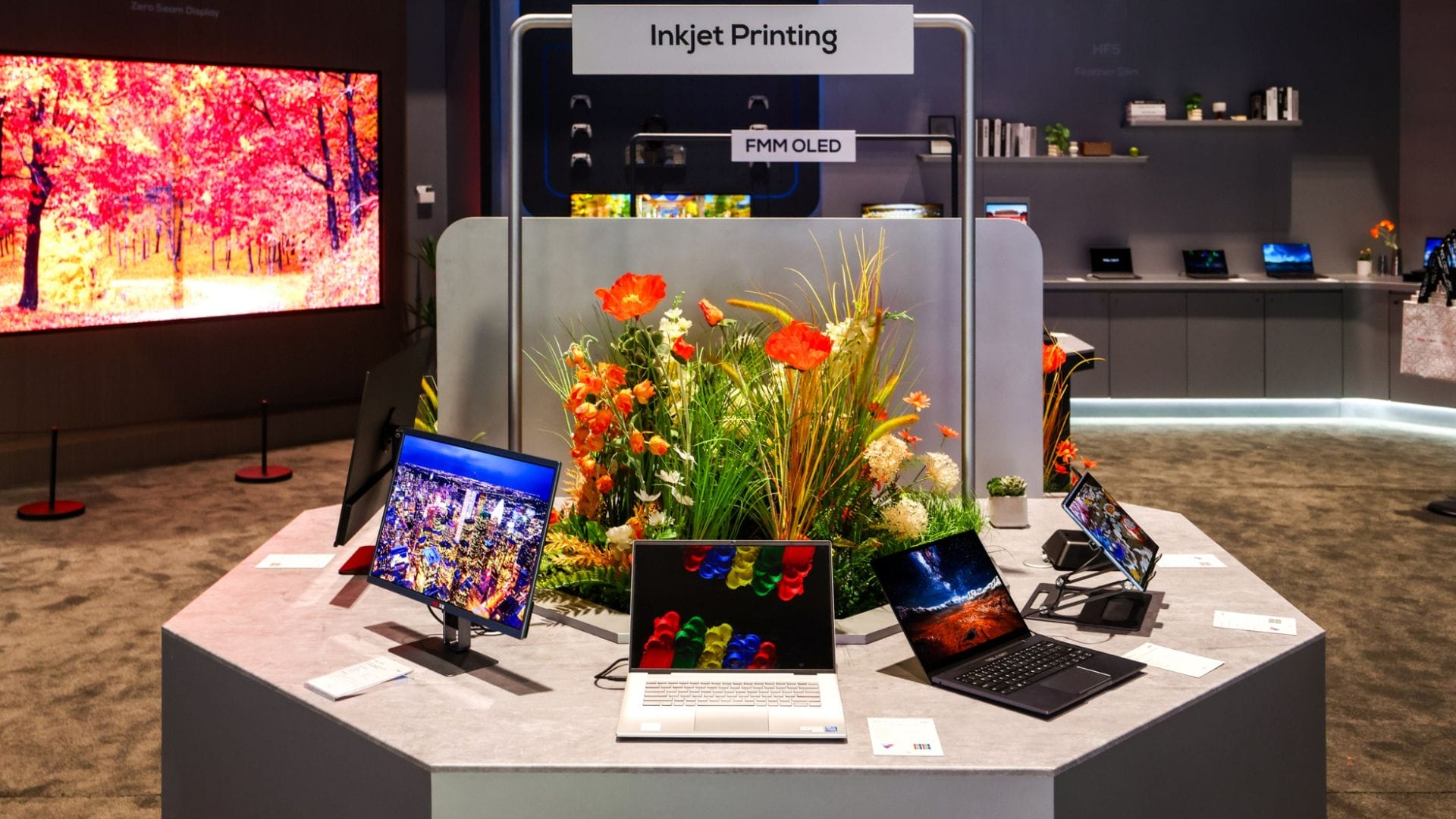
Lenovo has introduced the Legion R9000P, becoming the first laptop manufacturer to bring TCL CSOT’s inkjet-printed OLED display technology to a commercial product. The launch represents a significant step for OLED displays, combining the image quality associated with OLED panels with a manufacturing process designed to improve efficiency and reduce production costs over time.
The new gaming laptop features a 16-inch OLED display produced using TCL CSOT’s inkjet printing process rather than the conventional manufacturing methods widely used across the display industry. The technology has been under development for more than a decade and has now reached commercial deployment, marking an important milestone for both companies.
Legion R9000P introduces a new OLED display technology
The Legion R9000P is equipped with a 16-inch OLED display with a 240Hz refresh rate, offering smoother motion for gaming, video playback, and other fast-moving content. The high refresh rate is intended to improve responsiveness while maintaining the deep blacks and vivid colours that OLED technology is known for.
According to Lenovo, the display covers more than 99% of the DCI-P3 colour gamut, allowing it to reproduce a wide range of colours suitable for gaming, creative workloads and multimedia viewing. The company also states that colour accuracy remains consistent across different brightness levels, enabling the display to perform reliably in a variety of usage scenarios rather than being limited to gaming alone.
Another feature of the display is its Real RGB Stripe side-by-side sub-pixel arrangement. Traditional OLED displays sometimes use alternative pixel layouts that can reduce text sharpness, particularly when displaying small fonts. Lenovo says the RGB Stripe design improves text clarity, making the display better suited to productivity tasks such as document editing, web browsing, and software development, as well as entertainment.
The introduction of this panel also highlights a broader effort to improve OLED technology for laptops. While OLED displays have become increasingly common in premium notebooks, manufacturers continue to refine display performance, efficiency, and production methods to make the technology more widely available across different price segments.
Inkjet printing offers a different approach to OLED manufacturing
The display inside the Legion R9000P is produced using TCL CSOT’s inkjet-printed OLED technology, which differs significantly from the vacuum thermal evaporation process traditionally used to manufacture OLED panels. Conventional production relies on complex equipment and fine metal masks to deposit organic light-emitting materials onto display substrates.
Instead, TCL CSOT uses inkjet printing to apply the organic materials directly onto the display. By simplifying this stage of production, the company aims to reduce manufacturing complexity, improve production efficiency, and increase yields. Eliminating some of the specialised equipment required by traditional OLED manufacturing could also lower production costs as the technology becomes more widely adopted.
TCL CSOT has invested more than 10 years in developing the technology before bringing it to market. The company reached an important milestone in November 2024 when its 5.5-generation inkjet-printed OLED production line in Wuhan entered mass production and delivered its first commercial product.
The company has since announced plans to build an 8.6-generation inkjet-printed OLED production line, representing another step towards higher production capacity and support for larger display formats. Expanding manufacturing capabilities is expected to help accelerate adoption across multiple product categories in the coming years.
Lower production costs could expand OLED adoption
Although the Legion R9000P is aimed primarily at gamers and performance-focused users, the underlying display technology could have broader implications for the wider electronics market. OLED panels are valued for their high contrast ratios, vibrant colours and fast response times, but manufacturing costs have traditionally kept prices higher than comparable LCDs.
By improving manufacturing efficiency, inkjet-printed OLED technology could help reduce production expenses over time. As manufacturing volumes increase and production processes mature, lower costs may allow OLED displays to appear in a wider range of products, including more affordable laptops that have traditionally relied on LCD panels.
TCL CSOT believes the technology is not limited to notebooks. The company expects inkjet-printed OLED panels to expand into monitors, televisions and smartphones as manufacturing capacity grows. Wider adoption across multiple device categories could further improve economies of scale, making the technology increasingly competitive with existing display manufacturing methods.
The launch of the Legion R9000P therefore represents more than the arrival of another gaming laptop. It serves as the first commercial demonstration of a manufacturing process that has been in development for over a decade. While it will take time before inkjet-printed OLED displays become commonplace, the debut suggests that future OLED devices could become more accessible if production efficiencies continue to improve and costs fall.