


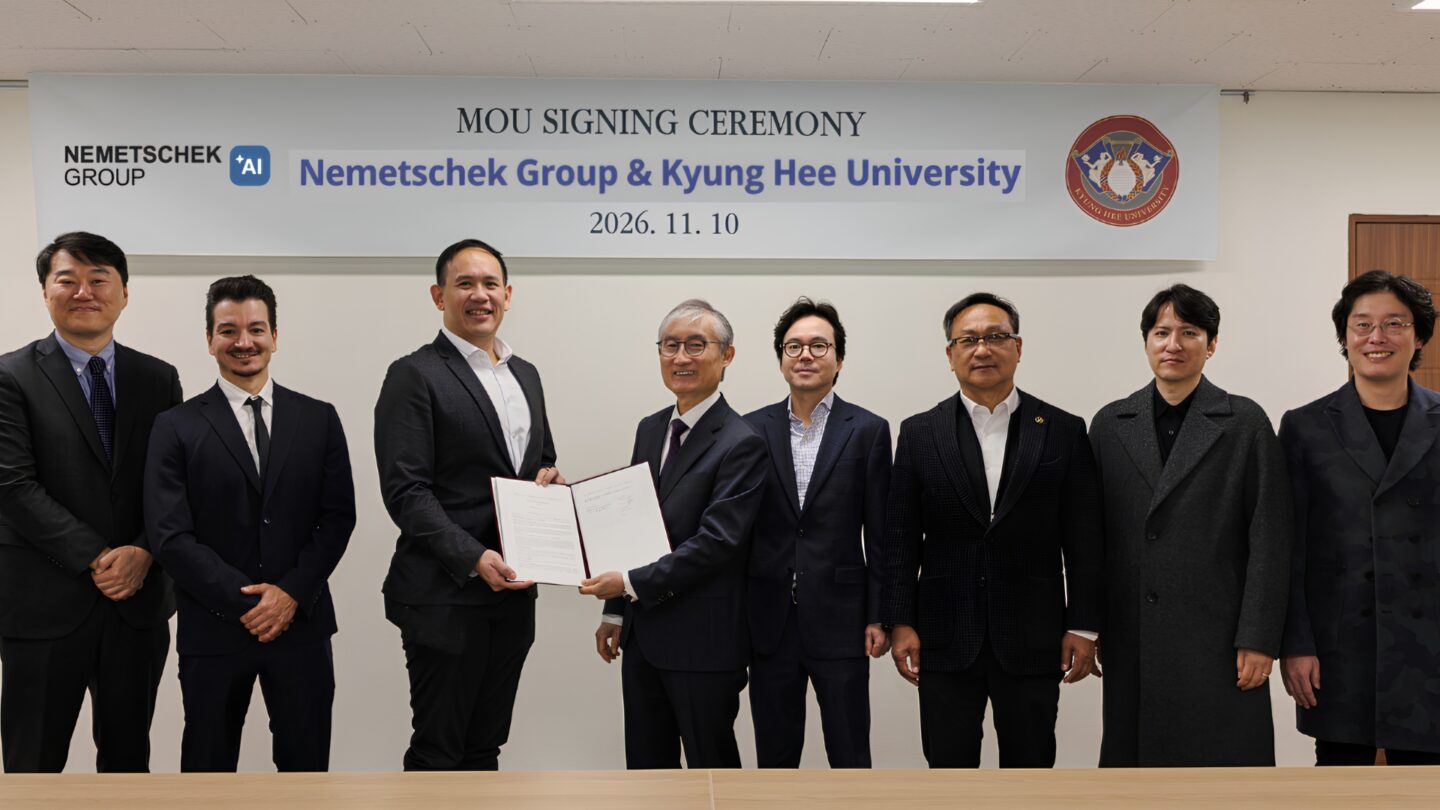
Nemetschek APAC Pte. Ltd. has signed a three-year memorandum of understanding (MoU) with the College of Engineering at Kyung Hee University, marking the Nemetschek Group’s first academic partnership in South Korea. Under the agreement, eligible students and faculty will gain access to six software technologies used across design, engineering and construction.
Alongside those tools, the collaboration brings together learning materials, curriculum input and training programmes. It aims to prepare future engineers to work with connected project information across disciplines as South Korea’s built environment sector advances its adoption of building information modelling (BIM) and digital project delivery.
Six technologies covering construction project workflows
Covering design, engineering, model coordination, documentation and field workflows, academic access spans six products from the Nemetschek Group portfolio: Archicad, Allplan, Bluebeam, GoCanvas, Solibri and Vectorworks. Working with these technologies will allow students to gain exposure to software used at different stages of construction projects.
Beyond the software itself, the partnership encompasses learning content, curriculum input and training for both faculty and students. As the collaboration develops, certification opportunities and access to internships or placements through Nemetschek’s industry network are expected to follow. Kyung Hee University will also have the opportunity to incorporate industry-informed input from Nemetschek into relevant civil and architectural engineering programmes. The university will retain responsibility for its curriculum and academic delivery, while the collaboration provides additional exposure to industry tools and working practices.
Preparing engineers to work with connected project information
As BIM, connected project data and AI-enabled tools become more common in project delivery, engineers increasingly need to understand how information is created, exchanged and maintained across different disciplines and systems. In practice, that means working with structured project information, knowing how models and data move between software systems and maintaining information quality throughout a project’s lifecycle. Nemetschek considers building these capabilities alongside technology adoption an important part of preparing engineers for connected construction workflows.
Jonathan Ng, Managing Director, Southeast Asia, Nemetschek Group, explained how engineering education needs to reflect the use of digital information across projects. “The next generation of engineers will enter an industry where digital tools are already part of everyday project delivery. The bigger capability will be understanding how information connects across disciplines – how it is created, exchanged, checked and carried through a project.” He also emphasised the role of education in developing these capabilities early, with the partnership intended to bring industry workflows closer to how future engineers are trained.
Kyung Hee University views the arrangement as a way to complement its existing engineering education with greater exposure to industry practices. Jin Hwan Choi, Dean, College of Engineering, Kyung Hee University, said: “Engineering education must continue to evolve alongside the technologies shaping the industry. This collaboration will give our students and faculty greater exposure to digital tools and workflows used across the built environment, complementing the strong engineering foundations developed at Kyung Hee University.”
Three-year agreement extends academic engagement in Asia
The MoU will remain in effect for three years, during which Nemetschek Group and Kyung Hee University may explore additional areas of collaboration. The South Korean partnership also extends Nemetschek Group’s engagement with academic institutions across Asia. In Southeast Asia, the company has worked with institutions in Singapore, Vietnam and the Philippines to strengthen digital capabilities and connect education with evolving industry requirements.