

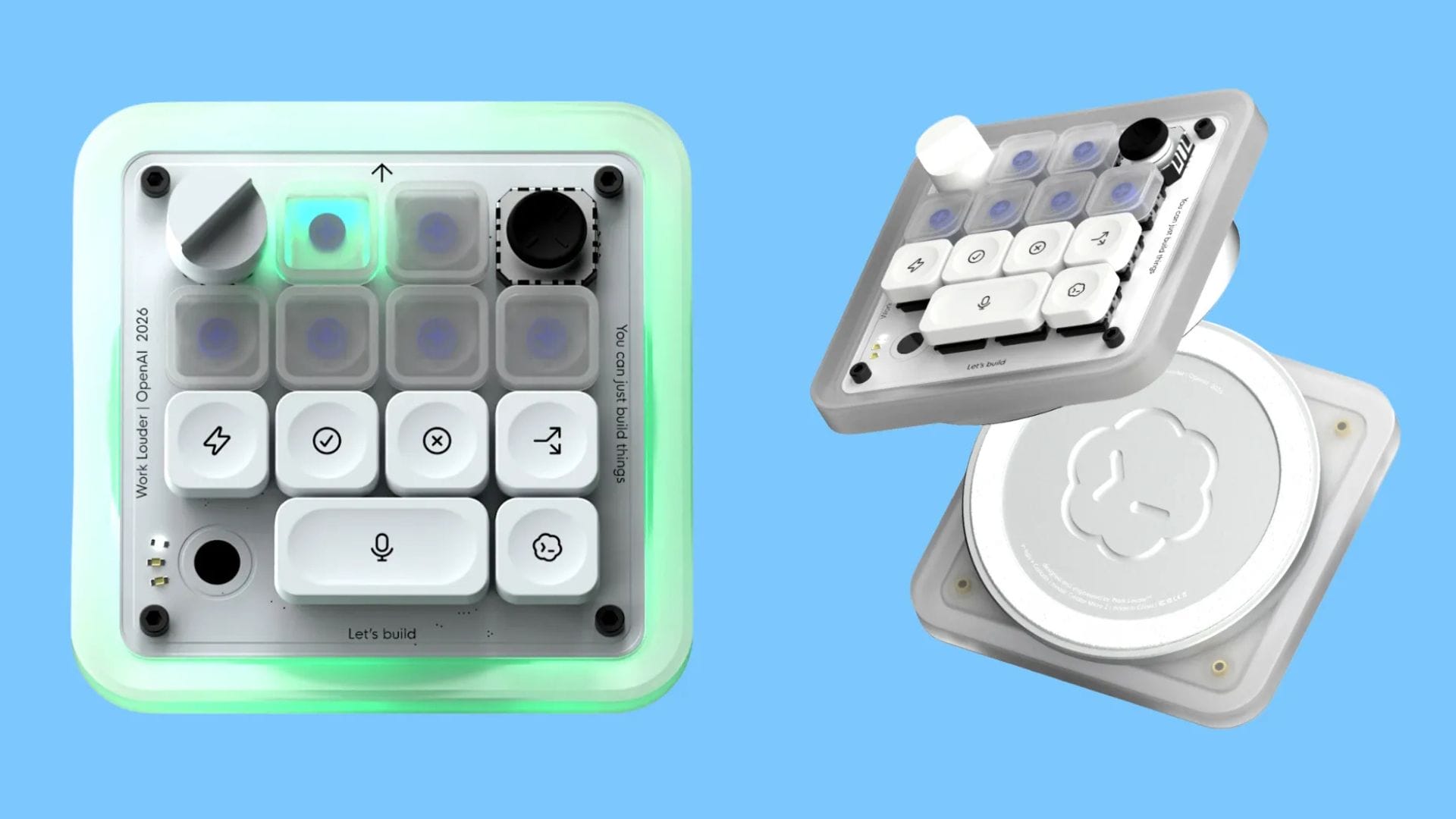
OpenAI has introduced a compact keyboard designed specifically for Codex users, offering physical controls that make interacting with its AI coding assistant more direct. Created in partnership with keyboard manufacturer Work Louder, the Codex Micro features a dedicated dial that allows users to adjust the AI’s reasoning level without navigating software menus.
The device is priced at US$230 and is compatible with both macOS and Windows through Bluetooth or USB-C. Although the keyboard is currently listed as out of stock on OpenAI’s online store, the company has indicated that additional units will be made available in a future restock.
Physical controls bring AI settings within reach
One of the Codex Micro’s most distinctive features is its rotary dial, which gives users instant control over Codex’s reasoning level. Instead of changing settings through the software interface, users can physically increase or decrease the amount of reasoning the AI applies to a task.
Lower reasoning levels are intended for simple requests that benefit from quicker responses, while higher levels allow the AI to spend more time analysing complex problems before generating an answer. The physical control offers a more accessible way to balance speed and accuracy depending on the task at hand.
The approach represents a different way of interacting with AI tools, turning a software-based setting into a tactile control. Rather than searching through menus, users can adjust the AI’s processing effort in much the same way they would change the volume on a speaker or the brightness on a display.
OpenAI’s collaboration with Work Louder reflects a growing interest in dedicated hardware that complements AI-powered workflows. Rather than serving as a general-purpose keyboard, the Codex Micro is designed to support developers who regularly work with Codex throughout the day.
Dedicated buttons simplify coding workflows
Beyond the reasoning dial, the Codex Micro includes several hardware features intended to speed up common development tasks. A built-in joystick can be configured to launch frequently used Codex actions, such as reviewing pull requests or helping to debug software errors.
The keyboard also features programmable mechanical keys that can be customised to perform common actions with a single press. These shortcuts can be assigned to functions such as accepting code changes, launching new chats or triggering predefined workflows, reducing the need to switch between different windows and menus.
Another notable feature is the use of RGB lighting as a visual status indicator. The illuminated keys provide real-time feedback on the progress of AI agents, displaying whether they are currently thinking, actively processing a request, waiting for input or have completed their task.
For developers managing multiple AI-assisted jobs simultaneously, these visual indicators could reduce the need to check individual conversations repeatedly. Instead, users can quickly see the status of ongoing tasks directly from the keyboard while continuing with other work.
The keyboard combines 13 mechanical switches with a joystick, touch sensor and rotary dial, creating a compact accessory that focuses on AI interaction rather than replacing a traditional full-sized keyboard.
A specialist accessory aimed at frequent Codex users
The Codex Micro is clearly designed with regular Codex users in mind rather than the broader computer accessory market. Its hardware features are closely tied to OpenAI’s AI coding assistant, making its usefulness largely dependent on how frequently a user relies on Codex during daily development work.
Developers who routinely manage multiple AI agents or spend much of their workday in Codex may find value in dedicated hardware controls. Physical shortcuts and status indicators can reduce interruptions and make repetitive actions more efficient.
However, the US$230 price tag may prove difficult to justify for occasional users. Those who only use Codex from time to time may find that software controls provide a sufficiently convenient experience without the need for a specialised accessory.
Demand appears to have been strong following the product’s launch, with the first batch already selling out. While OpenAI has confirmed that more units are planned, prospective buyers will need to wait for the next restock before deciding whether the dedicated AI controls are worth the investment.